
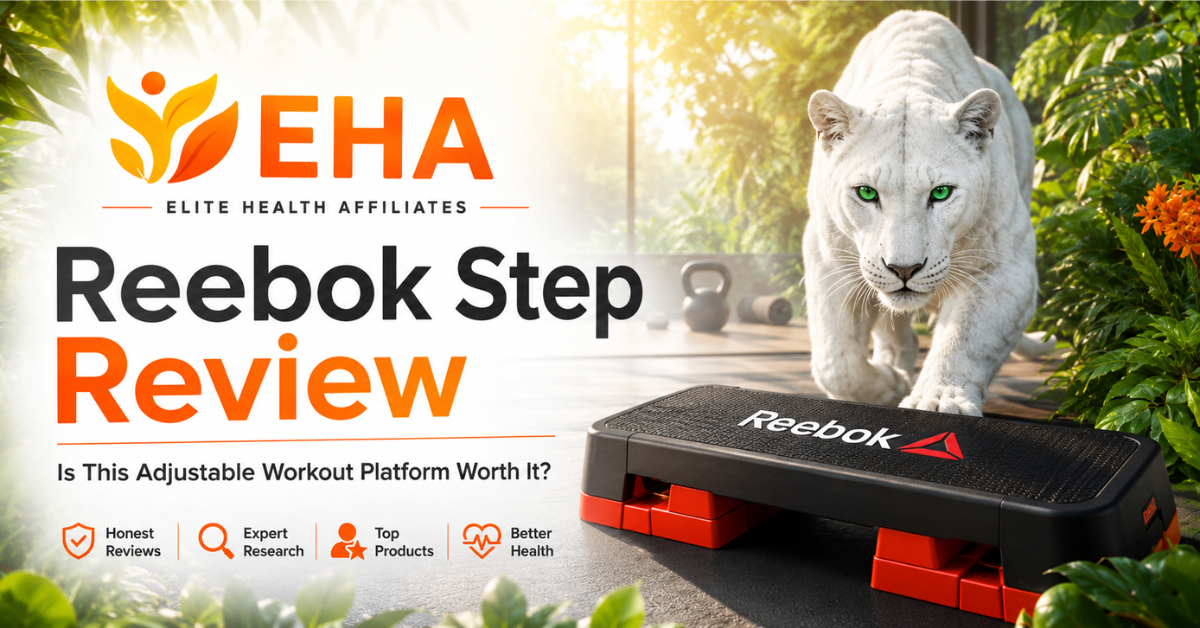
Is the Reebok Step worth it? Yes. If you want a sturdy, adjustable platform for cardio, HIIT, step workouts, and strength-focused exercises at home, the Reebok Step offers a lot of versatility without taking up much space. Its three height settings, textured workout surface, and stable rubberized base give it a more substantial feel than many basic aerobic steps, while the larger platform gives you room to use it for far more than traditional step routines.
What makes the Reebok Step especially appealing is that it does not feel like a one-purpose piece of fitness equipment. Reebok designed it for cardio, strength, core work, HIIT, and aerobics, and the adjustable platform lets you change the intensity without changing equipment. That makes it particularly attractive for home workouts where space matters and every piece of equipment needs to earn its place.
There are less expensive step platforms available, so the real question is whether the Reebok name comes with enough additional stability, adjustability, and build quality to justify the higher price.
In this Reebok Step review, we’ll look closely at those areas, where the platform performs best, what could be better, and whether it is the right choice for your home workout setup.
This post contains affiliate links. If you purchase through them, we may earn a small commission at no extra cost to you.
View current availability, pricing, and customer reviews
Table of Contents
How We Evaluated the Reebok Step
A good exercise step needs to do more than simply raise you off the floor. It has to remain stable as your weight shifts, provide enough grip for repeated movements, adjust without becoming frustrating, and feel substantial enough that you can focus on the workout instead of the equipment underneath you.
For this review, those are the areas we focused on most closely. We looked at the Reebok Step’s overall construction, surface design, three-position height system, rubberized contact points, platform size, and the range of workouts it is designed to support. Reebok positions the Step for cardio, strength, core training, HIIT, aerobics, and general fitness sessions, so versatility is a major part of its value.
We also considered how practical those features are for someone working out at home. A platform can have an impressive list of specifications, but if it slides, takes too long to adjust, or becomes awkward to store, those features matter a lot less. The Reebok Step gets many of those fundamentals right, and that is where it starts to separate itself from cheaper, more basic alternatives.
Reebok Step Build Quality and Stability
Build quality is one of the strongest parts of the Reebok Step. The platform is large enough to give you a comfortable working surface without becoming difficult to move around, and its overall weight gives it enough substance to feel planted during repeated movements.
The underside uses rubberized ground-contact points designed to reduce slipping and help absorb impact. That matters during repeated step movements, quick transitions, and exercises where your weight is moving from one side of the platform to the other. The Step also uses ribbed side panels and a multi-textured top surface to improve traction around the areas where your feet are most likely to land.
That combination gives the Reebok Step one of its biggest advantages: confidence. You still need to use it on an appropriate flat surface and pay attention to your footing, but the platform does not feel like an inexpensive plastic accessory that you have to baby through a workout. It feels like fitness equipment designed to be used regularly.
Reebok Step Height Adjustment
The Reebok Step offers three height settings, which gives you a useful range for changing workout intensity without changing equipment. Instead of relying on a fixed platform height, you can raise or lower the Step depending on the type of movement you are doing and how demanding you want the workout to feel.
That is a meaningful feature because height has a direct effect on how challenging the platform feels. The lowest setting is a sensible starting point for faster-paced cardio, beginners, or workouts where quick transitions matter most. Moving to the middle or highest setting increases the range of motion and makes movements such as step-ups and lunges more challenging.
We also like that the three settings give the Reebok Step room to grow with you. You are not locked into one fixed height, and you can change the platform according to the exercise rather than trying to make every movement work with the same setup. The adjustment system is simple enough that changing the height does not turn into a project between exercises.
Reebok Step Performance for Cardio and HIIT
Cardio is where the Reebok Step feels most natural. Traditional step movements, lateral transitions, knee drives, and interval work all fit the platform well, and the larger surface gives you enough room to move without constantly feeling like you are trying to hit a tiny target.
The textured workout surface also matters more once the pace picks up. During faster transitions, you want enough grip to feel secure without the platform becoming uncomfortable underfoot. The Reebok Step does a good job of balancing those two needs.
For HIIT workouts, the adjustable height becomes particularly useful because you can change the difficulty without completely changing the exercise. The lower setting works better when speed is the goal, while a higher setting makes slower, more deliberate step movements substantially harder. That gives the Reebok Step more long-term usefulness than a fixed-height platform.
Reebok Step Performance for Strength Training
The Reebok Step is not a replacement for a traditional weight bench, but it can be surprisingly useful for strength-focused home workouts. Its flat, raised surface works well for movements such as elevated push-ups, split squats, lunges, step-ups, triceps dips, and a variety of core exercises.
That versatility matters if you are building a compact home workout area and do not want every exercise to require a separate piece of equipment. The Step gives you a stable raised platform that can be worked into both upper- and lower-body routines, then immediately switched back into a cardio session. Resistance bands can expand those options even further, and our Resistance Bands Workout Guide includes additional exercises that work well in a home fitness setup.
It is important to keep expectations realistic, though. This is still an exercise step, not an adjustable workout bench or power rack. If your training revolves around heavy barbell work, you will need equipment built specifically for that purpose. For general home fitness, bodyweight training, dumbbell circuits, and mixed cardio-strength routines, however, the Reebok Step is much more useful than its simple appearance suggests.
If you are putting together a larger dedicated workout space, our Turn Your Shed into a Home Gym guide looks at additional ways to create a practical training area without filling your house with equipment.
What We Liked About the Reebok Step
The biggest thing we like about the Reebok Step is that its versatility feels purposeful rather than gimmicky. The three height settings genuinely change the difficulty of the platform, the large surface gives you room to move confidently, and the grip-focused design addresses one of the most important concerns with any step platform.
We also like the integrated height adjustment. Traditional aerobic steps often rely on separate risers that have to be stored somewhere when they are not being used. Reebok’s adjustment system keeps everything together, which makes the whole setup cleaner and easier to manage.
Another strength is how easily the Step fits into a broader home workout setup. It works well alongside dumbbells, resistance bands, and other compact equipment rather than requiring a dedicated area of its own. If you are considering adding resistance training without taking up much additional room, our Power Systems Resistance Bands Review looks at another compact option designed for home workouts.
The balance between size and portability is also a plus. The Reebok Step is substantial enough to feel solid but still manageable enough to move out of the way after a workout. The surface is also easy to wipe down, which is a small feature that becomes much more important once the platform is being used several times a week.
What Could Be Better
The most obvious drawback is price. The Reebok Step sits above many generic aerobic platforms, and not everyone needs the additional size, integrated adjustment system, or more substantial construction. If you only plan to use a step occasionally for basic low-impact cardio, a cheaper platform may do everything you need.
Its size can also work against it in very small spaces. The larger platform is part of what makes the Reebok Step feel stable and useful for varied workouts, but it also takes up more floor and storage space than a compact stepper. It is easy enough to move, but you still need somewhere to put it when the workout is over.
The final limitation is simply that it is still a step platform. It can support a wide range of exercises, but it is not designed to replace a dedicated bench, rack, or more specialized strength-training equipment. That is not really a flaw, but it is something buyers should understand before expecting it to do everything.
Check Current Price on Amazon →
Reebok Step Pros and Cons
Pros
- Three adjustable height settings
- Large, stable workout surface
- Textured top for improved grip
- Rubberized contact points to reduce slipping
- Useful for cardio, HIIT, strength, and core workouts
- Integrated height adjustment
- Easy-to-clean surface
- Solid construction without being overly bulky
Cons
- More expensive than many basic aerobic steps
- Larger footprint requires more storage space
- Not a substitute for a true adjustable weight bench
- May be more than casual users need
Reebok Step vs Other Adjustable Step Platforms
The biggest difference between the Reebok Step and many cheaper step platforms is that it feels more like long-term fitness equipment than a basic plastic riser. The integrated height system, larger workout area, textured surface, and rubberized contact points all contribute to that more substantial feel.
That does not automatically make it the best choice for everyone. If price is your main consideration and you only need a platform for occasional step-ups or light cardio, there are less expensive options that may make more sense. Where the Reebok Step earns its premium is with people who expect to use the platform regularly and want it to become part of several different types of workouts.
That distinction is important. You are not simply paying for the Reebok name. You are also getting a larger platform, adjustable height settings, a grip-focused surface, and a design intended for repeated cardio and strength-focused use. Whether those advantages are worth the additional cost depends largely on how often you plan to use them.
Who Should Buy the Reebok Step?
The Reebok Step makes the most sense for someone who wants one compact platform that can move easily between cardio and strength-focused workouts. It is particularly well suited to home users who enjoy HIIT, aerobic step routines, bodyweight training, and mixed circuits and want the ability to increase or decrease the platform height as their workouts change.
It is also a strong option for people who have owned cheaper step platforms and want something larger and more substantial. The Reebok Step is not particularly complicated, but the size, grip, adjustment system, and overall construction give it a more polished feel than many entry-level alternatives.
On the other hand, if you only want an inexpensive step for occasional low-impact exercise, you may not need to spend this much. And if your main goal is heavy strength training, a dedicated bench or larger home-gym setup will be a better investment.
Frequently Asked Questions About the Reebok Step
How many height settings does the Reebok Step have?
The Reebok Step has three adjustable height positions. That gives you enough range to use a lower setting for faster cardio work and a higher setting for exercises where you want greater range of motion and intensity.
Is the Reebok Step good for HIIT?
Yes. HIIT is one of the areas where the Reebok Step makes the most sense. The adjustable height lets you change the difficulty depending on whether you want faster transitions or a greater range of motion, while the larger textured surface helps keep movements controlled.
Does the Reebok Step slide?
The Step uses rubberized contact points underneath to help reduce slipping and movement during workouts. It should still be placed on a suitable flat surface and checked before use, especially during faster-paced exercises.
Is the Reebok Step easy to store?
For a full-size step platform, yes. It is easy enough to move after a workout, although its larger surface means you will need more storage space than you would with a compact stepper.
Can the Reebok Step be used for strength training?
Yes. The flat raised platform works well for bodyweight exercises, lower-body movements, core work, and mixed strength circuits. It is not designed to replace a traditional adjustable weight bench, but it offers considerably more versatility than a basic aerobic step.
Is the Reebok Step worth paying more for?
If you expect to use it regularly, yes. The larger platform, adjustable height, stable construction, and ability to work across cardio and strength routines give it more long-term value than a very basic step. If you only need something for occasional light exercise, a cheaper option may be enough.
EHA Verdict: Is the Reebok Step Worth It?

Yes, the Reebok Step is worth it for people who will actually take advantage of its versatility. It costs more than a basic aerobic step, but the larger platform, three height settings, textured surface, stable base, and ability to move between cardio and strength-focused workouts give you something much closer to a long-term piece of home fitness equipment than a simple exercise accessory.
We especially like it for home users who enjoy variety. You can use the same platform for a fast cardio session one day, HIIT the next, and a bodyweight strength circuit after that without adding another large piece of equipment to the room. The design is straightforward, but everything about it feels focused on making those different workout styles easier to combine.
If you only need the cheapest possible step platform, the Reebok Step is probably more than you need. But if you want a sturdier adjustable step that you expect to use regularly, this is a strong option and one we are comfortable recommending.
Where to Buy the Reebok Step
The Reebok Step is available through Amazon, where you can check the current price, availability, and customer reviews before ordering. Pricing and stock can change, so checking the current listing is the best way to see what is available right now.
Ready to Upgrade Your Home Workouts?
View current pricing, availability, and customer reviews
Explore More Fitness Equipment Reviews and Guides
The Reebok Step is a versatile addition to a home workout setup, but the right supporting equipment can give you even more ways to train. We have reviewed additional benches, resistance bands, fitness devices, and home gym equipment to help you compare your options and find the products that best fit your workouts before spending your money.