
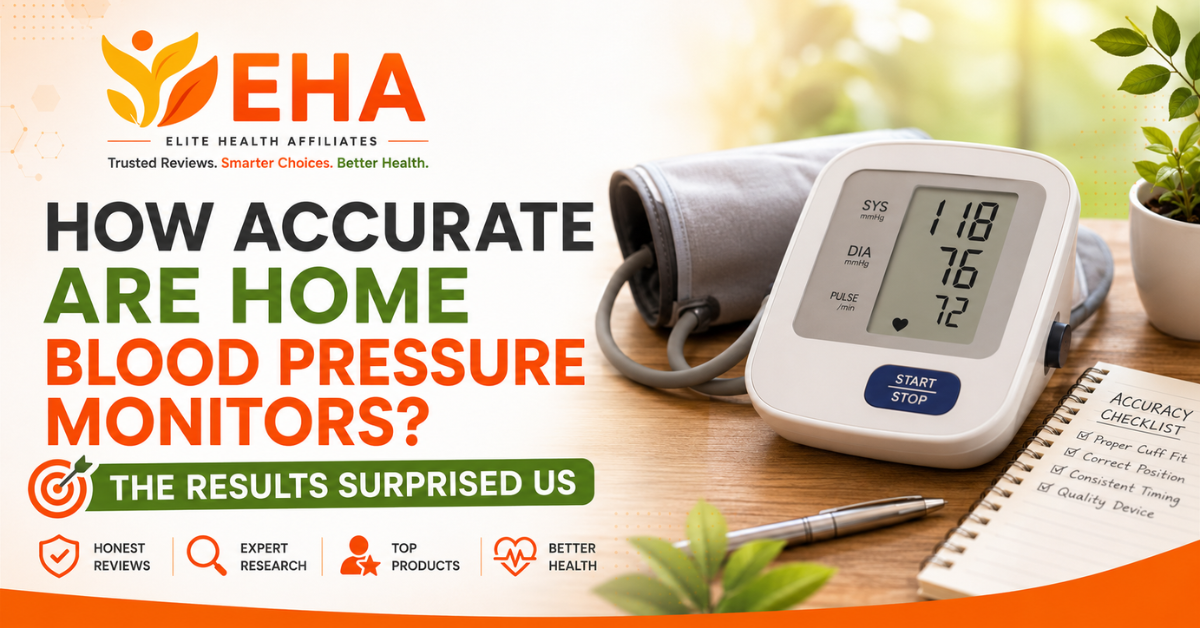
How accurate are home blood pressure monitors? The reassuring answer is that many upper-arm devices can provide dependable readings when they are properly validated, correctly fitted, and used under consistent conditions. However, the monitor itself is only one part of the accuracy equation.
Cuff size, arm position, posture, timing, movement, and even stress can all affect the numbers on the screen. That means a high-quality device may still produce confusing or inconsistent results when the testing routine changes from one reading to the next.
In this guide, we’ll explain what really determines home-monitor accuracy, why readings can vary, and whether advanced blood pressure monitors are actually more accurate or simply provide deeper cardiovascular insights beyond standard systolic and diastolic measurements.
This post contains affiliate links. If you purchase through them, we may earn a small commission at no extra cost to you.
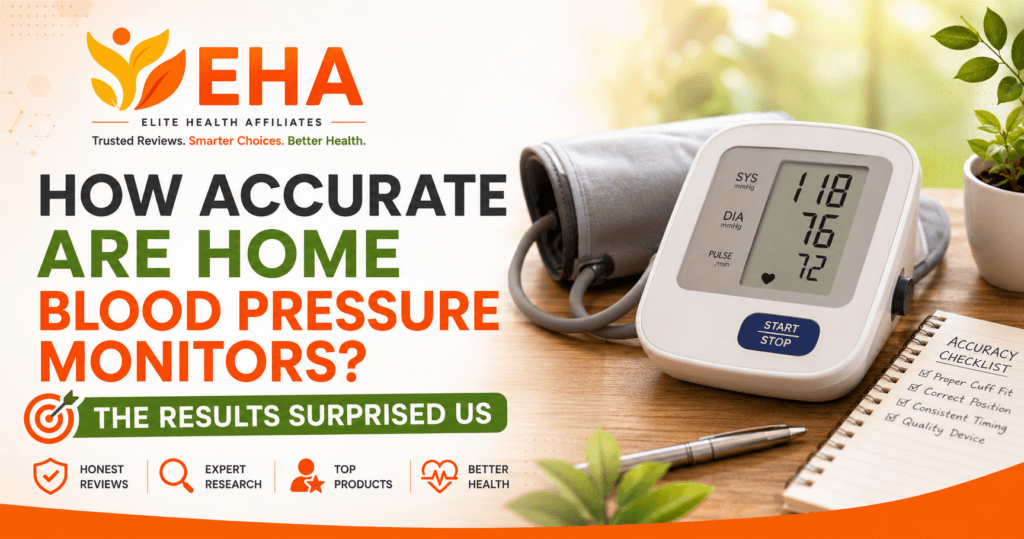
Table of Contents
How Do Home Blood Pressure Monitors Measure Blood Pressure?
Most home blood pressure monitors use oscillometric technology. Instead of listening to blood flow with a stethoscope, the device detects small pressure changes in the artery as the cuff inflates and gradually deflates. An internal algorithm then uses those signals to estimate systolic and diastolic blood pressure.
Because the process is automated, home monitors are generally easier to use than manual equipment. However, they do not measure blood pressure in exactly the same way a healthcare professional does with a stethoscope. The device relies on its sensors and calculation method, which is why validation and consistent use matter.
A properly designed upper-arm monitor can provide useful, repeatable readings for home tracking. The goal is not to expect every number to be identical, but to use the device under similar conditions so meaningful patterns become easier to recognize over time.
Are Home Blood Pressure Monitors Clinically Accurate?
Many home blood pressure monitors can provide readings that are close to those taken in a clinical setting, but not every device has been tested to the same standard. Clinical validation means a monitor has been compared with reference measurements under a recognized testing protocol.
Validation is different from marketing language that simply describes a monitor as accurate or medical grade. Shoppers should look for clear evidence that a device has undergone appropriate testing rather than relying only on claims printed on the box or product page.
Even with a validated device, small differences between home and office readings can occur. Technique, timing, stress, cuff fit, and normal blood pressure fluctuations all influence the result, so accuracy depends on both the monitor and the way it is used.
What Causes Inaccurate Blood Pressure Readings at Home?
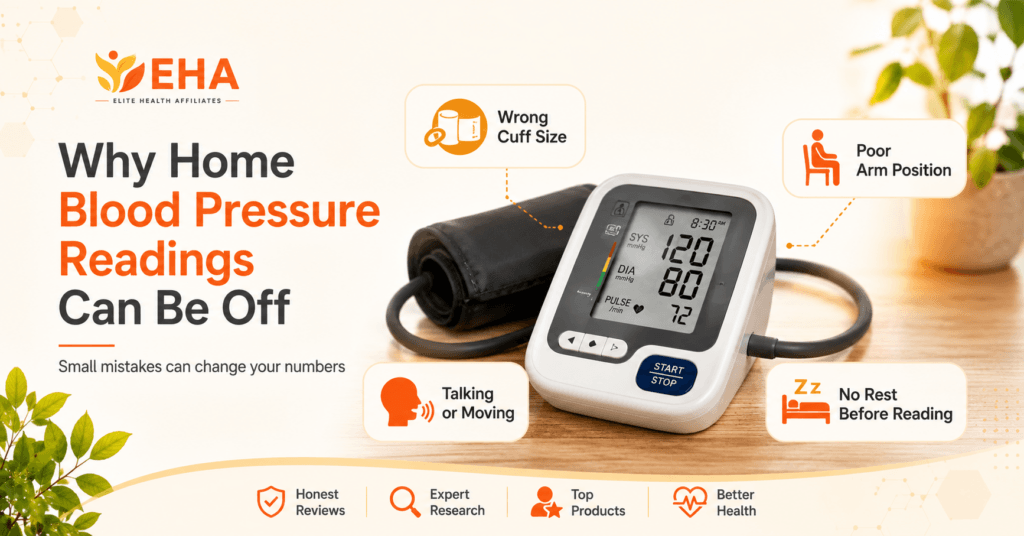
Many questionable home readings are caused by testing conditions rather than a faulty monitor. A cuff that is too small or too large, an unsupported arm, poor posture, movement, talking, or taking a reading immediately after activity can all affect the numbers.
Blood pressure also changes naturally throughout the day. Stress, caffeine, exercise, medications, and the time of measurement may cause one reading to differ from another even when the monitor is working properly. That is why one unusual result should be viewed in context rather than treated as the entire picture.
The most useful home monitoring comes from using the same arm, similar timing, proper cuff placement, and a consistent resting routine. When the process stays consistent, it becomes easier to tell the difference between a meaningful trend and a temporary fluctuation.
How to Get More Accurate Blood Pressure Readings at Home
A consistent routine is one of the best ways to improve the reliability of home blood pressure readings. Sit quietly for several minutes before testing, keep both feet flat on the floor, support your back, and place your arm on a table so the cuff is level with your heart.
The cuff should fit properly and be placed directly against bare skin rather than over clothing. Try to use the same arm, measure at similar times each day, and avoid checking immediately after exercise, caffeine, smoking, or a stressful event whenever possible.
Taking two readings about a minute apart can also provide a more useful picture than relying on a single number. Record the results and focus on patterns over time instead of reacting to one unusually high or low reading. For a broader look at device selection, see our Best Blood Pressure Monitor for Home Use guide.
Are Advanced Blood Pressure Monitors More Accurate?
Advanced blood pressure monitors are not automatically more accurate for standard systolic and diastolic readings. A properly validated traditional upper-arm monitor may provide equally dependable basic measurements when it is used correctly.
The advantage of an advanced device is usually the additional information it provides. Some models may estimate central blood pressure, arterial stiffness, or other cardiovascular measurements that standard monitors do not display. Our guide: Blood Pressure Devices for Home Use: Standard vs Advanced Monitoring explains that difference in more detail.
That extra data can be valuable for people who want a deeper view of their cardiovascular health, but it should not be confused with guaranteed improvement in ordinary blood pressure accuracy. The better choice depends on whether you need straightforward daily readings or broader health insights.
Should You Compare Your Home Monitor With a Doctor’s Reading?
Comparing your home monitor with a reading taken in a healthcare setting can help confirm that the device and cuff are working as expected. Bring the monitor to an appointment and ask whether you can take a reading using your normal technique.
The numbers may not match exactly because blood pressure changes from moment to moment, and the timing or equipment may differ. The goal is to determine whether the readings are reasonably consistent rather than expecting identical results.
This comparison is especially helpful when you begin using a new monitor, replace the cuff, or notice a pattern of readings that seems unusual. A healthcare professional can also check your technique and help determine whether the cuff size is appropriate. For product-specific testing details, our Oxiline Pressure XS Pro Review and Conneqt Pulse Review provide a closer look at how those monitors performed.
Which Type of Home Blood Pressure Monitor Is Usually Most Reliable?
Upper-arm blood pressure monitors are generally the best choice for dependable home readings because they measure pressure from the brachial artery and are less sensitive to positioning than wrist or finger devices. A properly fitted cuff and a consistent routine still matter, but upper-arm models usually make it easier to reproduce the same testing conditions.
Wrist monitors can be useful when an upper-arm cuff does not fit comfortably, but they must be held precisely at heart level to avoid misleading results. Even a small change in wrist position can affect the reading, which may make them harder to use consistently.
For most people, a validated upper-arm device offers the best balance of accuracy, convenience, and repeatability. The best choice is usually the monitor that fits correctly, is easy to use, and produces consistent readings under the same conditions.
Does a More Expensive Blood Pressure Monitor Mean Better Accuracy?
A higher price does not automatically guarantee more accurate systolic and diastolic readings. A straightforward monitor may provide dependable everyday measurements without the extra features found on a premium model.
More expensive devices often add larger displays, app connectivity, multiple-user storage, central blood pressure, arterial stiffness, or more detailed cardiovascular information. These features may improve convenience or provide deeper insight, but they should not be confused with guaranteed improvement in standard reading accuracy.
The better value depends on what you actually need. Someone focused on routine home tracking may be satisfied with a simpler device, while someone seeking broader cardiovascular information may see more value in an advanced monitor.
How Often Should You Check a Home Blood Pressure Monitor for Accuracy?
It is reasonable to compare a home monitor with professional equipment when the device is new, when readings begin to seem unusual, or when the cuff or monitor has been replaced. Bringing the device to a medical appointment allows the cuff fit, technique, and results to be reviewed under controlled conditions.
There is no single schedule that applies to every monitor or every user. Devices may continue working well for years, but cuff wear, damage, battery problems, improper storage, or changes in arm size can affect performance and consistency.
Pay attention to repeated error messages, sudden unexplained changes, difficulty inflating, or results that no longer make sense compared with your usual pattern. When concerns continue despite correct technique, the monitor should be checked against professional equipment or replaced.
How Accurate Is the Oxiline Pressure XS Pro?
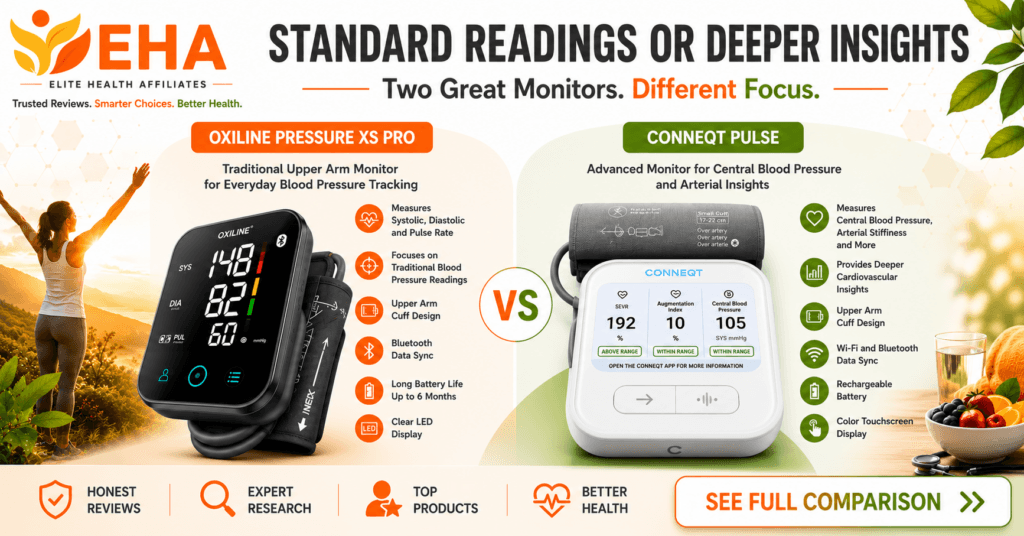
The Oxiline Pressure XS Pro is designed for straightforward upper-arm monitoring of systolic pressure, diastolic pressure, and pulse rate. Its value comes from making routine readings simple, easy to read, and repeatable without adding advanced cardiovascular measurements that many users may not need.
As with any home monitor, dependable results still depend on proper cuff fit, correct arm position, adequate rest, and consistent testing conditions. A well-designed device cannot completely overcome poor technique, so the monitor and the user’s routine work together to determine how trustworthy the readings are.
For a closer look at its consistency, testing experience, and the factors that may influence its results, read our Oxiline Pressure XS Pro Accuracy guide.
How Accurate Is the Conneqt Pulse?
The Conneqt Pulse measures standard blood pressure while also providing advanced information such as central blood pressure and arterial stiffness. Those additional measurements offer a broader cardiovascular picture, but they do not mean every standard systolic or diastolic reading will automatically be more accurate than one from a reliable traditional monitor.
Its main advantage is depth rather than a guaranteed improvement in basic readings. Someone who only wants straightforward daily tracking may not need the extra information, while a user interested in deeper cardiovascular insights may find the advanced measurements more useful.
Our Conneqt Pulse Accuracy article takes a closer look at its readings, testing process, and how its advanced measurements should be interpreted alongside standard home blood pressure results.
How Does the Conneqt Pulse Measure Advanced Cardiovascular Data?
The Conneqt Pulse begins with an upper-arm cuff measurement, much like a traditional home monitor. It then analyzes the pressure signals gathered during the reading to estimate measurements that extend beyond standard systolic and diastolic blood pressure.
These additional results include central blood pressure and arterial stiffness, which may provide more context about how pressure is affecting the arteries and cardiovascular system. They are intended to add perspective rather than replace the standard numbers most people already recognize.
Our guide: How the Conneqt Pulse Works explains the measurement process in more detail and shows how its advanced information differs from the readings provided by a traditional home blood pressure monitor.
Which Monitor Is Better for Everyday Home Use?
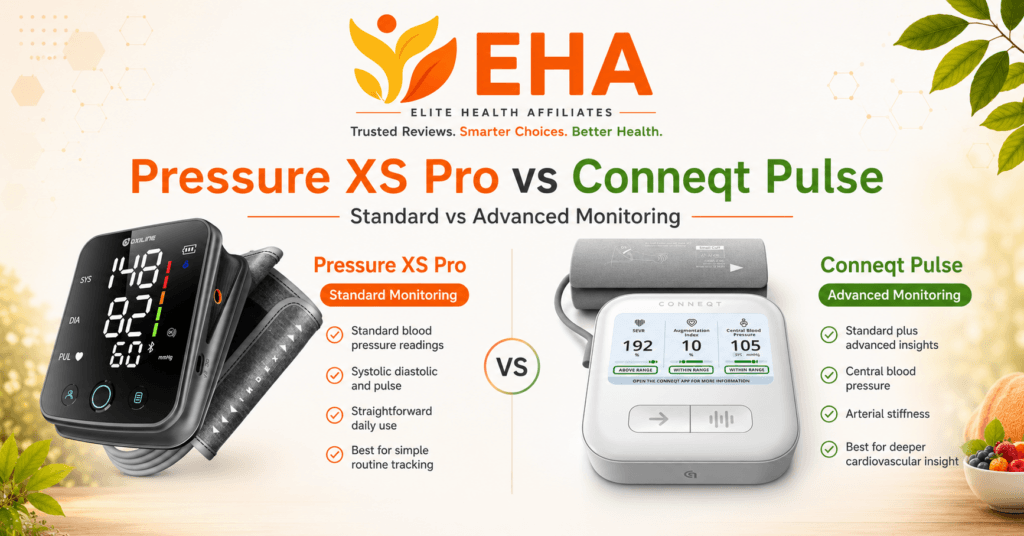
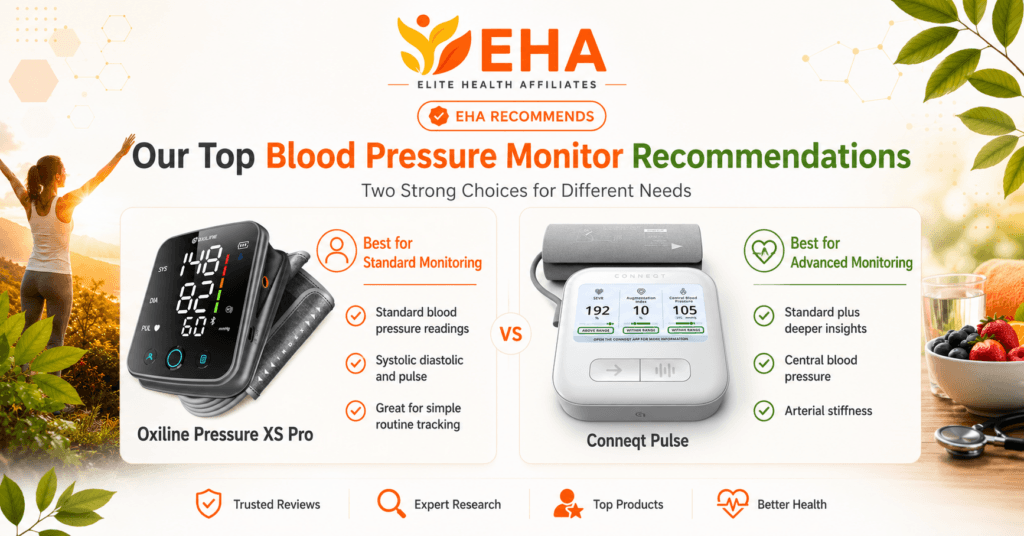
The better choice depends on what you want from home monitoring. Someone who primarily needs systolic pressure, diastolic pressure, and pulse readings may prefer the simpler experience of the Oxiline Pressure XS Pro. Its straightforward design keeps the focus on routine measurements without adding information that may not be necessary for everyday tracking.
The Conneqt Pulse is better suited to someone who wants standard blood pressure readings along with central blood pressure and arterial stiffness insights. Those added measurements provide a deeper look at cardiovascular health, although they do not automatically make its basic readings more accurate than those from a dependable standard monitor.
Neither approach is right for everyone. The best monitor is the one that fits your goals, is comfortable to use consistently, and provides information you can understand and use over time.
Is the Oxiline Pressure XS Pro Worth Buying?
The Oxiline Pressure XS Pro may be worth considering for someone who wants a modern upper arm monitor without paying for advanced cardiovascular measurements. It provides the familiar readings most people expect and presents them on a large, easy-to-read display. Its strongest appeal is simplicity.
You can use it for routine home monitoring without sorting through central blood pressure, arterial stiffness, or other advanced data that may be unnecessary for your needs.
Our Is the Oxiline Pressure XS Pro Worth Buying? guide examines its features, everyday usability, and overall value in greater detail.
Does the Conneqt Pulse Actually Work?
The Conneqt Pulse does provide standard blood pressure readings while also estimating central blood pressure and arterial stiffness. Its advanced measurements are intended to offer additional context beyond the numbers produced by a traditional home monitor. The value of those insights depends on what you want to learn from home monitoring.
Someone seeking a simple daily reading may not benefit enough to justify the added complexity, while a person interested in a broader cardiovascular picture may find the extra data worthwhile.
Our Does Conneqt Pulse Actually Work? article examines the testing experience, expected results, and practical value of its advanced monitoring features.
Frequently Asked Questions
Are home blood pressure monitors accurate?
Many upper-arm home blood pressure monitors can provide dependable readings when the cuff fits correctly and the device is used under consistent conditions. Accuracy depends on both the monitor and the user’s technique.
Why are my blood pressure readings different each time?
Blood pressure changes naturally throughout the day. Stress, movement, caffeine, medication timing, posture, cuff placement, and arm position can all cause one reading to differ from the next.
Are wrist blood pressure monitors accurate?
Wrist monitors can be useful, but they are more sensitive to positioning. The wrist must be held at heart level, and even a small change in position may affect the result. For most people, an upper-arm monitor is easier to use consistently.
Are advanced blood pressure monitors more accurate?
Not necessarily. Advanced monitors may provide additional information such as central blood pressure and arterial stiffness, but that does not automatically make their standard systolic and diastolic readings more accurate than those from a dependable traditional monitor.
How can I improve the accuracy of my home readings?
Rest quietly before testing, sit with your back supported, keep both feet flat on the floor, place the cuff on bare skin, and support your arm at heart level. Use the same arm and test under similar conditions whenever possible.
Should I compare my home monitor with my doctor’s equipment?
Yes. Bringing your monitor to an appointment can help confirm that the cuff fits properly, your technique is correct, and the readings are reasonably consistent with professional equipment.
How often should I replace a home blood pressure monitor?
There is no single replacement schedule for every device. Consider replacing it if it repeatedly gives error messages, the cuff is damaged, inflation becomes unreliable, or the readings no longer make sense compared with your usual pattern.
EHA Verdict

Home blood pressure monitors can provide dependable readings, but accuracy depends on more than the device alone. Proper cuff fit, correct positioning, adequate rest, and a consistent routine all play a major role in whether the numbers are useful and repeatable.
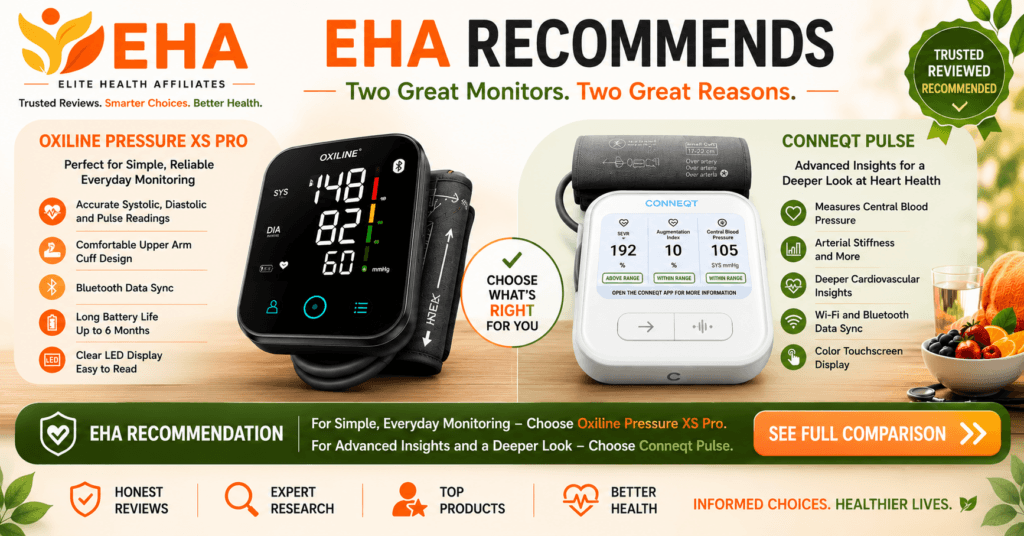
For straightforward daily monitoring, the Oxiline Pressure XS Pro is the better fit for people who mainly want systolic, diastolic, and pulse readings in an easy-to-use format. For those who want standard readings along with central blood pressure and arterial stiffness insights, the Conneqt Pulse provides a deeper look at cardiovascular health.
The best choice is not necessarily the most advanced or expensive monitor. It is the one that matches your goals, fits properly, and is simple enough to use consistently.
Our Recommended Blood Pressure Monitors
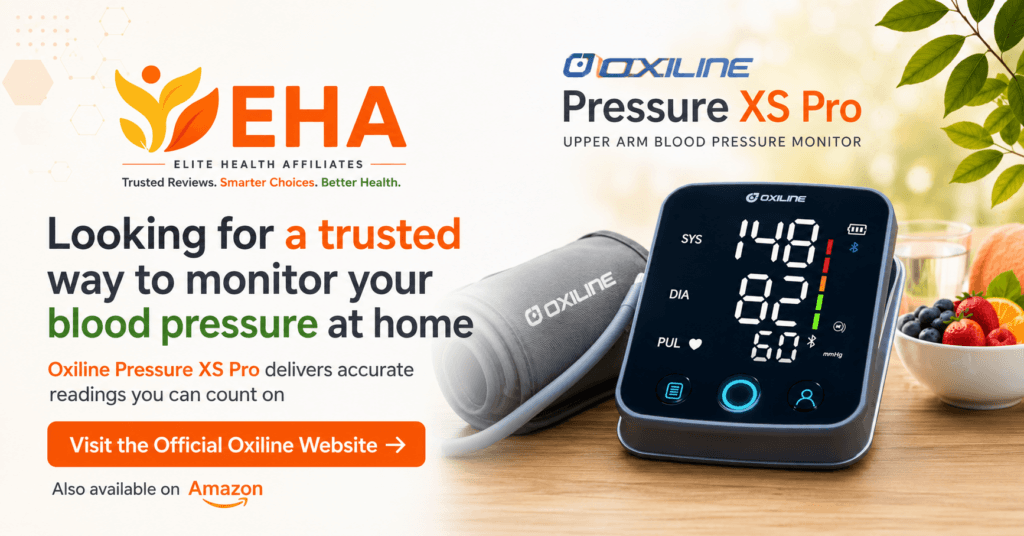
For simple, everyday home monitoring, we recommend the Oxiline Pressure XS Pro. It focuses on the standard readings most people need, including systolic pressure, diastolic pressure, and pulse, without adding advanced cardiovascular data that may not be necessary for routine use.
Ready for More Reliable Home Blood Pressure Monitoring?
Get 10% off with code EHA10 on the official website only
Prefer to Shop on Amazon?
Compare current Amazon pricing and availability before ordering
For those who want a deeper look at cardiovascular health, we recommend the Conneqt Pulse. Along with standard blood pressure readings, it provides central blood pressure and arterial stiffness insights that go beyond traditional home monitoring.
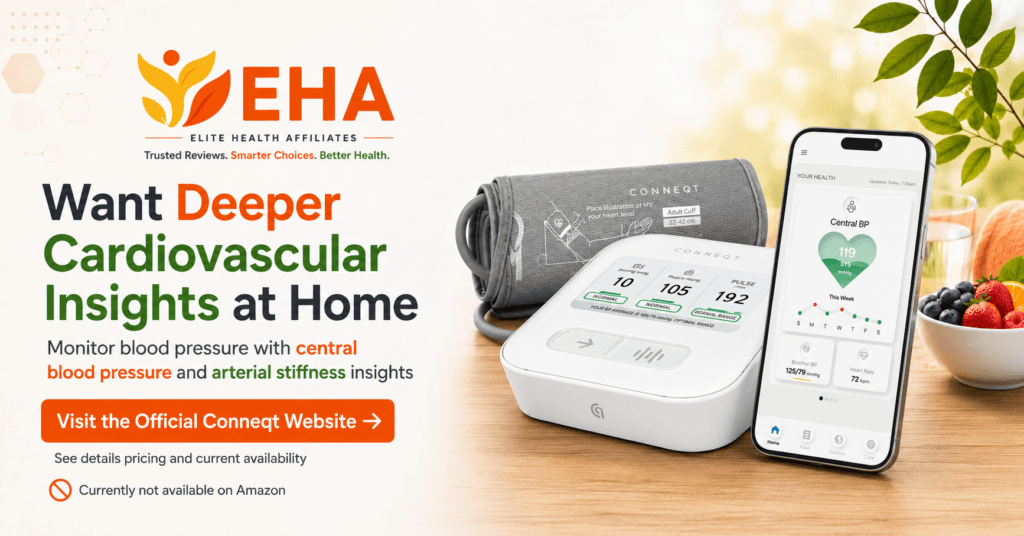
Ready for Deeper Cardiovascular Insights at Home?
View current pricing, product details, and availability on the official website only
Explore More Blood Pressure Monitor Reviews and Guides
Finding an accurate monitor is important, but the right device also needs to fit properly, match the level of information you want, and be simple enough to use consistently. Whether you are replacing an older monitor, trying to understand inconsistent readings, or choosing between straightforward daily tracking and deeper cardiovascular insights, our guides can help you compare your options and avoid paying for features you may not need.
Explore our complete collection of Blood Pressure Monitor Reviews and Guides for RN-tested reviews, accuracy articles, product comparisons, and practical home-monitoring information designed to help you choose with confidence.