
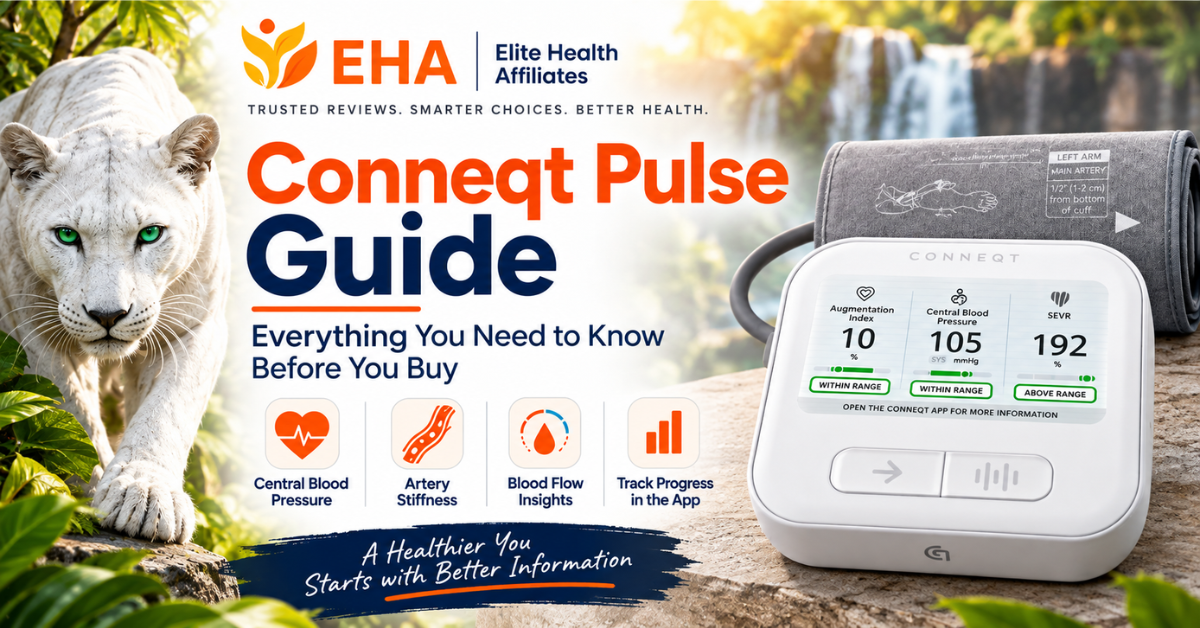
Our Conneqt Pulse Guide is your complete starting point for understanding what the Conneqt Pulse does, how its cardiovascular measurements work, and whether its added health insights make it worth considering over a traditional home blood pressure monitor.
The Conneqt Pulse goes beyond standard systolic and diastolic readings by providing additional information such as central blood pressure, arterial stiffness, and blood flow-related insights. Those extra measurements are what make the device stand out, but they also create more questions for buyers who want to understand exactly what they are getting.
In this guide, we bring together the most important details about how the Conneqt Pulse works, how accurate it is, what the companion app adds, and who may benefit most from its expanded cardiovascular tracking. We also link to our deeper Conneqt Pulse articles covering accuracy, how the technology works, whether it is worth it, and whether it actually delivers on its promises, giving you one central resource before you decide whether to buy.
This post contains affiliate links. If you purchase through them, we may earn a small commission at no extra cost to you.

Check pricing, features, and everything included on the official website
Table of Contents
What Is the Conneqt Pulse?
The Conneqt Pulse is an FDA-cleared vascular biometric monitor designed for home use. At first glance, it works much like a traditional upper-arm blood pressure monitor, but the information it provides goes considerably further. In addition to standard brachial blood pressure and heart rate, it uses SphygmoCor technology to provide measurements related to central blood pressure and arterial health.
That makes the Conneqt Pulse particularly interesting for people who want more information than a basic systolic and diastolic reading. Instead of looking only at the pressure measured in your upper arm, the device is designed to provide additional insight into what is happening closer to the heart and within the arteries.
The idea is not to replace your doctor or turn a home monitor into a diagnostic tool. Rather, the Conneqt Pulse gives you a broader set of cardiovascular measurements that can be tracked over time and, when appropriate, discussed with your healthcare provider.
For our complete hands-on look at the device, features, usability, and overall value, read our full Conneqt Pulse Review.
How the Conneqt Pulse Works
Using the Conneqt Pulse should feel familiar to anyone who has used an automatic upper-arm blood pressure monitor. You position the cuff around your upper arm and allow the device to inflate and take the measurement. Behind that familiar process, however, the Pulse is performing additional analysis.
The device uses Pulse Wave Analysis, or PWA, to analyze the pressure waveform created as blood travels through the arteries with each heartbeat. From that information, it can derive central blood pressure and several other vascular measurements that a standard home blood pressure cuff generally does not provide.
Conneqt built the Pulse around SphygmoCor technology, which has been used for years in cardiovascular research and clinical applications. That is one of the major differences between the Pulse and many consumer health gadgets that simply add more estimates or app features around an otherwise conventional blood pressure monitor.
If you want a deeper explanation of the technology and what happens during a reading, see our How the Conneqt Pulse Works guide.
What Does the Conneqt Pulse Measure?
This is where the Conneqt Pulse separates itself from a typical home blood pressure monitor. It provides the familiar measurements most people already recognize, while adding several measurements related to arterial function and central blood pressure.
Among the information available from the system are brachial blood pressure, heart rate, central blood pressure, central pulse pressure, augmentation pressure, augmentation index, and SEVR. These measurements look at different aspects of pressure, arterial stiffness, reflected pulse waves, and the relationship between blood supply and the workload placed on the heart.
Central blood pressure is particularly noteworthy because it reflects pressure closer to the heart rather than only pressure in the brachial artery of the upper arm. Augmentation pressure and augmentation index provide additional information related to reflected pressure waves and arterial stiffness, while SEVR provides another perspective on the balance between myocardial oxygen supply and demand.
You certainly do not need to become a cardiovascular specialist to use the device, but buyers should understand that the Conneqt Pulse produces considerably more information than a conventional blood pressure cuff. That added information is really the entire reason to consider it.
How Accurate Is the Conneqt Pulse?
Accuracy is understandably one of the first questions we would ask about any health monitor, particularly one making measurements beyond ordinary home blood pressure readings.
The Conneqt Pulse is FDA cleared and uses SphygmoCor technology, a platform supported by decades of hemodynamic research. Conneqt says its technology has been independently validated in research and used in thousands of peer-reviewed publications.
That does not mean every individual home reading will be perfect. As with any cuff-based blood pressure monitor, proper positioning, cuff fit, body movement, timing, and measurement technique can influence results. Consistency matters just as much as the technology inside the monitor.
For a closer look at validation, measurement technique, and what buyers should realistically expect, see our complete Conneqt Pulse Accuracy guide.
Does Conneqt Pulse Actually Work?
Yes, the Conneqt Pulse does what makes it different from an ordinary blood pressure monitor: it provides both traditional arm blood pressure measurements and additional central arterial measurements using Pulse Wave Analysis.
The more useful question is whether those additional measurements provide value to you. For someone who simply wants to know whether today’s blood pressure is 118/78 or 135/85, a much less expensive monitor may already provide the information they need. The Conneqt Pulse becomes more compelling when you actually want to follow broader cardiovascular and arterial-health trends.
The ability to take repeat measurements at home is important here. A single advanced measurement may be interesting, but following those measurements over weeks or months can provide considerably more context. The Conneqt app is designed to make that longitudinal tracking easier.
We examine that question in much greater depth in Does Conneqt Pulse Actually Work?, including where we believe the additional technology provides meaningful value and where it may be more than some buyers need.

The Conneqt App and Tracking Your Results
The Conneqt app turns the Pulse from a standalone monitor into more of a cardiovascular tracking system. Once paired, measurements can be transferred to the app so you can review previous results and look at changes over time rather than relying only on the numbers shown immediately after each reading.
The app provides historical tracking and trend views for individual metrics. Conneqt also offers assessments and reporting features designed to make the vascular measurements easier to interpret. Current Pulse purchases include 30 days of Care+ access, while ordinary measurements and results can continue to be viewed without a subscription after that introductory period.
We like that distinction because the basic functionality of the monitor is not locked behind a recurring subscription. Buyers who want the additional assessment and reporting tools can decide whether those services provide enough value to continue using them.
The app also makes the information easier to bring into a healthcare conversation. Rather than trying to remember a handful of readings, you can look at trends and potentially share a more complete history with your provider.
Who Is the Conneqt Pulse Best For?
The Conneqt Pulse makes the most sense for someone who already understands the value of monitoring blood pressure but wants to go further.
That could include someone actively following hypertension, a person interested in cardiovascular and arterial health, or someone who enjoys tracking health data and wants more meaningful information than another basic wellness score. It may also appeal to buyers who want data they can review over time and potentially discuss with their healthcare provider.
On the other hand, there is nothing wrong with deciding that you only need a dependable traditional blood pressure monitor. If your main goal is simply checking systolic and diastolic pressure at home, the extra vascular measurements may not justify the additional expense.
This is one of those products where the best buyer is not necessarily the person who wants the most features. It is the person who will actually use and follow the additional information.
Conneqt Pulse Pros and Cons
Pros
- More than standard blood pressure readings — Includes central blood pressure and additional vascular measurements
- FDA-cleared device — More than a typical consumer wellness gadget
- Uses established SphygmoCor technology — Built on technology with a long history in cardiovascular research
- Useful app-based trend tracking — Makes it easier to follow changes over time
- No subscription required for basic readings and results — Care+ adds optional features rather than locking basic monitoring behind a paywall
Cons
- More expensive than a conventional blood pressure monitor — You are paying for the expanded cardiovascular data
- Some measurements have a learning curve — Metrics such as augmentation index and SEVR may be unfamiliar
- Not everyone needs the added data — A basic monitor may be enough for someone who only wants standard blood pressure readings
- Advanced measurements may still need medical context — More data does not replace discussing unusual results or concerns with a healthcare professional
Is the Conneqt Pulse Worth It?
We think the Conneqt Pulse can absolutely be worth it for the right buyer, but the value comes from the measurements that go beyond conventional blood pressure.
If all you need is a basic home monitor, buying the Pulse solely to obtain ordinary systolic and diastolic readings would be difficult to justify. There are plenty of less expensive options that can handle that job.
The equation changes if central blood pressure, arterial stiffness, augmentation measurements, trend tracking, and broader cardiovascular information genuinely interest you. In that case, the Pulse is offering something substantially different instead of simply dressing up a normal blood pressure cuff with a nicer screen and mobile app.
That distinction is important. We would not recommend paying more simply because a device has more numbers. We would consider paying more when those additional numbers are exactly the information you want to track.
For our full value analysis, see Is Conneqt Pulse Worth It?
Conneqt Pulse FAQ
Is the Conneqt Pulse FDA cleared?
Yes. The Conneqt Pulse is an FDA-cleared medical device intended for blood pressure and central arterial measurements in professional or home settings.
Does the Conneqt Pulse measure regular blood pressure?
Yes. It measures conventional brachial systolic and diastolic blood pressure in addition to its more advanced cardiovascular measurements.
Does the Conneqt Pulse measure central blood pressure?
Yes. Central blood pressure is one of the primary measurements that differentiates the Pulse from a conventional home blood pressure monitor.
Does the Conneqt Pulse measure arterial stiffness?
The Pulse provides measurements such as augmentation pressure and augmentation index that offer information related to arterial stiffness and vascular function.
Do you need the Conneqt app to use the monitor?
The app expands the experience by storing results, displaying historical data, and providing additional insights. The user manual describes the app as an optional accessory, and readings can also be displayed on the Pulse itself.
Does Conneqt require a monthly subscription?
No subscription is required to continue taking measurements or viewing results in the app. Conneqt currently includes 30 days of Care+ access with the device, with additional reporting and assessment options available afterward.
How is the Conneqt Pulse different from a normal blood pressure monitor?
A traditional cuff primarily provides brachial blood pressure and heart rate. The Conneqt Pulse adds central blood pressure and additional vascular biomarkers designed to provide a broader view of cardiovascular and arterial function.
EHA Verdict

The Conneqt Pulse stands out because it is genuinely doing something different. This is not simply another Bluetooth blood pressure monitor with an app attached to it. Its central blood pressure and vascular measurements expand the amount of cardiovascular information that can be collected during a familiar upper-arm cuff reading.
We particularly like the combination of established SphygmoCor technology, FDA clearance, at-home convenience, and the ability to follow results over time. Those qualities give the Pulse considerably more substance than many health devices marketed primarily around novelty or an impressive-looking dashboard.
The biggest question is whether you will actually use the additional information. Buyers who only want an occasional blood pressure reading probably do not need this much monitor. Buyers who genuinely want a deeper look at their arterial health are the people most likely to appreciate what Conneqt has built.
Our verdict: The Conneqt Pulse is one of the more interesting options we have seen for people who want to go beyond conventional home blood pressure monitoring and gain a broader picture of cardiovascular trends.
Where to Buy the Conneqt Pulse
We recommend purchasing the Conneqt Pulse directly from the official Conneqt website. That gives you access to the current device package, cuff-size options, app support, included Care+ access, and any promotions Conneqt may currently be offering.
The standard package currently includes the Conneqt Pulse monitor, your selected cuff size, charging cable, user manual, Quick Start Guide, and 30 days of Care+ access.

Check pricing, features, and everything included on the official website
Explore More Blood Pressure Monitor Guides
Want to compare the Conneqt Pulse with other monitors or learn more about home blood pressure tracking? Visit our Blood Pressure Monitor Guides for additional reviews, comparisons, accuracy guides, and buying information.