

Learning how to get motivated to work out and stay consistent is difficult when we rely on willpower alone. We may begin with good intentions, plan a new routine, or feel excited about getting stronger, but that motivation can disappear quickly once soreness, busy schedules, stress, and low-energy days become part of the process.
The problem is not that we do not care about our health or lack the discipline to improve. Most workout routines fail because they are too difficult to start, too complicated to repeat, or too dependent on feeling ready. Consistency becomes much easier when the plan fits our real life and gives us a clear way to continue even when the enthusiasm is gone.
In this guide, we will show you how to remove the obstacles that make workouts easy to skip, build a routine that feels realistic, and stay committed without chasing perfection. The goal is not to complete an intense workout every day, but to create a dependable habit that helps us keep showing up and making progress over time.
This post contains affiliate links. If you purchase through them, we may earn a small commission at no extra cost to you.

Table of Contents
Why Workout Motivation Disappears
Workout motivation often feels strongest at the beginning because everything feels fresh. We may be excited about a new goal, a new piece of equipment, or the idea of feeling stronger and healthier. Once the routine becomes familiar, however, the effort can start to feel more noticeable than the reward.
Motivation also drops when progress feels slower than expected. We may not see changes in strength, energy, or appearance as quickly as we hoped, which can make each workout feel less meaningful. Comparing our results to someone else can make that frustration worse because it distracts us from the progress we are actually making.
Daily life matters too. Stress, poor sleep, work, family responsibilities, soreness, and limited time can all make a workout feel easy to postpone. Losing motivation does not mean we are lazy or incapable. It usually means we need a routine that is easier to begin, easier to adjust, and easier to continue.
Stop Waiting Until You Feel Motivated
Waiting until we feel motivated gives our mood too much control over whether the workout happens. Some days we may feel energized and ready, but on many others we will feel tired, distracted, or uninterested. If we only exercise when the timing feels perfect, consistency will always be difficult.
A better approach is to decide in advance what we are going to do and treat the workout like any other important commitment. We do not need to feel excited before we begin. We only need to follow the next step in the plan, even if that step is simply changing clothes and starting with a warm-up.
Motivation often shows up after movement begins. Once we start, the resistance usually becomes smaller and continuing feels easier than expected. The goal is not to force enthusiasm, but to make starting automatic enough that we do not have to wait for it.
Decide What Working Out Means for You
Working out does not have to mean spending an hour in a gym or following a complicated program. It can include strength training, resistance bands, bodyweight exercises, walking, cycling, short home workouts, or any combination that helps us become more active. The best routine is the one we can realistically repeat.
Defining what counts as a workout removes unnecessary pressure. A twenty-minute strength session can be enough, and a shorter routine on a busy day still matters. When we stop treating every workout as an all-or-nothing event, it becomes much easier to stay consistent.
It also helps to choose a routine that matches our goals. Someone trying to build strength may focus on resistance training, while someone trying to improve general fitness may prefer a mix of movement and strength work. A clear definition gives us a practical target and makes the next workout easier to plan.

Connect Your Workouts to a Stronger Reason
A workout is easier to skip when the only goal is vague, such as getting in shape or being healthier. Those goals matter, but they may not feel strong enough in the moment when we are tired, busy, or not in the mood. A more personal reason gives the routine meaning beyond the workout itself.
We may want more energy, greater independence, better strength, improved confidence, or the ability to keep up with the people and activities we care about. The clearer that reason becomes, the easier it is to remember why the effort matters. It gives us something more dependable than short-term motivation.
Writing the reason down can help keep it visible. We can place it near our workout area, add it to a planner, or keep it in a fitness journal. That reminder will not make every workout easy, but it can make skipping feel less automatic.
Make the First Workout Easy to Start
A workout can feel overwhelming before it begins, especially when we picture a long session or a difficult routine. That pressure makes it easier to postpone because the workout already feels exhausting in our minds. A smaller starting point lowers the resistance and makes action feel more realistic.
We might begin with five minutes, one exercise, or a short warm-up. Once we are moving, continuing often feels easier than expected. Even when the workout stays short, starting still protects the habit and reinforces the idea that showing up counts.
This approach also helps prevent the all-or-nothing thinking that ruins consistency. We do not need a perfect session every time. We need a version of the workout that is easy enough to begin and useful enough to repeat.
Build a Workout Schedule That Fits Your Life
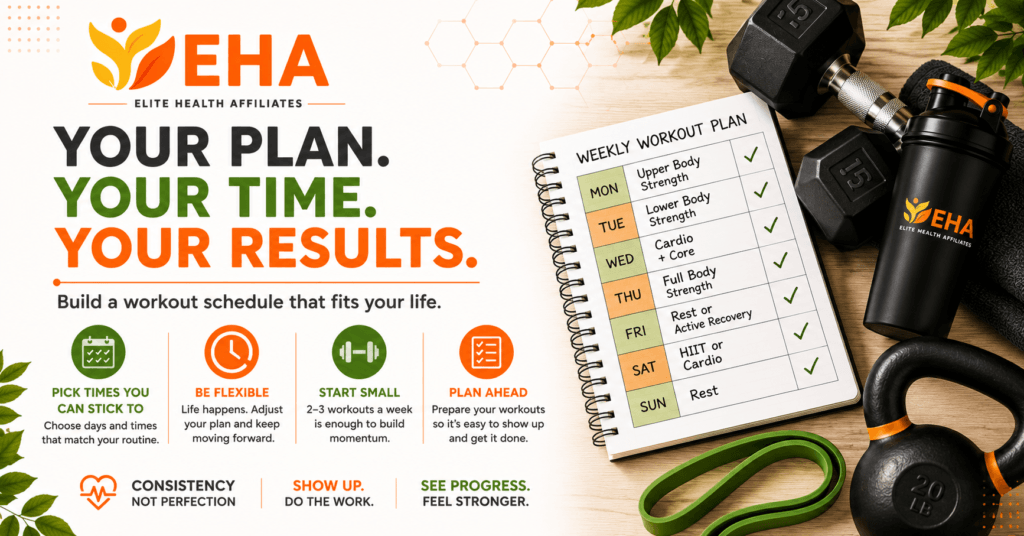
A workout schedule works best when it fits around the life we already have. If every session requires a perfect morning, extra energy, or a large block of free time, the plan will be difficult to maintain. A realistic schedule gives exercise a dependable place without making the rest of the week feel harder.
We can begin with two or three workouts and choose times that are usually available. Some people are more consistent in the morning, while others do better after work or later in the day. The best schedule is the one we can return to without constantly rearranging everything else.
Flexibility matters too. A missed morning workout can move to the evening, and a longer session can become a shorter one when the day gets busy. A schedule should help us stay consistent, not make us feel like we have failed whenever life changes.
Prepare Before It Is Time to Exercise
Many skipped workouts begin with small obstacles. We cannot find our shoes, the equipment is not ready, the room is cluttered, or we have not decided what routine we are going to follow. By the time we sort everything out, the motivation to begin may already be gone.
Preparing ahead removes those decisions from the moment. We can lay out our clothes, set up the equipment, choose the exercises, fill a water bottle, and decide how long the workout will be before the day gets busy. When the plan is ready, starting feels more automatic and there are fewer chances to talk ourselves out of it.
This preparation matters most on low-energy days. We may not feel excited, but we can still follow a plan we already made. The less effort it takes to begin, the easier it becomes to protect the habit.
Choose Workouts You Actually Enjoy
A workout routine is much easier to continue when we enjoy at least part of the experience. That does not mean every session has to feel fun, but the activity should feel like something we can tolerate, improve at, and eventually look forward to. Forcing ourselves into a routine we dislike makes consistency much harder than it needs to be.
Some people enjoy lifting weights, while others prefer resistance bands, bodyweight exercises, cycling, walking, or short circuit workouts. Trying different options can help us discover what feels natural and what keeps our attention. The best workout is not always the most intense one, but the one we are willing to repeat.
Enjoyment also comes from the way we structure the routine. Music, a favorite workout space, a training partner, or a clear challenge can make the session feel more rewarding. Small changes can turn exercise from an obligation into something that feels more personal.
Keep Your Routine Simple Enough to Repeat
A complicated workout plan may look impressive, but it can become difficult to follow. Too many exercises, constant changes, long sessions, and confusing schedules create more opportunities to skip. A simple routine makes it easier to know what to do and easier to measure whether we are improving.
We can begin with a small group of exercises that cover the major muscle groups and repeat them consistently. As strength and confidence improve, we can add variety without rebuilding the entire plan. Keeping the routine familiar reduces decision fatigue and makes each workout easier to start.
Simple does not mean ineffective. Progress comes from repeating useful movements, gradually increasing the challenge, and giving the body time to adapt. A routine we can follow for months will usually do more than a perfect plan we abandon after two weeks.

Focus on Consistency Instead of Perfect Workouts
A perfect workout plan is useless if it is too difficult to follow. Many people lose momentum because they expect every session to be long, intense, and completed exactly as planned. When real life interrupts, they feel like the workout no longer counts.
Consistency works differently. It allows us to complete a shorter session, reduce the weight, change the exercises, or simply do what is realistic that day. Those adjustments keep the habit alive and make it easier to return for the next workout.
Progress comes from repeated effort over time, not from one perfect week. A routine we can follow regularly will always be more effective than an ideal plan we rarely complete.
Track Progress Without Obsessing Over Results
Tracking progress can be motivating because it helps us see improvements that are easy to miss from one workout to the next. We can record the weight we lifted, the number of repetitions completed, the length of the workout, or how consistent we were during the week. These small details can show that the routine is working even before major physical changes become obvious.
The problem begins when every workout becomes a test. Constantly checking the mirror, the scale, or someone else’s progress can make steady improvement feel disappointing. It shifts our attention away from what we are building and toward results that may take more time.
A simple record is usually enough. We can look for gradual changes in strength, energy, confidence, and consistency without letting the numbers control how we feel about every session. Tracking should remind us that we are moving forward, not convince us that progress is never fast enough.
Use Strength Training to Build Confidence
Strength training does more than improve physical ability. It gives us clear evidence that we are becoming more capable, whether that means lifting a heavier weight, completing more repetitions, or performing an exercise with better control. Those improvements can make each workout feel more meaningful.
Confidence grows because strength is easy to notice in everyday life. Carrying groceries, climbing stairs, moving furniture, and completing daily tasks can all feel easier as we become stronger. That connection between the workout and real life gives us another reason to stay consistent.
We do not need an advanced program to benefit. Dumbbells, resistance bands, bodyweight exercises, and simple equipment can all support steady progress. The important thing is choosing movements we can perform safely, repeat regularly, and gradually make more challenging.

Have a Short Workout Ready for Busy Days
Busy days make it easy to believe a workout is not worth doing unless we have enough time for the full routine. That all-or-nothing thinking turns a smaller opportunity into a missed session. A short workout gives us a practical way to keep moving without pretending the day is less demanding than it really is.
We can prepare a ten- or fifteen-minute routine built around a few familiar exercises. Squats, rows, presses, lunges, resistance-band movements, or a quick circuit can provide enough structure to make the session feel purposeful. The goal is not to replace every full workout, but to have a dependable option when time is limited.
A shorter session still reinforces the habit. It reminds us that consistency does not require ideal conditions and that even a small amount of effort can keep the routine from disappearing. On busy days, doing less is often far better than doing nothing.
Create a Backup Plan for Low-Energy Days
Low-energy days are different from busy days because the time may be available even when the desire to exercise is not. Without a backup plan, it is easy to skip the workout completely and wait for a better mood. A lighter version of the routine gives us a way to stay active without forcing an intense session.
The backup plan might include fewer exercises, lighter resistance, more rest between sets, or a mobility-focused workout. We can also switch to walking, stretching, or a short resistance-band routine when a full strength session feels unrealistic. The important thing is choosing an alternative that still supports the habit.
Flexibility protects consistency. Adjusting the workout does not mean we are making excuses or giving up. It means we are responding to the day in a way that keeps us connected to the routine and makes it easier to return to normal.
Use Accountability When You Keep Skipping Workouts
Accountability can help when we repeatedly make plans but struggle to follow through. Knowing that someone else is aware of the goal can make the workout feel more concrete and harder to postpone. It also gives us support when motivation is low or progress feels slow.
We might work out with a friend, share our schedule with a family member, join a class, or check in with someone after each session. A coach or structured program can also provide direction and reduce the decisions that make workouts easier to skip. The best form of accountability is one that encourages consistency without making the routine feel punishing.
Accountability should support the habit, not create guilt. Missing a session should lead to an honest reset, not embarrassment or pressure to overcompensate. The goal is to make follow-through easier and help us return quickly when the routine starts to slip.

Reward the Habit, Not Just the Results
Results can take time, which makes them unreliable as the only source of motivation. If we wait until we lose weight, build visible muscle, or reach a major strength goal before feeling successful, the routine can start to feel unrewarding. Recognizing the habit itself gives us more reasons to keep going.
We can reward consistency by noticing completed workouts, sticking to the schedule, or returning after a difficult week. The reward does not need to be expensive or complicated. It might be new workout music, a relaxing evening, fresh gear, or simply checking off another successful week. The purpose is not to bribe ourselves into exercising. It is to reinforce the idea that showing up matters.
When consistency feels rewarding, the routine becomes easier to protect even before the larger results arrive.
Restart Quickly After Missing a Workout
Missing a workout does not erase the progress we have made. Schedules change, energy drops, and unexpected responsibilities can interrupt even a strong routine. The problem begins when one missed session turns into a long break because we feel guilty or believe we have already failed.
The best response is to return with the next realistic workout. We do not need to make up every missed exercise, double the intensity, or wait for the beginning of a new week. A simple restart helps rebuild momentum before the break becomes harder to overcome.
Consistency includes interruptions. What matters is how quickly we return and whether we keep moving forward. One missed workout is a small setback, but giving up completely is a decision we do not have to make.
Workout Equipment That Makes It Easier to Stay Consistent
The right equipment can make strength training more comfortable, convenient, and easier to repeat. A stable bench, resistance bands, adjustable dumbbells, or a simple power rack can create more workout options without requiring a crowded gym. The best equipment is the gear that fits the available space, budget, and type of training we actually plan to do.
Our Ultra Fuego Power Rack Review looks at a larger setup for home strength training, while the Reebok Deck Workout Bench Review covers a more compact option for presses, step-ups, and other exercises.
Readers who prefer a lighter and more flexible setup can also explore our Resistance Bands Workout Guide and Power Systems Resistance Bands Review.
We do not need to buy everything at once. One or two useful pieces of equipment can remove obstacles and make the routine easier to follow. The goal is to create a workout space that supports consistency instead of filling it with gear we rarely use.
For readers who want to compare simple equipment for building a home strength-training routine, Amazon offers a wide range of dumbbells, benches, resistance bands, and other practical options. Shop Strength-Training Equipment on Amazon →

Frequently Asked Questions About Workout Motivation
How do we get motivated to work out when we do not feel like it?
Make the first step smaller than usual. Changing clothes, doing a five-minute warm-up, or completing one exercise can reduce the resistance and make it easier to continue.
How many days a week should beginners work out?
Two or three manageable workouts each week can be a realistic starting point for many beginners. The best schedule is one that allows enough recovery and feels practical enough to repeat.
What should we do when we keep skipping workouts?
Look for the obstacle that keeps getting in the way. A shorter routine, a different workout time, prepared equipment, or added accountability may solve the problem more effectively than relying on more motivation.
Do short workouts still count?
Yes. A short, focused workout can protect the habit, improve fitness, and help us stay consistent on busy or low-energy days.
How do we start working out again after a long break?
Begin with lighter resistance, fewer exercises, and shorter sessions than before. Returning gradually makes the routine easier to manage and reduces the pressure to immediately perform at the same level.
Explore Fitness Equipment
The right equipment can make workouts easier to begin, more comfortable to complete, and better suited to the way we prefer to train. Strength-training gear, resistance bands, workout benches, fitness trackers, and other practical tools can all help create a routine that feels more convenient and repeatable.
Explore our Fitness Equipment reviews and guides for help comparing home workout gear, exercise benches, resistance bands, power racks, fitness trackers, and other equipment designed to support a more consistent routine.
Find the Right Motivation for Every Kind of Exercise
The motivation needed to begin exercising is not always the same as the motivation needed to keep following a workout plan. Some people struggle with taking the first step, while others begin easily but lose momentum once the routine becomes repetitive or life gets busy.
Our guide on how to get motivated to exercise focuses on overcoming the resistance that makes any form of movement difficult to begin. For readers who want help staying committed to a specific cardio goal, how to get motivated to run offers practical ways to rebuild momentum and continue when motivation fades.
The best strategy depends on the problem we are trying to solve. Once we understand whether we need help starting, staying consistent, or following through with a specific goal, it becomes easier to choose an approach that keeps us moving forward.
More Daily Motivation
Motivation will never feel the same every day, but the habits we build can help us continue when enthusiasm is low. Whether we are beginning a new routine, returning after a break, or trying to stay consistent through a busy season, practical strategies can make the next workout feel much more manageable.
Explore our Daily Motivation guides for more ways to overcome hesitation, rebuild momentum, and stay committed to healthier routines. The goal is not to feel inspired before every workout, but to have a dependable plan that helps us keep moving when motivation is missing.
Final Thoughts on How to Get Motivated to Work Out
Learning how to get motivated to work out and stay consistent is not about finding endless willpower. Motivation may help us begin, but realistic goals, simple routines, advance preparation, and flexible backup plans are what allow the habit to continue when life becomes difficult.
Some workouts will feel strong, while others may be shorter, lighter, or harder to begin. Adjusting the plan does not mean the routine has failed, and missing one session does not erase the progress we have made. Consistency comes from returning, making the next workout realistic, and continuing without demanding perfection.
The next workout does not need to be long or impressive. It only needs to be manageable enough that we can begin and useful enough that we are willing to return. Each time we show up, we strengthen both the body and the habit that keeps us moving forward.