
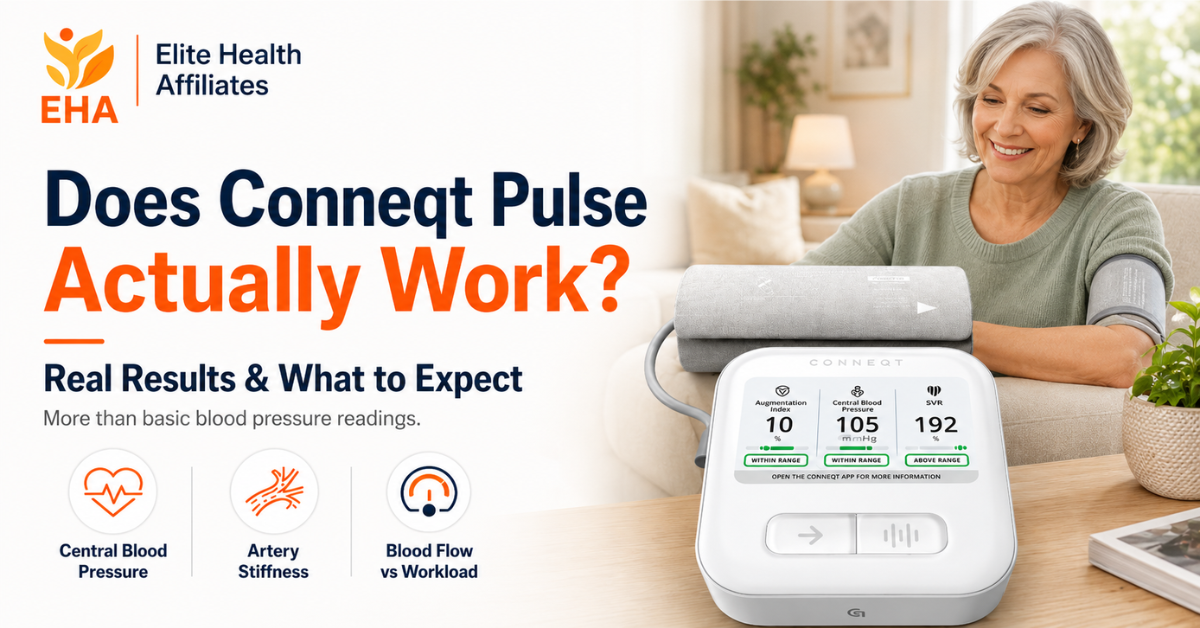
Does Conneqt Pulse work? Short answer: Yes — Conneqt Pulse works. But not in the way most people expect.
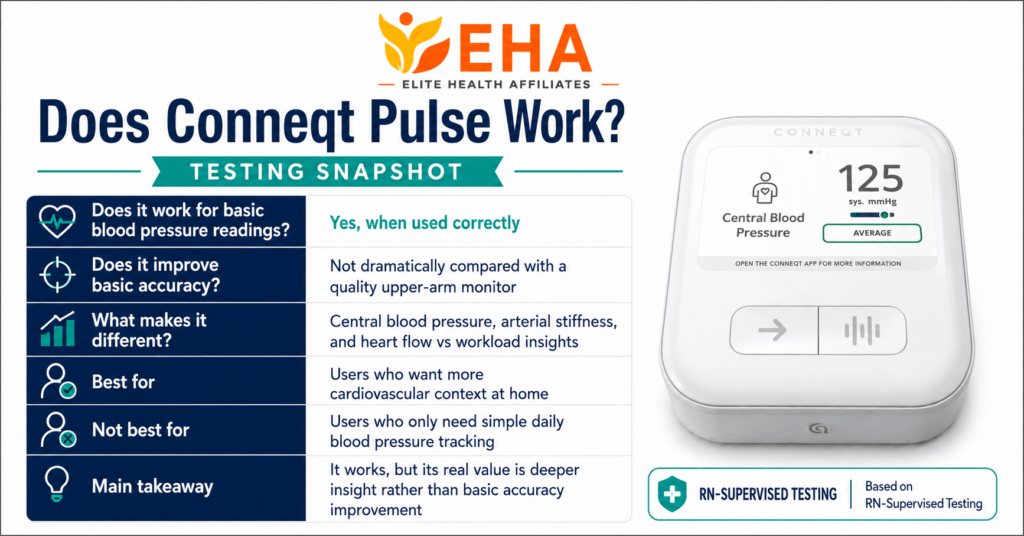
It delivers reliable systolic and diastolic readings when used correctly, just like other validated upper-arm devices. The difference is in what it adds. Conneqt Pulse provides additional insights like central blood pressure and arterial stiffness, giving a deeper view of cardiovascular health over time.
Most confusion comes from expectations. Many people assume “advanced” means more precise readings, but that’s not really the case. Standard monitors are already highly accurate when used properly. The real value of Conneqt Pulse is the extra data it provides — not a major jump in basic accuracy.
So, the better question isn’t just whether it works, but whether those added insights actually matter for your needs.
In this guide, we’ll break down real-world performance, what we found during testing, and who this type of monitoring is best suited for.
This post contains affiliate links. If you purchase through them, we may earn a small commission at no extra cost to you.
Looking for More Than Just Basic Blood Pressure Readings?
Explore pricing, features, and how it works before you decide
Table of Contents
How Conneqt Pulse Works in Real Use
Conneqt Pulse functions similarly to a standard upper-arm blood pressure monitor, but with additional data analysis built into the process. It uses an automated cuff to capture readings, then applies internal algorithms to estimate not only systolic and diastolic pressure, but also central blood pressure and arterial stiffness.
In real use, the experience is straightforward. The cuff inflates, the reading is taken, and results are displayed through the device or companion app. Where it differs is in the expanded data provided after each measurement, giving users more context beyond a single number.
For a deeper breakdown of the technology and what those additional metrics mean, see our detailed guide: How the Conneqt Pulse works.
What We Looked for During Testing
To determine whether Conneqt Pulse works, we focused on a few key areas: reading consistency, ease of use, stability over time, and usefulness of additional cardiovascular data.
Rather than focusing on a single reading, we evaluated performance across repeated use. This helps determine whether the device delivers reliable, repeatable results, which is far more important than any one measurement.
We also paid close attention to how much proper setup affected the experience. Like any home blood pressure monitor, the Conneqt Pulse depends on correct cuff placement, seated posture, a short rest period, and staying still during the reading. That is why we looked at repeated measurements and overall consistency instead of judging the device from one isolated number.
Real Results: What We Found
In testing, Conneqt Pulse delivered consistent systolic and diastolic readings when used correctly. Results stayed within expected ranges across multiple measurements, aligning with what you would expect from a validated upper-arm monitor.
Where it stood out was in the additional cardiovascular insights provided alongside each reading. Metrics like central blood pressure and arterial stiffness added context that standard monitors simply do not offer.
These added data points don’t replace traditional readings, but they do provide a clearer picture of long-term cardiovascular trends and overall heart health.
Does Conneqt Pulse Improve Accuracy?
This is one of the most common misconceptions.
Conneqt Pulse does not significantly improve basic systolic or diastolic accuracy compared to a properly validated standard monitor. Most high-quality upper-arm devices already operate within an accepted clinical margin of error.
What Conneqt Pulse provides is expanded insight — not a major increase in raw accuracy.
If your goal is simple tracking, a standard monitor is often enough. If your goal is a broader understanding of cardiovascular function over time, those additional metrics become more valuable.
For a deeper look at reading consistency and how it compares with a standard upper-arm monitor, see our full guide to Conneqt Pulse accuracy.
Who Conneqt Pulse Works Best For
Conneqt Pulse is best suited for users who want more than basic blood pressure readings and are focused on long-term cardiovascular insight.
It’s a strong fit for those who:
- Want deeper data beyond systolic and diastolic numbers
- Are tracking long-term trends
- Have risk factors like hypertension or diabetes
- Prefer a more data-driven approach to monitoring
Who It May Not Be Right For
This type of device may not be necessary for everyone.
Conneqt Pulse may not be the best fit if you only need simple daily blood pressure tracking or prefer a lower-cost, straightforward device without additional metrics.
In those cases, a standard validated monitor can provide everything needed for routine monitoring.
How It Compares to Standard Blood Pressure Monitors
Compared to standard monitors, Conneqt Pulse offers more detailed cardiovascular insight, but not a major difference in basic accuracy.
Standard devices focus on reliable core measurements and simplicity, while Conneqt Pulse is designed to provide expanded insight into how the heart and arteries are functioning over time.
The difference is not about better readings — it’s about more context around those readings.
For a full comparison, see our guide on standard vs advanced blood pressure devices for home use.
Pros and Cons of Conneqt Pulse
Pros
- Provides deeper cardiovascular insight beyond basic blood pressure readings
- Measures central (heart-level) blood pressure, offering a more complete view of cardiovascular strain
- Tracks arterial stiffness and additional vascular data for long-term health monitoring
- Helps users understand trends over time, not just single readings
- Offers more context around heart and vascular function than standard monitors
- Can support more informed conversations with healthcare providers
- Designed for users who want data-driven insight beyond daily numbers
Cons
- Does not significantly improve basic systolic and diastolic accuracy compared to standard validated monitors
- Higher cost than traditional blood pressure devices
- Additional metrics may feel unnecessary for users who only need simple tracking
- Requires some learning to fully understand advanced data
- May be more than needed for users without cardiovascular risk factors
If you’re mainly trying to decide whether the extra features justify the price, our guide on whether Conneqt Pulse is worth it breaks that down more directly.
Conneqt Pulse Alternatives for Simpler Blood Pressure Monitoring
Not everyone needs advanced cardiovascular data to monitor their blood pressure effectively.
If your goal is simple, consistent daily tracking, a standard upper-arm monitor may already provide everything you need. Most validated devices are capable of delivering reliable systolic and diastolic readings when used correctly.
For users who prefer a more straightforward approach, devices like the Oxiline Pressure XS Pro focus on ease of use and dependable measurement, without the added complexity of advanced metrics.
This type of monitor is best suited for those who want:
- Basic blood pressure tracking without extra data
- Consistent readings for daily monitoring
- A simple, easy-to-use experience
The key difference comes down to what you’re looking for:
Conneqt Pulse is designed for deeper cardiovascular insight.
Standard monitors are designed for simple, reliable measurement.
If you don’t need advanced metrics like arterial stiffness or central blood pressure, a straightforward device may be the better fit. But if you want a more complete view of long-term heart health, that’s where Conneqt Pulse stands apart.
For a closer look at how a standard device performs in real-world use, see our Oxiline Pressure XS Pro review.
Frequently Asked Questions
Does Conneqt Pulse work for blood pressure monitoring?
Yes — Conneqt Pulse provides reliable systolic and diastolic readings when used correctly. Its main difference is the additional cardiovascular data it offers, such as central blood pressure and arterial stiffness, rather than a major increase in basic accuracy.
Is Conneqt Pulse more accurate than standard blood pressure monitors?
Not for basic readings. Most validated upper-arm monitors already deliver strong accuracy. Conneqt Pulse focuses on providing deeper insight, not significantly improving systolic or diastolic precision.
What makes Conneqt Pulse different from regular monitors?
The key difference is that it provides more than just basic readings. In addition to systolic and diastolic pressure, it offers central blood pressure and arterial stiffness data, giving a broader view of cardiovascular health.
Do I need an advanced monitor like Conneqt Pulse?
Not necessarily. If you only need simple daily blood pressure tracking, a standard monitor is usually enough. Conneqt Pulse is better suited for those who want more detailed cardiovascular insight and long-term trend tracking.
Is Conneqt Pulse difficult to use?
No — the basic measurement process is simple and similar to standard monitors. The only difference is that it provides more data, which may take a little time to fully understand.
Can Conneqt Pulse replace doctor visits?
No. It’s designed for home monitoring and trend tracking, not diagnosis. It can provide helpful data, but it should be used as a supplement to professional medical care, not a replacement.
Is Conneqt Pulse worth it?
It depends on your needs. If you want deeper insight into cardiovascular health, it can be valuable. If you only need basic blood pressure readings, a standard monitor may be the better choice.
EHA Verdict

Yes — Conneqt Pulse works, but its real value isn’t in basic accuracy. It’s in the additional insight it provides.
For users who want more than standard blood pressure readings, the ability to track central blood pressure and arterial stiffness offers a deeper understanding of long-term cardiovascular health. That added context is what separates it from traditional monitors.
At the same time, it’s important to stay grounded in expectations. Conneqt Pulse does not dramatically outperform validated upper-arm devices in basic systolic and diastolic accuracy. Standard monitors are already highly reliable when used correctly.
The decision ultimately comes down to how much information you want.
If your goal is simple, consistent blood pressure tracking, a standard monitor will likely meet your needs. If you want a more complete picture of how your heart and arteries are functioning over time, Conneqt Pulse delivers meaningful added value.
Our verdict: Conneqt Pulse is a strong choice for users who want deeper cardiovascular insight, but not a necessary upgrade for those who only need basic monitoring.
Where to Get Conneqt Pulse
If you’re considering Conneqt Pulse, the best place to check current pricing, availability, and included features is through the official product listing.
It’s important to note that Conneqt Pulse is not available on Amazon, even though many users search for it there. Buying directly ensures you’re getting the latest version of the device, along with any current offers or updates that may not be available through third-party sellers.
It also helps avoid issues with outdated models, incomplete packages, or unauthorized listings, which can sometimes happen when purchasing from unofficial sources.
For a full breakdown of performance, features, and real-world use, see our Conneqt Pulse review.

Ready to See If Conneqt Pulse Is Right for You?
See pricing, features, and what’s included before you decide
Explore More Conneqt Pulse Guides
If you’re still comparing advanced blood pressure monitors and want to better understand what separates Conneqt Pulse from a standard arm cuff, explore our full Conneqt Pulse guide collection for more reviews, testing insights, and feature breakdowns.