
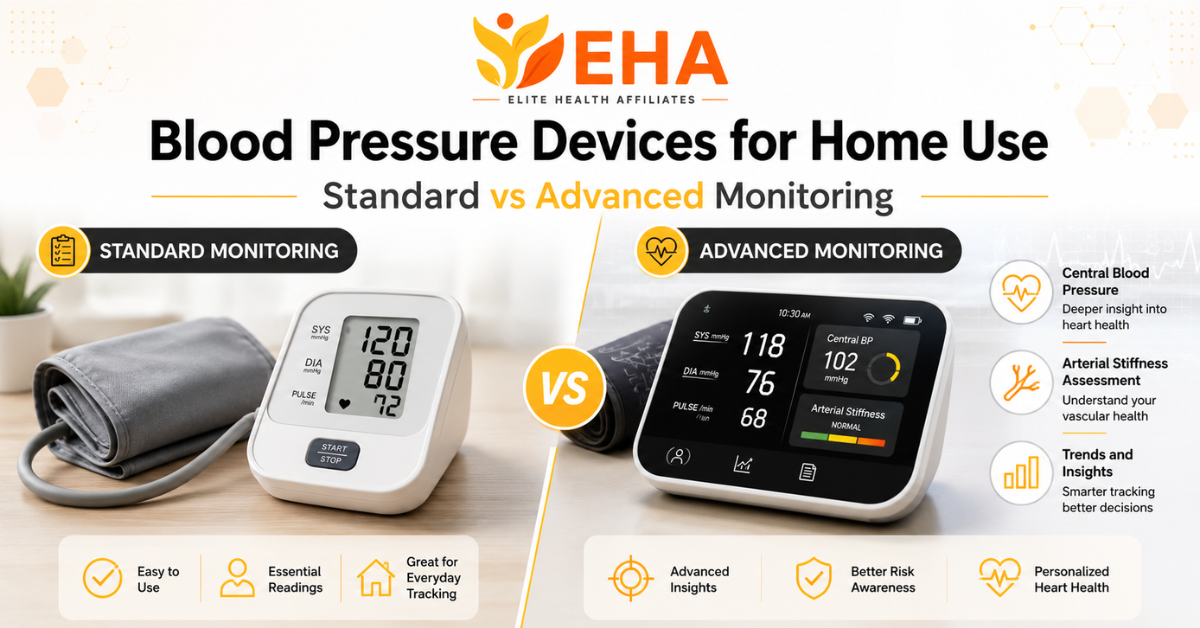
Choosing between blood pressure devices for home use can feel more complicated than it should. Some monitors provide the familiar systolic, diastolic, and pulse readings most people expect, while newer devices offer additional information designed to give users a broader view of their cardiovascular health.
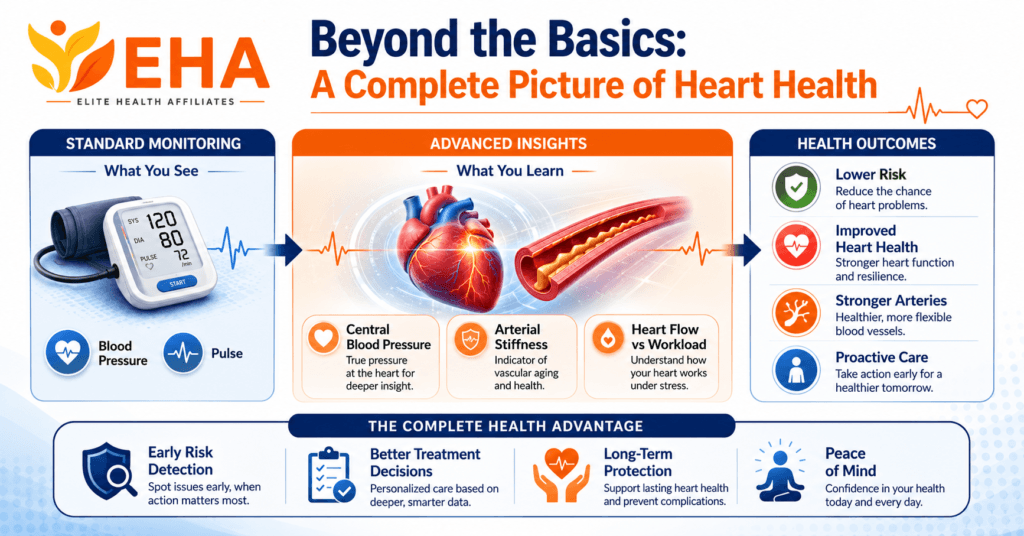
Standard upper-arm monitors remain a practical choice for simple, routine tracking. They are generally straightforward to operate, widely available, and often all that is needed for following everyday blood pressure trends. Advanced blood pressure devices go further by adding insights such as central blood pressure and arterial stiffness, which may help users better understand what is happening beyond the numbers measured at the arm.
Neither option is automatically right for everyone. In this guide, we will compare standard and advanced blood pressure devices, explain what each type measures, and help you decide whether straightforward daily monitoring or deeper cardiovascular insight better fits your needs.
This post contains affiliate links. If you purchase through them, we may earn a small commission at no extra cost to you.
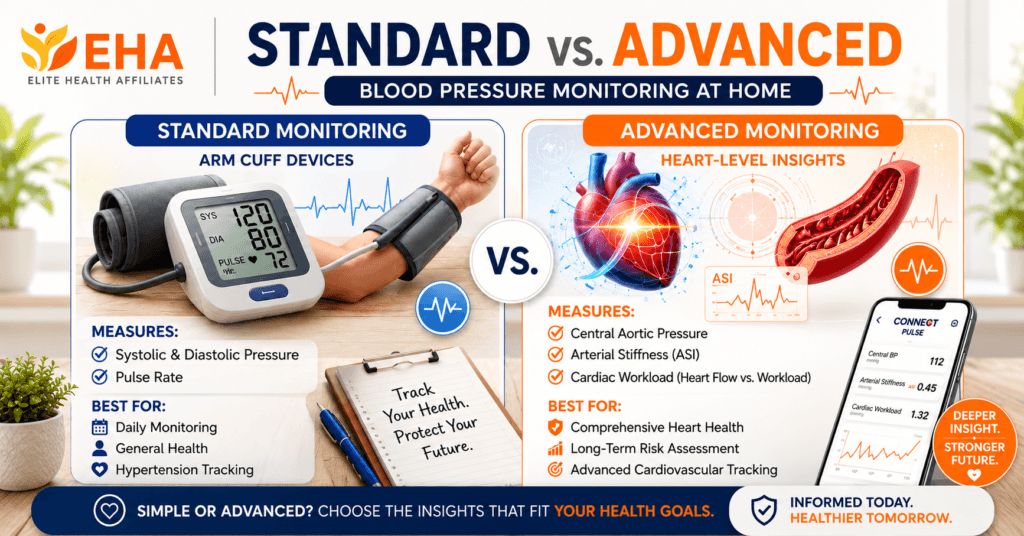
Table of Contents
Standard Blood Pressure Devices for Home Use
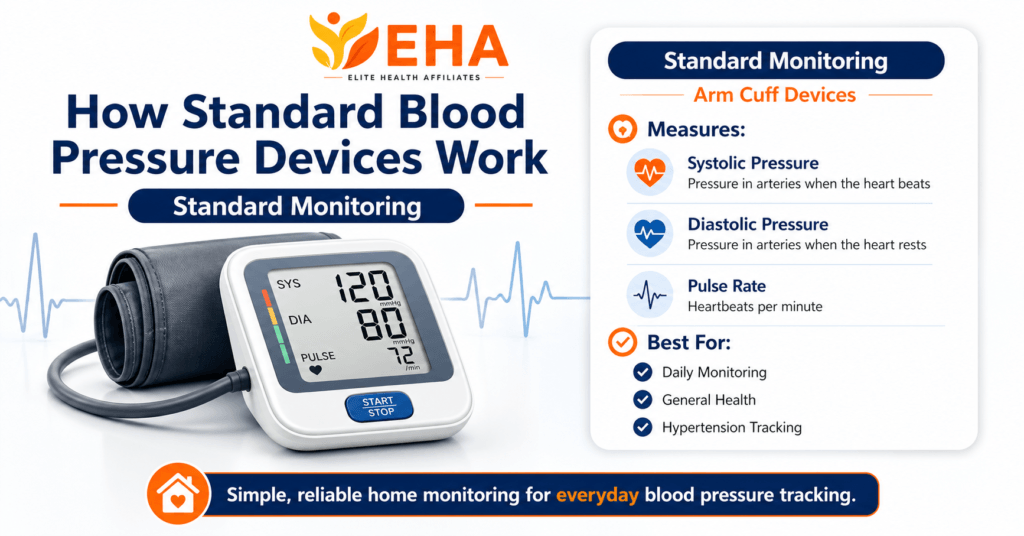
Standard blood pressure devices are the familiar upper-arm monitors most people use for routine home tracking. They measure systolic pressure, diastolic pressure, and pulse rate, giving users the core information needed to follow everyday blood pressure trends.
These monitors are usually the best fit for people who want a simple process without extra data to interpret. They tend to be easy to set up, straightforward to operate, and available at a wide range of prices. For many users, a dependable standard monitor provides everything needed to record readings and share changes with a healthcare provider.
The main limitation is that standard devices focus on pressure measured at the arm. They tell you what your blood pressure is at that moment, but they generally do not provide additional information about central blood pressure or arterial stiffness.
Advanced Blood Pressure Devices for Home Use
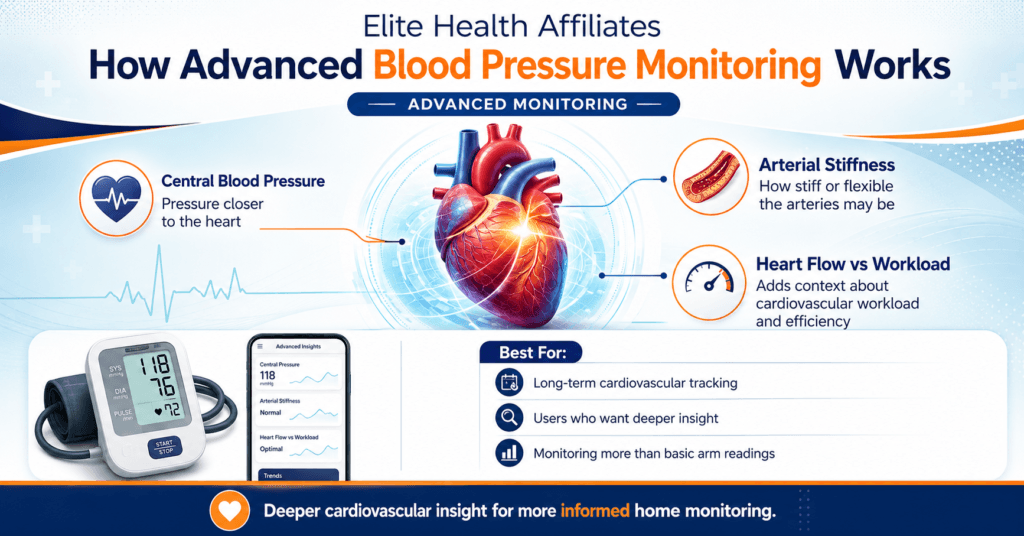
Advanced blood pressure devices include the same standard systolic, diastolic, and pulse readings but add measurements intended to provide more cardiovascular context. Depending on the device, these may include central blood pressure and arterial stiffness.
Central blood pressure estimates the pressure closer to the heart rather than only at the upper arm. Arterial stiffness provides information about how flexible or stiff the arteries may be. Together, these measurements can offer a broader look at cardiovascular trends than a standard monitor provides.
Advanced monitoring may appeal to people who enjoy following detailed health data, want more information to discuss with a healthcare professional, or are interested in understanding more than their daily arm-based readings. The tradeoff is that these devices usually cost more and may require more time to understand.
The Conneqt Pulse is one example of how advanced blood pressure devices go beyond standard arm-based readings. Our How the Conneqt Pulse Works guide explains how it estimates central blood pressure, evaluates arterial stiffness, and turns those measurements into information users can follow over time.
Standard vs Advanced Blood Pressure Devices at a Glance
| Feature | Standard Monitoring | Advanced Monitoring |
|---|---|---|
| Systolic and diastolic readings | Yes | Yes |
| Pulse rate | Yes | Yes |
| Central blood pressure | Usually no | Available on some devices |
| Arterial stiffness | Usually no | Available on some devices |
| Ease of use | Typically very simple | May require more familiarity |
| Best for | Routine daily tracking | Deeper cardiovascular insight |
| Typical cost | Lower | Higher |
A standard monitor is usually enough for someone who wants clear, dependable daily readings. An advanced device may be a better fit for someone who will genuinely use the additional cardiovascular information rather than simply paying for features they may never review.
Which Type of Blood Pressure Device Is Right for You?
Choose a standard monitor when your main goal is simple, reliable home tracking. These devices are usually the better fit for people who want to check systolic, diastolic, and pulse readings without reviewing additional cardiovascular data. Choose an advanced monitor when you want a broader view of what may be happening beyond the arm-based reading.
Measurements such as central blood pressure and arterial stiffness can provide more context, but that extra information is only worthwhile when you plan to use and understand it.
For a closer look at how the top options compare in everyday use, see our Best Blood Pressure Monitor for Home Use guide. It explains where standard options such as the Oxiline Pressure XS Pro and advanced devices such as the Conneqt Pulse may fit different users.
Readers who want to compare specific brands may find our Oxiline vs Conneqt vs Omron Comparison helpful. It breaks down how these three options differ in features, ease of use, advanced insights, and the type of user each monitor is best suited for.
How We Evaluated Standard and Advanced Devices
We evaluated both types of blood pressure devices under RN supervision with a focus on real-world home use. Rather than comparing feature lists alone, we looked at how easily each type could fit into a regular monitoring routine.
Our evaluation considered cuff comfort, setup, display clarity, reading consistency, ease of reviewing results, and how much explanation the additional data required. Standard monitors were generally easier to understand immediately, while advanced devices provided more information once the user became familiar with the measurements.
The goal was not to decide that one category is universally better. We wanted to understand which type offers the most practical value for different users and whether the added information from advanced monitoring justifies the higher cost and learning curve.
Are Advanced Blood Pressure Devices More Accurate?
Advanced devices are not automatically more accurate for standard systolic and diastolic readings. A well-designed standard upper-arm monitor can provide dependable results when the cuff fits correctly, and the device is used consistently.
The main advantage of advanced monitoring is not necessarily better basic accuracy. It is the additional context provided through measurements such as central blood pressure and arterial stiffness. These insights may help users better understand cardiovascular trends that a standard monitor does not show.
Anyone primarily concerned with the reliability of home readings should focus on validation, cuff fit, and repeatable results. Our How Accurate Are Home Blood Pressure Monitors? guide explains the factors that have the greatest effect on reading reliability.
Advanced features do not automatically make basic systolic and diastolic readings more accurate, but device-specific performance still matters. Our How Accurate Is the Conneqt Pulse? guide takes a closer look at its reading consistency, advanced measurements, and how it performed during RN-supervised testing.
Pros and Cons of Standard Blood Pressure Devices
Pros
- Usually easier to set up and use
- Focus on the core readings most people need
- Often more affordable
- Widely available from familiar brands
- A practical fit for routine daily monitoring
Cons
- Provide less cardiovascular detail
- Usually do not include central blood pressure
- Usually do not assess arterial stiffness
- May feel limited to users who want deeper long-term insights
For many households, those limitations are not a problem. A standard monitor can still provide useful, consistent readings without adding data that may never be reviewed.
Pros and Cons of Advanced Blood Pressure Devices
Pros
- Include standard blood pressure and pulse readings
- May provide central blood pressure
- May provide arterial stiffness insights
- Offer more context around cardiovascular trends
- Can be useful for people who want more detailed health information
Cons
- Usually cost more
- May require more time to understand
- Extra measurements may not be useful for every user
- Can feel unnecessarily complicated for basic daily checks
Advanced blood pressure devices offer more information, but more data does not automatically make them the better choice. Their value depends on whether the user will actually review and use those additional insights.
When Advanced Monitoring May Be Worth the Extra Cost
Advanced monitoring may be worth considering when you want more than a basic arm-based reading and are genuinely interested in following cardiovascular trends over time. It may also appeal to people who want more detailed information to discuss with a healthcare professional.
A device such as the Conneqt Pulse can provide central blood pressure and arterial stiffness insights that standard monitors generally do not offer. Our Conneqt Pulse Review takes a closer look at how those added measurements work in everyday home use.
A standard monitor remains the more practical choice when your priority is simple, dependable tracking. The extra cost of advanced monitoring only makes sense when the additional information supports the way you plan to monitor your health.
Frequently Asked Questions
What is the difference between standard and advanced blood pressure devices?
Standard blood pressure devices focus on systolic pressure, diastolic pressure, and pulse rate. Advanced devices include those same readings but may also provide central blood pressure and arterial stiffness for a broader view of cardiovascular trends.
Do I need an advanced blood pressure device?
Not necessarily. A standard upper-arm monitor is often enough for routine home tracking. An advanced device may be more useful when you want deeper information and are comfortable reviewing more than the basic numbers.
Are advanced blood pressure devices harder to use?
They can involve a little more explanation because they provide additional measurements. However, many advanced devices are still designed for home use and become easier to understand once you are familiar with the results.
Do standard blood pressure devices work well for most people?
Yes. For many users, a standard upper-arm monitor provides the core readings needed for everyday tracking. Simplicity can also make it easier to use the device consistently.
Can advanced blood pressure devices replace medical care?
No. These devices can help track trends and provide useful information, but they do not diagnose conditions or replace professional medical evaluation.
EHA Verdict

Standard and advanced blood pressure devices can both be valuable, but they serve different needs. A standard monitor is usually the better fit for straightforward daily tracking, while an advanced device is designed for users who want more cardiovascular context. For most people, a reliable standard upper-arm monitor is enough. It provides the core readings needed to follow blood pressure over time without adding information that may feel unnecessary or difficult to interpret.
Advanced monitoring becomes more appealing when you want central blood pressure, arterial stiffness, and a broader view of cardiovascular trends. The better choice is not automatically the more expensive device. It is the one that matches how much information you actually want to use.
Our Top Recommendations
For standard home monitoring, our top recommendation is the Oxiline Pressure XS Pro. It focuses on the core readings most people need—systolic pressure, diastolic pressure, and pulse rate—while keeping setup and everyday use straightforward. For a closer look at its performance, cuff design, and long-term value, read our Oxiline Pressure XS Pro Review.
View Oxiline Pressure XS Pro on the Official Website →
For advanced monitoring, our top recommendation is the Conneqt Pulse. In addition to standard blood pressure readings, it provides deeper cardiovascular insights such as central blood pressure and arterial stiffness. Our Conneqt Pulse Review explains how those added measurements work and who is most likely to benefit from them.
View Conneqt Pulse on the Official Website →
Explore More Blood Pressure Monitor Reviews and Guides
Choosing between standard and advanced monitoring is only one part of finding the right device. Browse our Blood Pressure Monitor Reviews and Guides for more RN-tested reviews, accuracy articles, product comparisons, and practical home-monitoring information.