
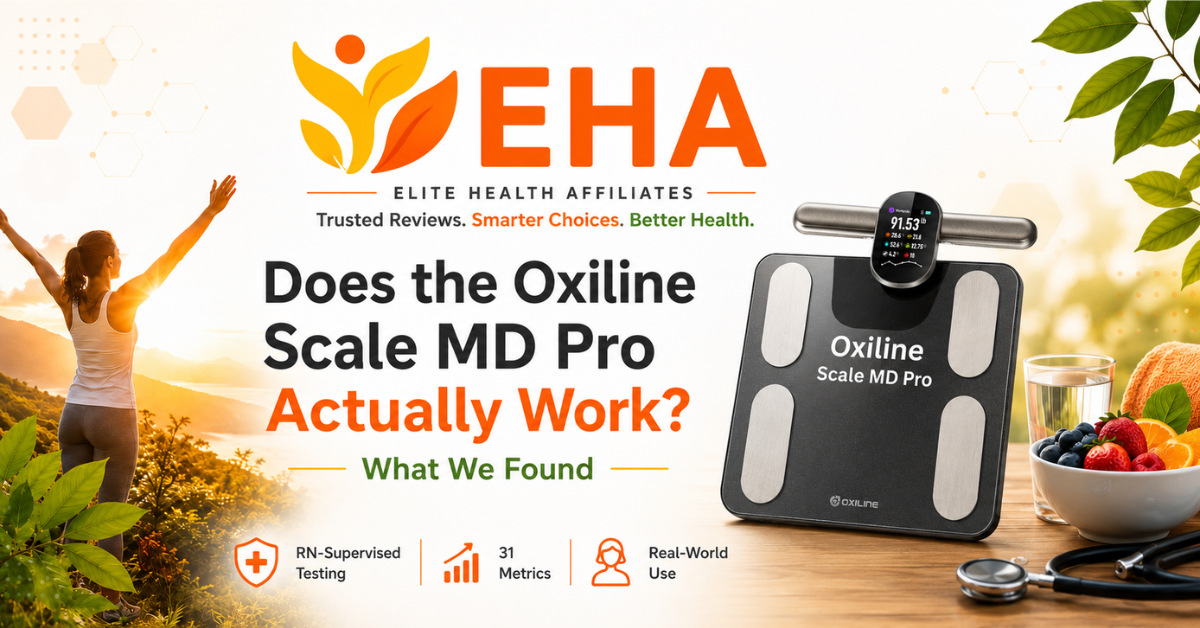
When asking does the Oxiline Scale MD Pro actually work, the real question is not whether it can produce a long list of numbers. It is whether those numbers are consistent, understandable, and useful enough to help someone follow meaningful changes over time. With 31 reported health metrics, the MD Pro promises far more than a standard bathroom scale—but that added detail can either be helpful or overwhelming depending on how the data is used.
We evaluated the Oxiline Scale MD Pro through repeated real-world use under registered nurse supervision, paying attention to weight consistency, body-composition trends, Bluetooth syncing, app usability, and whether the additional measurements provided practical insight. Because hydration, food intake, exercise, and timing can affect smart-scale readings, we focused on repeatability and longer-term patterns rather than expecting every individual metric to match medical-grade testing.
In this guide, we will explain how the MD Pro works, what we observed during testing, which of its 31 metrics are most useful, and who is most likely to benefit from the deeper level of tracking it provides. By the end, you should have a clear understanding of whether the Oxiline Scale MD Pro is a genuinely useful wellness tool or simply more technology than you need.
This post contains affiliate links. If you purchase through them, we may earn a small commission at no extra cost to you.
Table of Contents
Does the Oxiline Scale MD Pro Actually Work?
Yes, the Oxiline Scale MD Pro works well as a home body-composition and long-term trend-tracking tool. It provides consistent weight readings, organizes 31 reported health metrics through its companion app, and gives users a more detailed view of progress than a standard bathroom scale. It should not, however, be treated as a replacement for medical-grade testing.
The Oxiline Scale MD Pro combines a traditional digital weight measurement with bioelectrical impedance analysis, commonly called BIA. When you stand barefoot on the scale and hold the attached sensor bar, a very small electrical signal travels through the body. The scale then uses the resistance detected by that signal, together with profile information entered into the app, to estimate measurements such as body fat, muscle mass, body water, visceral fat, bone mass, and metabolic age.
The weighing process itself is quick. Once the reading is complete, the results sync through Bluetooth to the companion app, where users can review individual measurements and watch longer-term patterns develop. That app-based history is an important part of the MD Pro experience because many of the reported metrics become more meaningful when viewed across several weeks rather than as isolated numbers from one morning.
The MD Pro does not directly scan fat, muscle, or internal organs, and it should not be treated as a medical diagnostic device. Its value comes from combining frequent home measurements with organized trend tracking. For a complete look at the scale’s design, setup, app experience, features, and overall performance, read our Oxiline Scale MD Pro Review.
See current pricing, availability, and eligible offers from Oxiline
How We Tested the Oxiline Scale MD Pro
We evaluated the Oxiline Scale MD Pro through repeated real-world use under registered nurse supervision. Rather than judging it by a single weigh-in, we focused on the areas that matter most during everyday ownership: how easy the scale was to set up, whether repeated readings remained reasonably consistent, how reliably it connected to the app, and whether the additional health data was understandable enough to be useful.
Testing included repeated measurements under similar conditions so we could separate ordinary daily variation from potential problems with the device itself. We also watched how quickly results transferred to the app, whether the stored trends were easy to follow, and whether the 31 reported metrics added helpful context or simply created more information to sort through.
Hydration, meals, exercise, sodium intake, and the time of day can all influence BIA estimates, so we did not expect every body-composition result to remain identical. Instead, we looked for repeatability under comparable conditions and whether the broader direction of the data made sense over time.
For a deeper explanation of those variables and how much confidence to place in the results, read our Oxiline Scale MD Pro Accuracy Guide.
What We Found During Real-World Use
The strongest finding was that the Oxiline Scale MD Pro works best as a long-term health and body-composition tracking tool rather than a source of perfect daily precision. Weight readings were fast and reasonably consistent during repeated use, while Bluetooth syncing was straightforward and transferred results to the companion app without creating much extra work.
The added measurements gave us more context than weight alone. Body fat, muscle mass, body water, visceral fat, and similar readings made it easier to see how broader body-composition patterns were developing. At the same time, not every one of the 31 metrics felt equally important, and users may need time to learn which measurements are most relevant to their own goals.
The amount of information can initially feel overwhelming, especially for someone accustomed to a scale that displays only body weight. Once the data is viewed as a collection of trends rather than 31 exact clinical measurements, the experience becomes easier to understand. The scale felt most useful when it was used under similar conditions and the results were followed over weeks and months instead of reacting to small daily changes.
The MD Pro is Oxiline’s most detailed option, but that does not automatically make it the best model for every household. For a clearer look at how its deeper tracking compares with Oxiline’s simpler choices, read our Oxiline Scale Comparison.
See the Oxiline Scale MD Pro on Amazon →
Are the 31 Health Metrics Actually Useful?
Some of the Oxiline Scale MD Pro’s 31 reported metrics are genuinely useful, while others are likely to matter only to users with specific goals. Weight, body-fat percentage, muscle mass, body water, visceral fat, and BMI provide the clearest everyday value because they help place changes in body weight within a broader body-composition picture. Someone who is losing weight, for example, may find it encouraging to see muscle remain relatively stable while body-fat trends move downward.
The more advanced readings should be approached differently. Measurements such as metabolic age, bone mass, and other calculated values may add context, but they are still estimates produced through BIA and predictive formulas. They should not be interpreted as exact clinical findings or allowed to overshadow the handful of trends that are most relevant to your goals.
This does not mean the additional metrics are meaningless. Their usefulness depends on whether they help you recognize patterns, stay engaged, or make sense of progress that would not be visible through body weight alone. The MD Pro becomes easier to use once you choose several meaningful measurements and treat the rest as supporting information rather than 31 numbers that all require equal attention.
For a broader look at what home smart scales can realistically measure, and which results deserve the most attention, read our Best Smart Scale for Body Fat Accuracy That Actually Works.
Who Is the Oxiline Scale MD Pro Best For?
The Oxiline Scale MD Pro is best for people who want detailed, data-driven tracking and are willing to use the scale consistently enough for meaningful trends to develop. It makes the most sense for users following weight-loss progress, body-composition changes, muscle-building goals, fitness routines, or broader wellness improvements over time.
It may also appeal to someone who finds additional data motivating. Seeing weight alone remain unchanged can sometimes feel discouraging, while shifts in estimated body fat, muscle, or body water may provide more context about what is happening. The companion app also makes the MD Pro a stronger fit for users who enjoy reviewing charts and monitoring patterns rather than relying on occasional weigh-ins.
The MD Pro is probably more scale than necessary for someone who wants only a quick weight reading or has little interest in using an app. It is also a poor match for anyone expecting each body-composition result to deliver hospital-grade precision. The scale is designed to support home wellness tracking, not replace professional evaluation or diagnostic testing.
For people who like the idea of smart-scale tracking but do not need the MD Pro’s full depth, the simpler Oxiline Scale XS Pro Review may point to a more practical everyday option.
Oxiline Scale MD Pro Pros and Cons
The Oxiline Scale MD Pro offers considerably more insight than a standard bathroom scale, but its deeper tracking comes with a learning curve. Understanding both sides of the experience can help you decide whether those extra measurements will be useful or simply create more data than you want to manage.
Pros
- Tracks 31 reported health and body-composition metrics
- Provides consistent, straightforward weight measurements
- Helps users follow longer-term body-composition trends
- Syncs measurements to the companion app through Bluetooth
- Offers more context than body weight alone
- Supports multiple fitness, weight-loss, and wellness goals
- Simple to incorporate into a regular weighing routine
Cons
- Most body-composition measurements are estimates
- Hydration, meals, exercise, and timing can affect results
- Thirty-one metrics may feel overwhelming at first
- Consistent testing conditions are important for useful trends
- Not intended to replace professional or medical testing
These limitations do not prevent the MD Pro from working as intended. They simply define what the scale is designed to do. Users who want detailed home trend tracking are likely to see the depth as an advantage, while those who prefer simplicity may find a less advanced model easier to live with.
Our testing showed that the Scale MD Pro does provide useful measurements and consistent trend tracking, but performance is not the same as value. Read our guide: Is the Oxiline Scale MD Pro Worth It? for our closer look at its price, advantages, limitations, and who should consider buying it.
Save 10% with code EHA10 on eligible official-site orders only
Is the Oxiline Scale MD Pro Worth It?
The Oxiline Scale MD Pro is worth considering for users who want more than a basic weight reading and will regularly use the additional information it provides. Its strongest value comes from combining consistent weight measurements with app-based tracking for body fat, muscle mass, visceral fat, body water, and other estimated metrics. That broader view can make progress easier to understand, especially when body weight alone does not tell the complete story.
The scale becomes less valuable when the additional data is ignored. Someone who weighs occasionally, never reviews the app, or prefers a simple number on the display may be paying for features they will rarely use. The same is true for buyers expecting every measurement to function like a clinical test. The MD Pro is designed to reveal patterns and support accountability, not provide diagnostic certainty.
During our evaluation, the app was straightforward, readings were reasonably consistent under similar conditions, and the stored data made longer-term changes easier to follow. For the right user, those benefits make the MD Pro more informative and engaging than a standard digital scale.
People who want smart tracking without the MD Pro’s deeper feature set may also consider Oxiline’s most basic option. Our Oxiline Scale X Pro Review explains what the simpler model tracks and who may prefer it.
Frequently Asked Questions
Does the Oxiline Scale MD Pro actually work?
Yes. The Oxiline Scale MD Pro works well for tracking weight and estimated body-composition trends at home. Its measurements are most useful when the scale is used regularly under similar conditions and the results are evaluated over time rather than judged by one reading.
How accurate is the Oxiline Scale MD Pro?
Weight readings were reasonably consistent during repeated use. Body-composition measurements are estimates created through BIA, so hydration, meals, exercise, sodium intake, and timing can cause them to fluctuate. The scale is better suited to tracking direction and consistency than delivering medical-grade precision.
What does the Oxiline Scale MD Pro measure?
The MD Pro reports 31 health and body-composition metrics. These include weight, body-fat percentage, muscle mass, visceral fat, BMI, body water, metabolic age, bone mass, and additional calculated measurements.
Does the Oxiline Scale MD Pro require a subscription?
The source article states that the companion app does not require an ongoing paid subscription. Users can sync, store, and review measurements without a monthly fee.
Can multiple people use the Oxiline Scale MD Pro?
Yes. The app supports separate user profiles, allowing multiple household members to track their own measurements and progress independently.
Is the Oxiline Scale MD Pro available on Amazon?
Yes. The Oxiline Scale MD Pro is available through Amazon as well as Oxiline’s official website. Compare current pricing, seller information, shipping, returns, and warranty terms before deciding where to order.
EHA Verdict

Yes, the Oxiline Scale MD Pro actually works—and it works best for people who want detailed home tracking rather than a simple bathroom scale. Weight measurements were straightforward and reasonably consistent during repeated use, Bluetooth syncing was easy, and the companion app made it practical to follow changes across multiple health metrics.
Its biggest strength is not any one body-fat or muscle reading. It is the ability to show how several measurements move together over time. That added context can make progress feel more meaningful and may help users remain engaged when body weight alone changes slowly.
The MD Pro is not a clinical instrument, and its advanced measurements should be viewed as estimates. Buyers who understand that distinction are likely to find the scale useful, while those expecting exact diagnostic results may be disappointed.
Our verdict is that the Oxiline Scale MD Pro is a capable and genuinely useful smart scale for data-focused users. It delivers more insight than a traditional scale, but its value depends on consistently using the device, reviewing the trends, and focusing on the measurements that matter most to your goals.
Where to Buy the Oxiline Scale MD Pro
The Oxiline Scale MD Pro is available through both Oxiline’s official website and Amazon. Buying directly may be the better fit for shoppers who want manufacturer support, official promotions, and access to the current direct-purchase warranty terms. Amazon may be more convenient for people who prefer familiar checkout, shipping options, and recent customer feedback.
Before ordering, compare the current price, seller, delivery estimate, return policy, and warranty coverage. Those details can differ between the two purchasing routes and may change over time. The existing article identifies both options and notes that the official website may include longer-term manufacturer coverage, while Amazon purchases follow Amazon’s applicable policies.
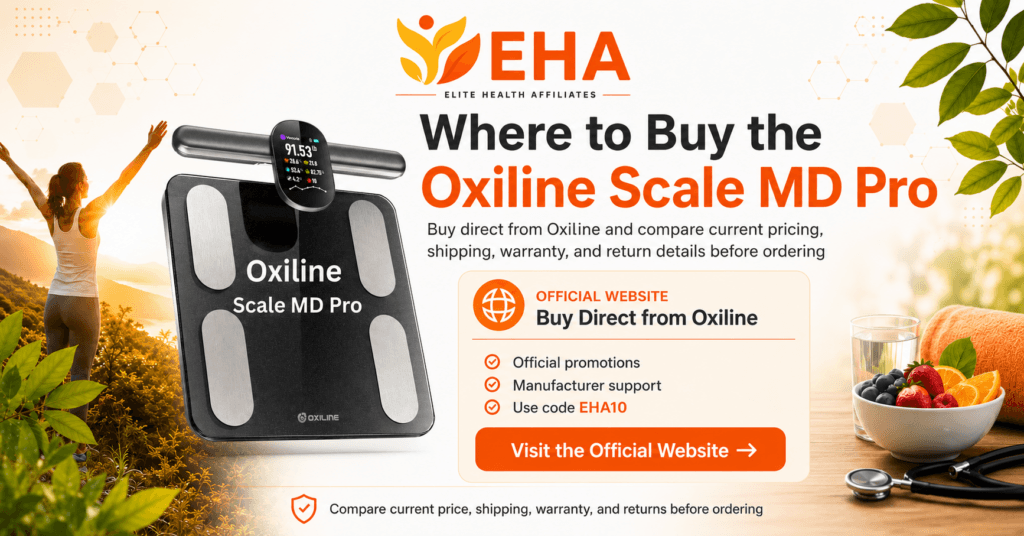
Buy the Oxiline Scale MD Pro Direct from Oxiline
Use code EHA10 at checkout to save 10% on eligible official-site orders
Prefer Ordering the Oxiline Scale MD Pro Through Amazon?
Compare current pricing, shipping, availability, and recent customer reviews
Explore More Smart Scale Reviews and Guides
The Oxiline Scale MD Pro is a strong fit for users who want detailed body-composition tracking, but it is not the best choice for every household. Some people will prefer the simpler XS Pro, while others may only need basic weight and body-composition monitoring.
For more RN-supervised reviews, accuracy testing, product comparisons, and practical buying guidance, explore our complete Smart Scale Reviews and Guides.