
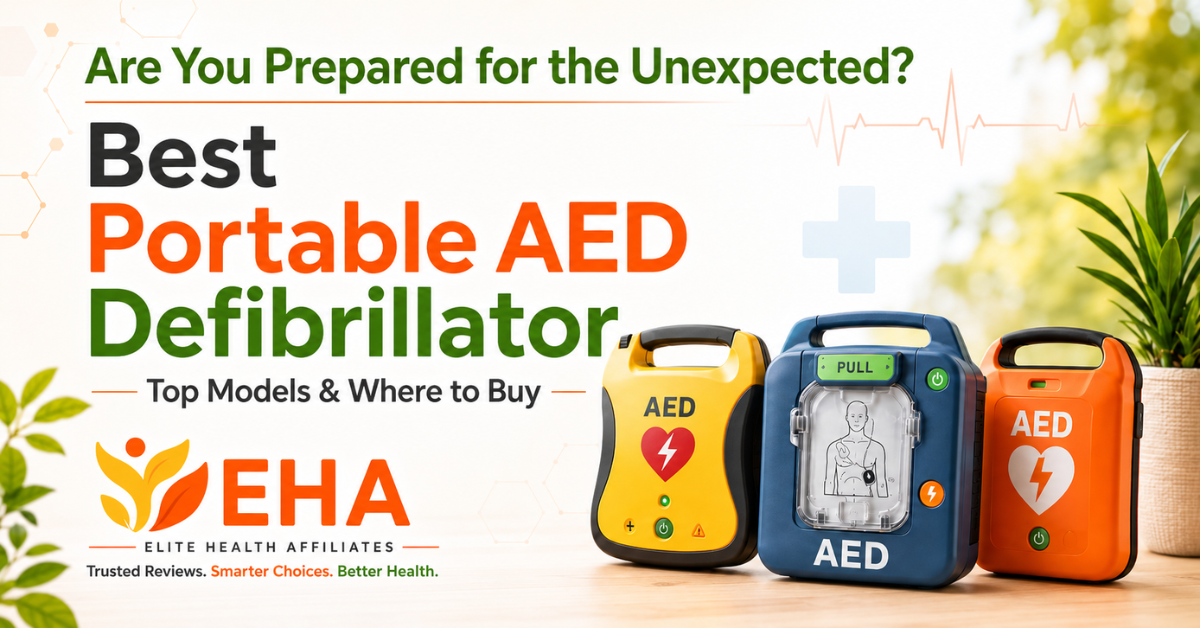
Sudden cardiac arrest can happen almost anywhere, including a gym, office, church, school, or small business. During those first critical minutes, having a portable AED nearby can give someone the chance to begin life-saving treatment before emergency responders arrive.
The challenge is choosing the right one. Portable AEDs vary widely in price, features, included supplies, and long-term maintenance costs. Some models are designed for first-time users, while others are better suited for larger workplaces, public spaces, or organizations that need additional tracking and support.
Quick answer: The best portable AED defibrillator is one that is easy to use, dependable, appropriate for the location, and affordable to maintain over time. The right choice depends on who may need to operate it, where it will be stored, and what is included with the purchase.
In this guide, we compare the top portable AED models, explain which features genuinely matter, and look at ongoing expenses such as replacement pads and batteries. We also cover where to buy an AED so you can compare reputable purchasing options without paying for features you may not need.
This is not simply about finding the lowest price. It is about choosing an AED that provides clear guidance, dependable performance, and the confidence to act during an emergency.
This post contains affiliate links. If you purchase through them, we may earn a small commission at no extra cost to you.
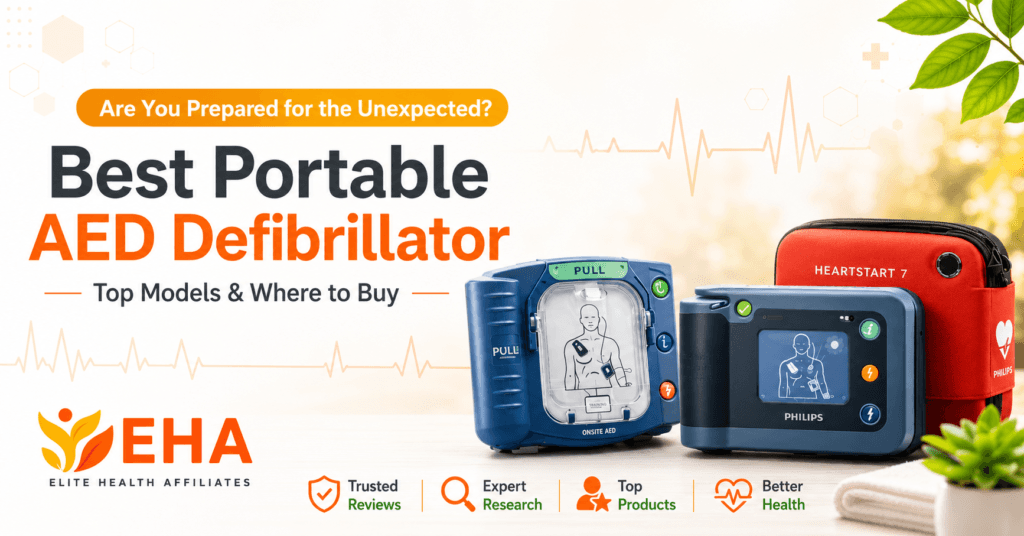
Table of Contents
What Makes a Portable AED Defibrillator the Best?
Not all AEDs are created equal, and not every model described as portable is equally practical during a real emergency. The best portable AED defibrillator should be easy for a non-medical person to operate, light enough to move quickly, durable enough for its intended environment, and reasonably affordable to maintain over time. Brand reputation matters, but the real question is how confidently and efficiently someone can use the device when every second counts.
Ease of Use for Non-Medical Responders
Most AEDs are designed to be used by bystanders rather than healthcare professionals. During a stressful emergency, the person responding should not have to interpret complicated controls, remember a long series of steps, or make unnecessary medical decisions. The strongest models provide calm voice prompts, clear visual instructions, automatic heart-rhythm analysis, and shock delivery only when the device determines it is appropriate.
The guidance should feel simple from the moment the AED is powered on. A well-designed unit walks the responder through pad placement, analysis, and shock delivery without creating confusion or hesitation. Extra features may sound impressive on a product page, but clear instructions and a straightforward response sequence are often more valuable in a real emergency.
True Portability
A portable AED should be lightweight, compact, and easy to carry from one location to another. Many models weigh less than five pounds and include a handle or protective carrying case, making them suitable for offices, gyms, schools, churches, vehicles, wall cabinets, and emergency-response kits.
Portability involves more than the number shown on a specification sheet. The AED should be easy to remove from storage, carry through a building, open, and prepare for use. A device that feels bulky or awkward may be stored farther away or placed somewhere less accessible, which can delay the response when it is needed most.
Durability for the Intended Environment
The location where an AED will be stored should play an important role in the buying decision. A device kept inside a climate-controlled office will face different conditions than one stored in a warehouse, gym, construction area, vehicle, or outdoor setting.
Dust and water resistance, impact protection, and operating-temperature limits are all worth reviewing before choosing a model. The best portable AED is not simply one that works when activated. It must also remain protected, properly stored, and ready for use throughout years of ownership.
Battery and Pad Life
The purchase price is only one part of the cost of owning an AED. Batteries and electrode pads have expiration dates and eventually need to be replaced, even when the device has never been used. The replacement schedule varies by model, and these ongoing expenses can significantly affect long-term value.
A lower-priced AED may not be the most economical choice if its batteries or pads require more frequent replacement. Before buying, compare the expected battery life, pad shelf life, replacement prices, and availability of supplies. Spending slightly more upfront may make sense when it results in fewer maintenance expenses and a simpler ownership experience.
Self-Testing and Readiness Indicators
Modern AEDs commonly perform automatic self-checks to confirm that the internal electronics, battery, and other essential components remain ready. A clear visual readiness indicator makes routine inspections easier and allows someone to verify the device’s status without opening the case or running a manual test.
Some models also produce an audible or visual alert when maintenance is required. These features are especially useful for schools, businesses, churches, gyms, and other organizations responsible for keeping emergency equipment prepared. Having an AED nearby provides little reassurance if no one can quickly determine whether it is ready to operate.
How We Tested the Portable AEDs
We evaluated multiple portable AED units through simulated emergency scenarios under the supervision of a Registered Nurse. Rather than relying only on manufacturer descriptions and technical specifications, we focused on how each device performed from the perspective of someone without medical training.
Using training pads and simulated cardiac-arrest situations, we compared startup speed, voice-prompt clarity, pad-placement guidance, rhythm-analysis flow, shock-readiness sequence, and overall ease of deployment. We also considered how quickly each AED could be removed from its case, carried to another location, powered on, and prepared for use.
Ease of Use Under Pressure
One of the clearest findings was that simple guidance mattered more than having the longest feature list. Short, calm instructions were easier to follow than prompts that felt overly detailed or interrupted the response sequence. Clear diagrams also helped reduce uncertainty around pad placement and made it easier to understand what the device wanted the responder to do next.
The units that required fewer decisions generally felt more approachable and confidence-inspiring. In a simulated emergency, we found that responders were more comfortable with devices that provided one clear instruction at a time rather than presenting too much information at once.
Speed and Response Flow
We compared the process from powering on each AED through rhythm analysis and shock-ready status. Most quality models moved through this sequence efficiently, but the clarity and pacing of the instructions varied. Some devices created a smoother, more natural response flow, while others included pauses or prompts that made the process feel less direct.
Technical speed is important, but the user experience also affects how quickly an AED can be deployed. A device may analyze the heart rhythm rapidly, but that advantage can be reduced when the responder struggles to follow the instructions or hesitates during pad placement.
Portability and Deployment
We assessed how easily each AED could be removed from its case, carried between rooms, powered on, and put into operation. Compact devices with practical handles and uncomplicated carrying cases were easier to move and prepare quickly.
This can matter in larger buildings, outdoor locations, crowded public spaces, or situations where the AED must be carried between floors. A portable AED should not only be light enough to move. It should also be packaged in a way that supports fast, uncomplicated deployment.
Maintenance and Readiness
Our evaluation also included battery installation, electrode-pad expiration labeling, and the visibility of each device’s readiness indicator. AEDs with clearly marked maintenance information were easier to inspect and manage, especially for organizations that may have several people responsible for routine equipment checks.
Readiness should be easy to confirm at a glance. Clearly visible status indicators and understandable expiration labels reduce uncertainty and make it less likely that maintenance will be overlooked.
What We Discovered
Several conclusions stood out during our RN-supervised testing. Simplicity consistently mattered more than complexity, and the most reassuring AEDs were the ones that guided the user clearly from startup through pad placement, rhythm analysis, and shock delivery. The devices that required the fewest unnecessary decisions generally created the most confidence.
Long battery life, clearly labeled expiration dates, visible readiness indicators, and easy access to replacement supplies also added meaningful long-term value. A higher price did not always create a better experience for the person operating the device, and additional features were only helpful when they improved guidance, maintenance, or deployment.
The most important takeaway from our testing was simple: An AED is only valuable when someone feels confident enough to use it.
Top Portable AED Defibrillator Models Worth Considering
Not all AEDs offer the same balance of usability, maintenance costs, portability, and long-term value. Some models are designed to make operation as simple as possible for first-time users, while others place more emphasis on durability, advanced feedback, or lower ownership costs. After hands-on evaluation and additional research, several models stood out for different types of buyers and environments.
Philips HeartStart OnSite AED
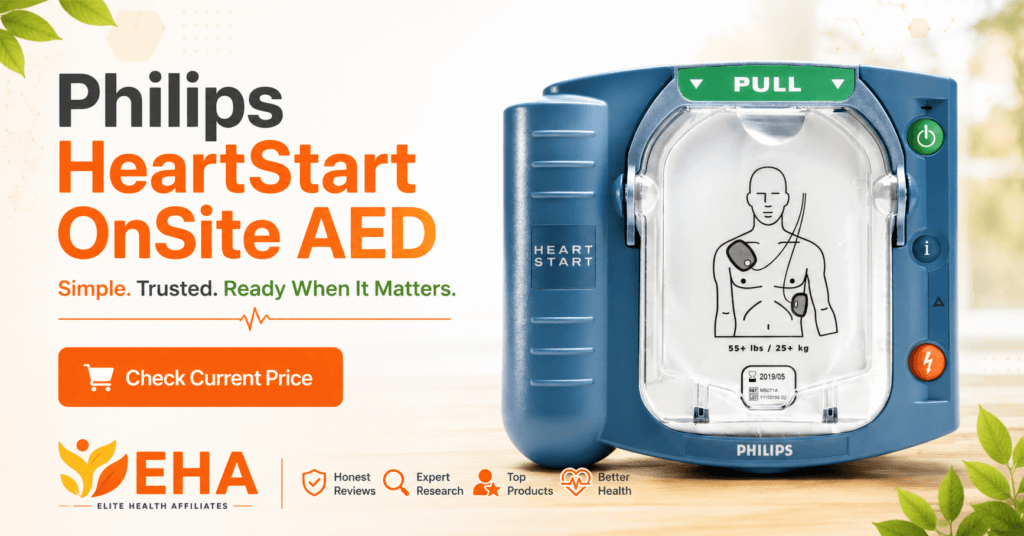
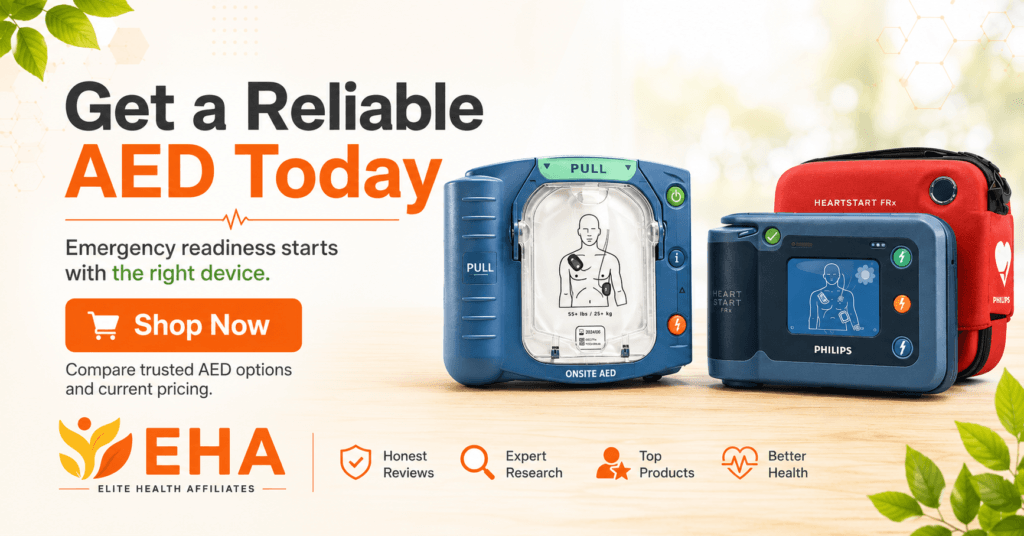
The Philips HeartStart OnSite is one of the easiest AEDs for a non-medical responder to understand and operate. It uses calm voice prompts and clear visual guidance to walk the user through each step, from pad placement to rhythm analysis and shock delivery. That simplicity can make a major difference in a stressful situation because the responder is not forced to sort through complicated controls or make unnecessary decisions.
Its lightweight design, preconnected pads, and compact size make it practical for homes, small offices, churches, gyms, and other locations where the person responding may have little or no medical training. The device is easy to carry, quick to open, and designed to begin guiding the user almost immediately after it is powered on. Philips also has a strong reputation in medical and public-access settings, which adds confidence for buyers who want a familiar and well-established brand.
The HeartStart OnSite may cost more than some entry-level AEDs, but the added simplicity, clear guidance, and overall ease of deployment can make the higher price worthwhile. For buyers who want a dependable, beginner-friendly model without unnecessary complexity, it remains one of the strongest portable AED options to consider.
Best for first-time users and straightforward emergency readiness
View current pricing and availability from the recommended seller
For a closer look at the Philips options, read our Philips HeartStart OnSite M5066A vs M5068A comparison, where we break down the differences in features, included equipment, ease of use, and overall value.
ZOLL AED Plus
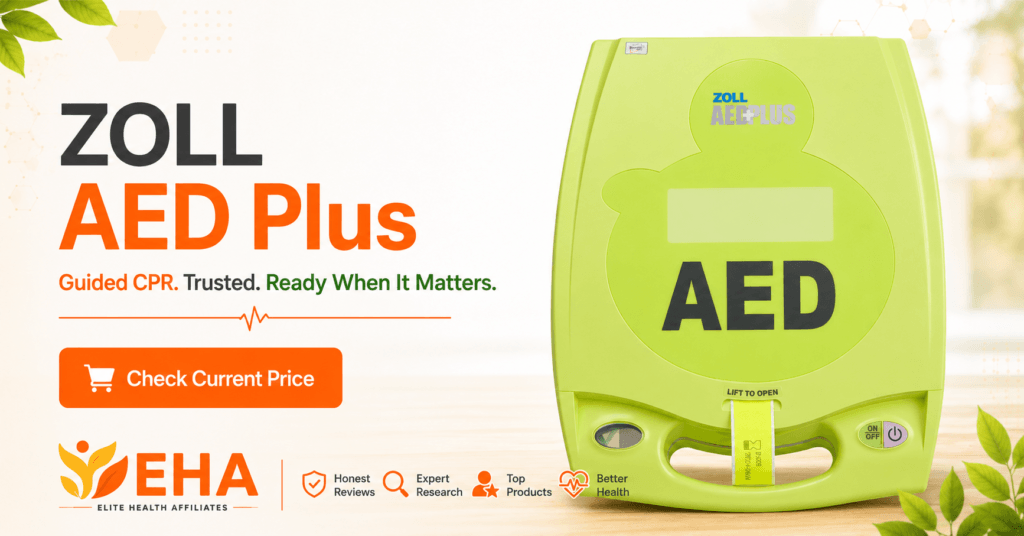
The ZOLL AED Plus stands out because it does more than analyze the heart rhythm and determine whether a shock is needed. It also provides real-time CPR feedback, helping the responder understand whether chest compressions are being delivered at an appropriate depth and rate. That added guidance can be especially valuable for someone who has received CPR training but may struggle to remember every detail during a high-stress emergency.
Its clear visual indicators, durable construction, and long-lasting batteries make it well suited for schools, gyms, churches, offices, and other public settings where multiple people may be responsible for emergency response. The device is designed to remain easy to follow while providing more hands-on coaching than a basic AED, which can help the responder stay focused through both CPR and shock delivery.
During our RN-supervised evaluation, the CPR feedback was the feature that made this model stand out. The device’s ability to coach compressions can provide additional confidence when the responder is unsure whether enough pressure is being applied or whether the pace is correct. For organizations that want an AED capable of offering more guidance throughout the full rescue process, the ZOLL AED Plus is one of the strongest options to consider.
Best for guided CPR support
View current pricing and availability from the recommended seller
HeartSine Samaritan PAD 350P
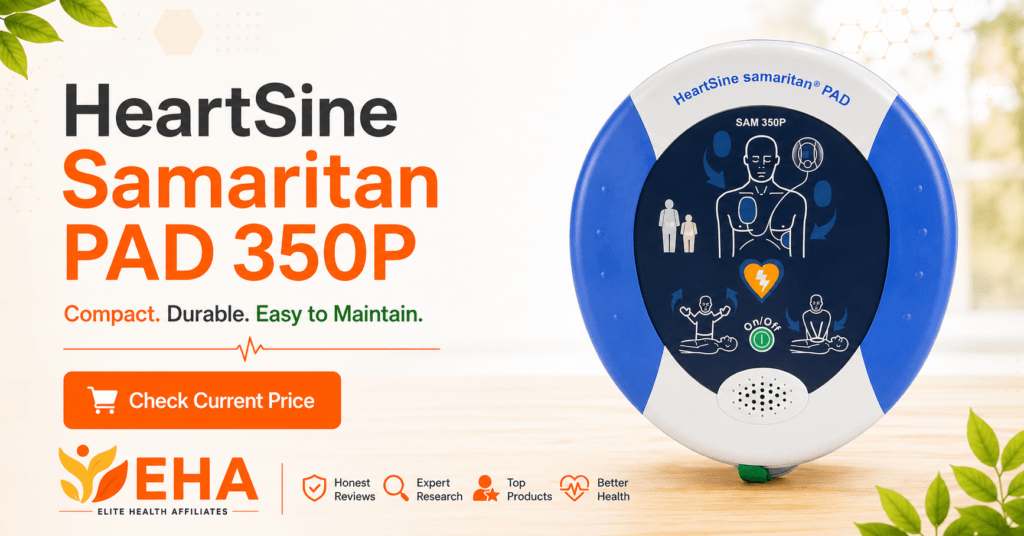
TThe HeartSine Samaritan PAD 350P is a strong option for buyers who want a compact AED without sacrificing durability or ease of use. Its lightweight design makes it practical for offices, churches, schools, vehicles, travel kits, and other settings where the device may need to be carried quickly from one location to another.
One of its biggest advantages is the integrated battery-and-pad cartridge. Instead of tracking separate replacement schedules for the battery and electrode pads, the system combines them into one replaceable unit. That can make maintenance easier to manage and reduce the chance of overlooking an expired component.
The PAD 350P also offers strong resistance to dust and water, which adds value for environments where the AED may be exposed to more demanding conditions. For budget-conscious buyers who want a portable, durable, and easier-to-maintain device, it offers a practical balance of price and long-term convenience.
Best balance of price and portability
View current pricing and availability from the recommended seller
Defibtech Lifeline AED
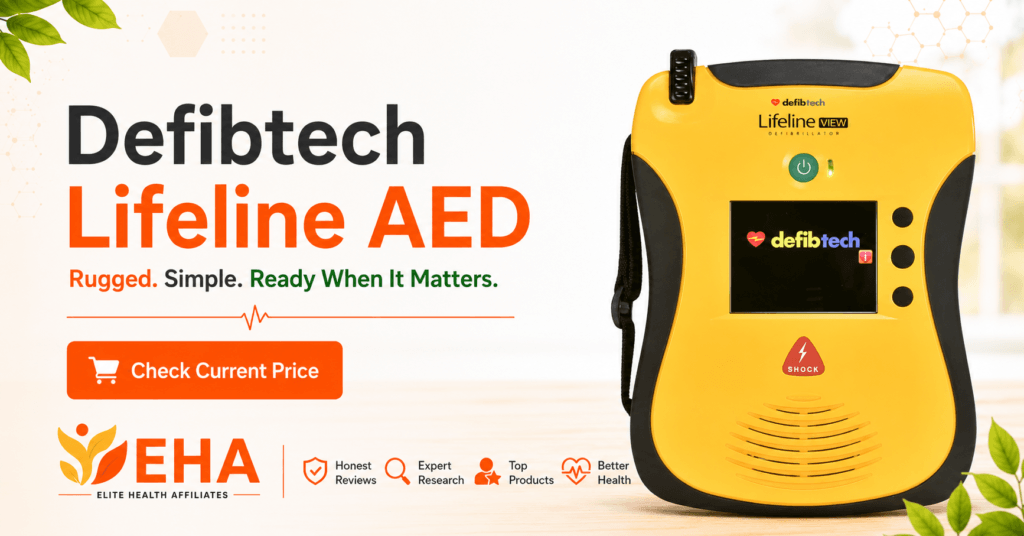
The Defibtech Lifeline AED is built for buyers who want a durable, easy-to-use device without extra complexity. Its rugged casing makes it well suited for schools, churches, gyms, offices, warehouses, and other environments where the AED may need to withstand frequent handling or less controlled storage conditions.
The control layout is intentionally simple, with minimal buttons and clear instructional prompts that guide the responder through the rescue process. That straightforward design can reduce hesitation because the user is not distracted by unnecessary menus or features when quick action matters most.
The Lifeline AED does not try to overwhelm the buyer with advanced extras, and that is one of its strengths. For organizations that value durability, clear guidance, and dependable emergency readiness, it offers a practical balance of simplicity and long-term reliability.
Best for rugged simplicity and straightforward operation
View current pricing and availability from the recommended seller
Where HeartSmart Fits into the Equation
HeartSmart is not an AED manufacturer. It is a specialized retailer that brings multiple AED brands, accessories, replacement supplies, and preparedness packages together in one place. That can make the buying process easier for shoppers who want to compare several trusted options without visiting multiple manufacturer websites.
Along with the AED itself, buyers can often compare packages that include wall cabinets, signage, carrying cases, spare pads, and other accessories needed for a complete setup. This is especially helpful for schools, churches, offices, gyms, and other organizations that may need more than a device alone.
HeartSmart also provides access to training and compliance-related resources, which can help buyers better understand what may be needed after the purchase. For those who want comparison flexibility and a more complete buying experience, it offers a convenient way to evaluate several leading portable AED defibrillators in one place.
Who Should Own a Portable AED Defibrillator?
Portable AEDs are no longer limited to hospitals and emergency-response teams. They are increasingly placed in homes, workplaces, schools, churches, gyms, and community spaces where sudden cardiac arrest could occur before emergency medical services arrive.
The decision to purchase one often depends on the people who use the location, the amount of daily traffic, the activities taking place, and how quickly professional help can typically arrive. During our RN-supervised evaluation, several settings stood out as especially practical places to keep an AED available.
Homeowners With Cardiac Risk Factors
For households where someone has known cardiovascular risk factors or a previous cardiac event, an AED may provide an additional layer of emergency preparedness. Because many cardiac emergencies occur at home, immediate access to a device could allow a trained family member or bystander to begin following the AED’s instructions while emergency services are on the way.
Location matters as well. Families living in rural or remote areas may face longer response times, which can make immediate access to emergency equipment feel even more important. An AED does not replace calling 911, CPR training, or professional medical care, but it can become part of a broader home-emergency plan.
Small Businesses and Offices
Small businesses and offices often have employees, customers, vendors, and visitors moving through the property each day. Keeping an AED on site can strengthen emergency preparedness and give staff access to clear, step-by-step guidance while waiting for first responders.
The device should be placed somewhere visible and easy to reach rather than locked away in a back office. Businesses should also consider training, routine readiness checks, replacement schedules, and clear internal procedures so employees know what to do during an emergency.
Churches, Gyms, and Community Centers
Churches, gyms, recreation centers, and community facilities often serve people across a wide range of ages and health conditions. These locations may also host physical activity, large gatherings, and special events, increasing the importance of having a practical emergency-response plan.
An AED with clear prompts and added CPR guidance can be especially useful in these environments because the person responding may not be a medical professional. Models such as the ZOLL AED Plus may appeal to facilities that want additional coaching during chest compressions, particularly when several responders may be involved.
Schools and Athletic Programs
Schools and athletic programs should consider how quickly an AED can be reached from classrooms, gymnasiums, fields, and other high-use areas. One device placed in the main office may not be enough when a large campus or outdoor athletic complex is involved.
Portable AEDs are often positioned near gymnasiums, administrative areas, athletic facilities, and high-traffic common spaces. The goal is not simply to own an AED, but to place it where it can be retrieved quickly and used by someone who understands the emergency-response plan.
Rural and Remote Locations
Rural properties, farms, camps, remote businesses, and recreational locations may be farther from emergency medical services. In these settings, a portable AED can become an important part of the immediate response while professional help is traveling to the scene.
Durability, battery longevity, portability, and storage conditions become especially important in remote environments. Buyers should consider temperature limits, dust and water resistance, replacement-supply availability, and whether the device can be carried easily between buildings, vehicles, or outdoor locations.
HeartSmart AED Pros and Cons: A Value-Based Summary
When evaluating HeartSmart as a place to buy a portable AED defibrillator, the real question is whether it makes comparison shopping easier and provides enough overall value for the buyer.
Pros
- Wide selection of trusted brands: HeartSmart carries recognized AED brands such as Philips HeartStart, ZOLL, HeartSine, and Defibtech, making it easier to compare multiple options in one place.
- Clear product specifications: Listings commonly include important details such as battery life, pad replacement timelines, device weight, CPR feedback, and included accessories.
- Accessory bundles: Some packages include carrying cases, wall cabinets, signage, spare pads, rescue kits, or other useful extras that may otherwise need to be purchased separately.
- Useful for schools, churches, and businesses: Institutional buyers may benefit from larger-order support, preparedness resources, training information, and compliance-related guidance.
- Centralized replacement shopping: Buyers can often return to the same retailer for replacement pads, batteries, cabinets, and other ongoing supplies.
Cons
- HeartSmart is not the manufacturer: Product specifications, warranties, and long-term support ultimately depend on the company that makes the AED.
- The lowest price is not guaranteed: HeartSmart may be competitively priced without always offering the cheapest advertised price online.
- Package comparisons can be confusing: Two listings for the same AED may include different accessories, pad dates, batteries, or support, making direct price comparison more difficult.
- The selection may overwhelm first-time buyers: Shoppers who are unfamiliar with AEDs may find the number of models, packages, and technical details difficult to sort through.
Bottom Line on HeartSmart
HeartSmart is a strong option for buyers who value convenience, broad brand selection, bundled accessories, and access to a retailer that specializes in AED equipment. It may not always have the lowest advertised price, but the ability to compare complete packages in one place can make the buying process more organized and easier to understand.
Frequently Asked Questions About Portable AED Defibrillators
Before buying a portable AED defibrillator, most shoppers have similar questions about price, maintenance, ease of use, placement, and purchasing requirements. The answers can vary by model, so buyers should always review the specifications and current policies for the exact AED they are considering.
How Much Does a Portable AED Defibrillator Cost?
Portable AED prices vary considerably based on the manufacturer, included accessories, CPR-feedback features, durability, and the type of package being purchased. The advertised price may cover only the AED, while other packages include a carrying case, wall cabinet, signage, rescue kit, or replacement supplies.
The initial purchase price is only part of the total cost. Electrode pads and batteries have limited service lives and eventually require replacement, even if the AED has never been used. Replacement schedules vary by model, so comparing pad life, battery life, accessory costs, and package contents provides a more accurate picture of long-term value.
Are AEDs Difficult to Use Without Medical Training?
Modern public-access AEDs are designed to analyze a person’s heart rhythm automatically and deliver a shock only when the device determines one is appropriate. They typically provide voice instructions, visual prompts, and step-by-step guidance intended to help a bystander move through the rescue process.
During our RN-supervised evaluations, the most approachable models were those that provided short, calm instructions and required fewer decisions from the responder. Training is still strongly recommended because familiarity with CPR and AED use can improve confidence and reduce hesitation during an emergency.
Do You Need a Prescription to Buy an AED?
Some AEDs in the United States are classified as prescription-use medical devices. Retailers may include physician authorization or prescription assistance as part of the purchase process, but buyers should confirm the requirements for the particular device and seller before ordering.
State and local requirements may also apply to AED registration, medical oversight, training, maintenance, signage, or emergency-action planning. Organizations should verify the rules that apply in their location rather than assuming that purchasing the device completes every requirement.
How Long Does an AED Last?
The usable life of an AED depends on the manufacturer, model, storage conditions, maintenance history, and continued availability of replacement supplies. There is no single lifespan that applies to every device, so buyers should review the manufacturer’s expected service life and warranty rather than relying on a general estimate.
The pads and batteries will normally need attention long before the AED itself reaches the end of its useful life. Owners should follow the manufacturer’s replacement schedule, inspect expiration dates, and regularly check the readiness indicator so the device remains prepared for use.
Where Should an AED Be Placed?
An AED should be kept in a visible, clearly marked, and easily accessible location where it can be retrieved quickly. Public-access devices are often stored in wall-mounted cabinets near high-traffic areas rather than hidden in locked offices or storage rooms.
Schools, churches, gyms, offices, community centers, athletic facilities, and rural properties may all benefit from AED placement, but the exact location should reflect the size and layout of the property. Larger facilities may require more than one device so responders do not lose critical time traveling across a building or outdoor complex.
Is a Portable AED Worth the Investment?
An AED cannot guarantee a successful outcome, but early recognition, CPR, and defibrillation are central parts of the cardiac-arrest Chain of Survival. Immediate CPR and access to an AED can substantially improve a person’s chance of survival compared with waiting for emergency responders alone.
For a home, business, school, church, gym, or remote property, the decision comes down to risk, response time, placement, training, and the ability to maintain the device properly. The value is not simply in owning an AED. It comes from having a suitable device that is accessible, ready, and supported by people who know how to respond.
EHA Verdict

The best portable AED defibrillator is not automatically the most expensive model or the one with the longest feature list. The strongest choice is the device that matches the environment, gives clear guidance, stays easy to maintain, and helps a responder act with confidence during a high-stress emergency.
For first-time users, the Philips HeartStart OnSite stands out for its straightforward instructions and beginner-friendly design. The ZOLL AED Plus is a stronger fit for buyers who value real-time CPR feedback, while the HeartSine Samaritan PAD 350P offers excellent portability and simplified maintenance. The Defibtech Lifeline AED is a practical option for buyers who want rugged construction and uncomplicated operation.
HeartSmart also makes sense as a purchasing option because it allows buyers to compare several trusted brands, review bundled packages, and find accessories and replacement supplies in one place. It may not always offer the lowest advertised price, but the convenience and specialized selection can make the buying process easier to manage.
Our recommendation is to focus less on finding the cheapest AED and more on choosing the model that will be accessible, properly maintained, and easy for the people in that location to use. A portable AED only provides real value when it is ready, nearby, and simple enough to use without hesitation.
Where to Buy Portable AED Defibrillators
Choosing the right AED is important, but where you buy it can make a major difference too. A knowledgeable seller can help you compare models, understand maintenance requirements, and avoid buying an incomplete package that leaves you searching for pads, batteries, cabinets, or signage later.
HeartSmart: Our Primary Recommendation
HeartSmart specializes in AEDs and emergency-preparedness equipment, carrying major brands such as Philips, ZOLL, HeartSine, and Defibtech. That focus makes it a practical starting point for buyers who want help comparing models rather than sorting through dozens of unrelated listings on a general retail website.
One of the biggest advantages is access to complete AED packages. Depending on the model, buyers may be able to add wall cabinets, carrying cases, signage, rescue kits, spare pads, and other accessories in one order. HeartSmart can also make it easier to understand battery life, pad replacement schedules, prescription requirements, and the differences between packages that may look similar at first glance.
For schools, churches, businesses, gyms, and community organizations, that guidance can help prevent costly mistakes and simplify the entire buying process. Buyers who want trusted brands, professional support, and multiple options in one place will likely find HeartSmart to be the most straightforward place to begin.
Compare trusted AED models, current pricing, and available packages directly from HeartSmart
Amazon: A Convenient Alternative
Amazon may be a reasonable alternative for shoppers who already know the exact AED model and package they want. It can be useful for comparing prices, checking availability, and taking advantage of familiar ordering and shipping options.
The tradeoff is that AED listings on Amazon may vary by seller, package contents, warranty coverage, and the age of included pads or batteries. Some listings may include only the device, while others may add accessories that make the price appear higher or lower than a competing offer.
Before purchasing an AED through Amazon, confirm that the seller is reputable, the manufacturer warranty is valid, and the pads and battery have acceptable expiration dates. It is also important to verify exactly what comes in the package so you are not surprised by additional purchases after the AED arrives.
Compare available models, seller options, pricing, and customer reviews on Amazon
Our Buying Recommendation
HeartSmart is the stronger choice for buyers who want guidance, complete package options, and access to a retailer focused specifically on AED equipment. Amazon may work well for experienced buyers who already know the exact model, accessories, and replacement requirements they need.
Whichever option you choose, avoid buying solely on the lowest advertised price. A dependable AED package should include the right equipment, valid warranty coverage, fresh replacement components, and a clear plan for keeping the device ready for use.
Ready to Compare Portable AED Options?
Compare trusted AED models, current pricing, and available packages directly from HeartSmart
Explore More AED Guides
Choosing the right AED involves more than comparing brands and upfront prices. Placement, ease of use, replacement supplies, battery life, and the needs of the people who may operate the device can all influence which option makes the most sense.
Explore our AED Guides for more AED reviews, model comparisons, buying guides, and practical emergency-preparedness information.
Final Thoughts on Portable AED Defibrillators
Buying a portable AED defibrillator is not just another equipment purchase. It is a decision to be prepared before an emergency happens, instead of realizing afterward that the right tool was not available when someone needed it most.
Sudden cardiac arrest can happen at home, at work, in a gym, at church, on a school campus, or during a community event. In that moment, waiting for emergency responders may feel much longer than it actually is. Having an AED nearby gives a bystander the ability to begin following clear instructions immediately while help is still on the way.
The good news is that you do not need to understand every technical feature or buy the most expensive model on the market. You need a reliable AED that is easy to use, appropriate for the location, simple to maintain, and supported by replacement pads and batteries that are easy to obtain.
That is why we recommend focusing on three things: choose a trusted brand, understand the long-term ownership costs, and buy from a reputable seller that can help you compare complete packages. HeartSmart is a strong option because it brings several leading AED brands, accessories, and replacement supplies together in one place, while Amazon may also be worth checking as an alternative for certain models.
The biggest mistake is continuing to put off the decision because the choices feel overwhelming. You do not need a perfect setup. You need a dependable AED that is accessible, ready, and simple enough for someone to use without hesitation.
An AED may sit unused for years, and that is exactly what everyone hopes happens. But if the day ever comes when it is needed, having one nearby could make all the difference.
Do not wait for an emergency to decide whether you should have been prepared. Compare the available models, choose the one that fits your setting, and put that protection in place now.