
Finding the most accurate blood pressure monitors for home use is not as simple as choosing the most expensive model or the one with the longest feature list. Reliable readings depend on the quality of the device, proper cuff fit, correct technique, and how consistently the monitor is used from one day to the next.
That is why we are focusing on three strong options with different strengths. The Oxiline Pressure XS Pro is designed for straightforward everyday monitoring, the Conneqt Pulse adds advanced insights such as central blood pressure and arterial stiffness, and Omron remains a familiar choice for people who prefer a traditional home blood pressure monitor.
In this guide, we will compare how these monitors differ, what each one does best, and which type of user may benefit most from each option. The goal is not to claim that one monitor is automatically the most accurate for everyone, but to help you choose the device that best matches your needs, routine, and comfort level..
This post contains affiliate links. If you purchase through them, we may earn a small commission at no extra cost to you.
Table of Contents
What Makes a Home Blood Pressure Monitor Accurate?
The frustrating part about shopping for a blood pressure monitor is that nearly every model claims to be accurate, yet the numbers can still vary from one reading to the next. In practice, accuracy comes from more than the device itself. The monitor needs to be well designed, the cuff needs to fit correctly, and the testing process needs to be easy enough to repeat the same way each time.
That is where many home readings go wrong. A cuff that sits too high or too low, an unsupported arm, poor posture, talking, movement, or checking too soon after activity can all change the result. Even a strong monitor can appear inconsistent when the routine changes from one reading to the next.
For that reason, we look for monitors that make accurate technique easier, not harder. The best choice is usually the one that fits properly, feels comfortable, produces consistent readings, and gives you confidence that you are following the same process every time you sit down to check.
Our Three Most Accurate Blood Pressure Monitor Picks
There is no single monitor that is automatically best for everyone, because not everyone wants the same type of home monitoring. Some people want a simple device that delivers the familiar numbers quickly, while others want more detailed information about what is happening deeper in the cardiovascular system.
That is why our three picks serve different needs. The Oxiline Pressure XS Pro is the strongest fit for straightforward daily monitoring, the Conneqt Pulse is the better choice for advanced insights such as central blood pressure and arterial stiffness, and Omron remains a dependable option for those who prefer a more traditional and familiar monitoring experience.
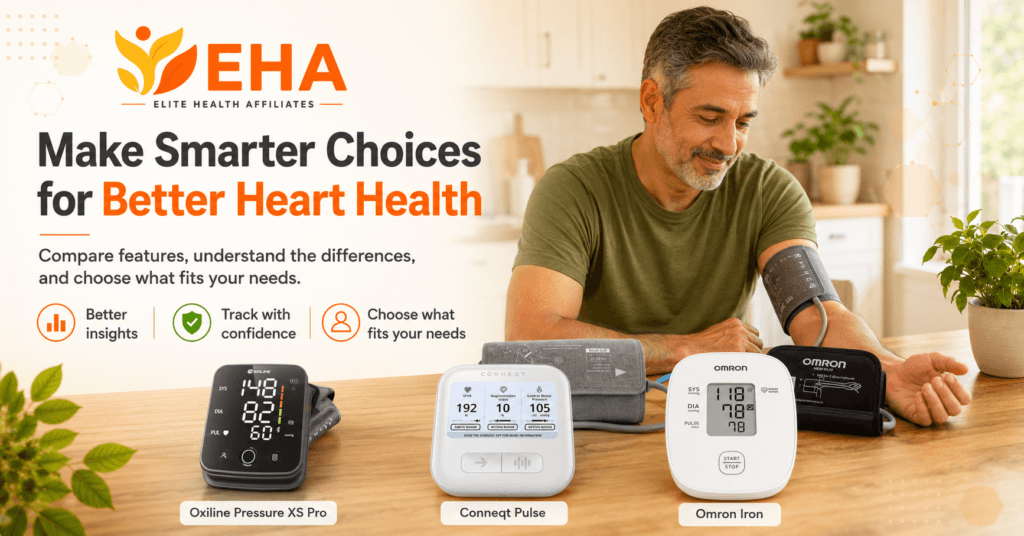
Our Oxiline vs Conneqt vs Omron Comparison looks at all three side by side, including ease of use, monitoring depth, features, and the type of user each one is most likely to suit.
Best for Straightforward Daily Monitoring: Oxiline Pressure XS Pro
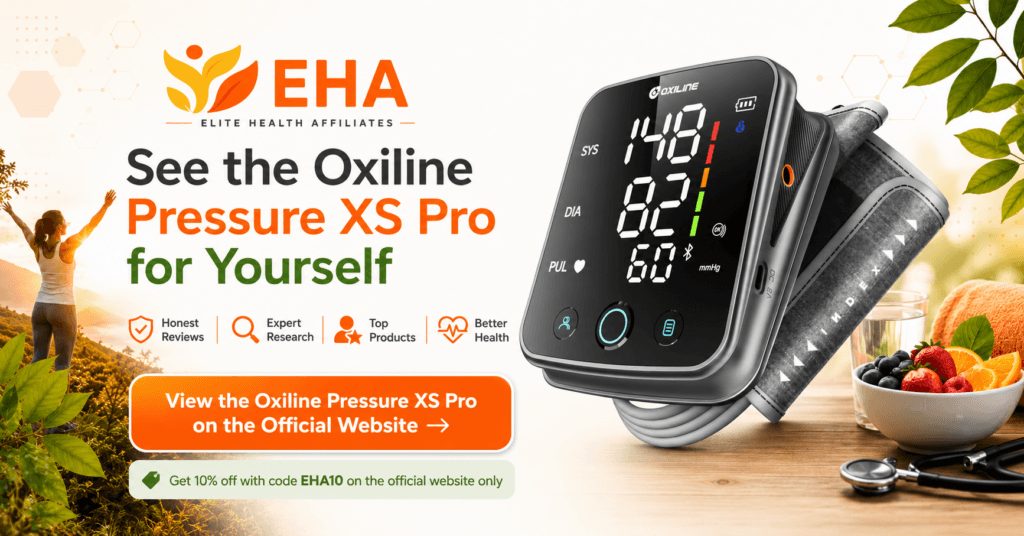
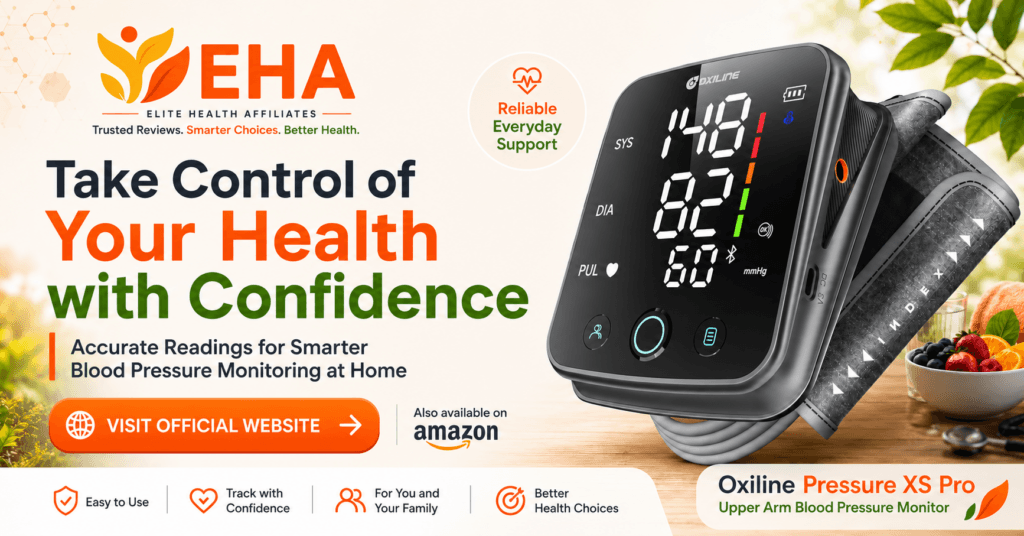
The Oxiline Pressure XS Pro makes sense for people who want reliable home readings without turning every check into a complicated health assessment. It focuses on systolic pressure, diastolic pressure, and pulse, which are the numbers most people already understand and use for routine monitoring.
Its biggest advantage is how easily it fits into everyday life. The display is clear, the controls are simple, and there is very little standing between you and a quick reading. That matters because the easier a monitor is to use correctly, the more likely you are to stick with a consistent routine.
For anyone who values simplicity, comfort, and repeatable daily use, the Pressure XS Pro is a strong place to start. Our Oxiline Pressure XS Pro Review takes a closer look at its cuff, display, performance, and overall everyday experience.
Best for Advanced Monitoring: Conneqt Pulse
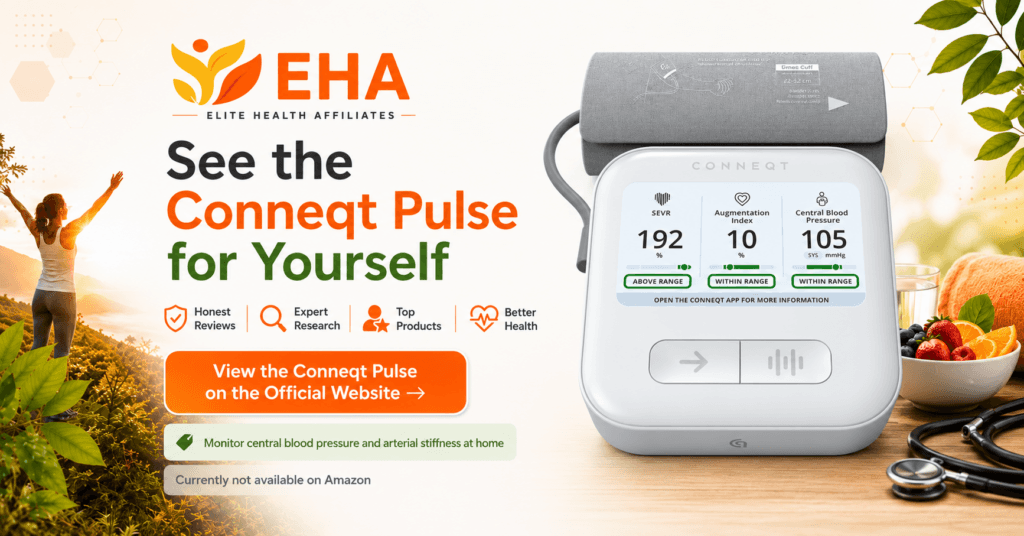
The Conneqt Pulse is the better fit for people who want more than a standard blood pressure reading. It still provides the familiar systolic and diastolic numbers, but it also adds central blood pressure and arterial stiffness insights that help show what may be happening deeper within the cardiovascular system.
That extra information is the reason to choose it, not because advanced monitoring automatically makes every basic reading more accurate. Someone who only wants a quick daily check may find the additional data unnecessary, but a user who enjoys understanding trends and looking beyond the surface numbers may appreciate the broader picture.
The Conneqt Pulse does require a little more interest and involvement than a traditional monitor, but that is exactly what makes it valuable for the right person. Our Conneqt Pulse Review explains what the advanced measurements mean, how the monitor works in everyday use, and what you can realistically expect from it.
Best Traditional Choice: Omron
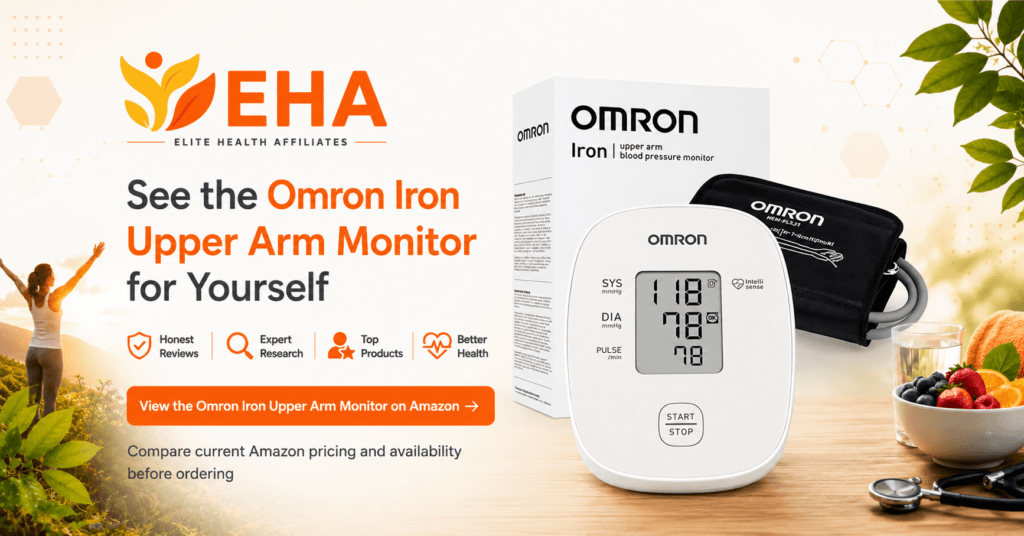
Omron remains a comfortable choice for people who want a familiar upper-arm monitor from a well-known blood pressure brand. Its monitors generally follow the traditional approach most users already understand, making them appealing to anyone who wants straightforward readings without moving into advanced cardiovascular monitoring.
The biggest advantage is familiarity. Many people have seen Omron monitors in pharmacies, medical offices, or family homes, and that recognition can make the buying decision feel less uncertain. Different Omron models offer different displays, memory options, cuff designs, and connectivity features, so the exact experience depends on which model you choose.
Omron is not necessarily more accurate simply because the brand is familiar, but it remains a practical option when traditional monitoring, broad availability, and a recognizable name matter most. It fits neatly between Oxiline’s modern simplicity and Conneqt’s deeper cardiovascular focus.
Oxiline vs Conneqt vs Omron at a Glance
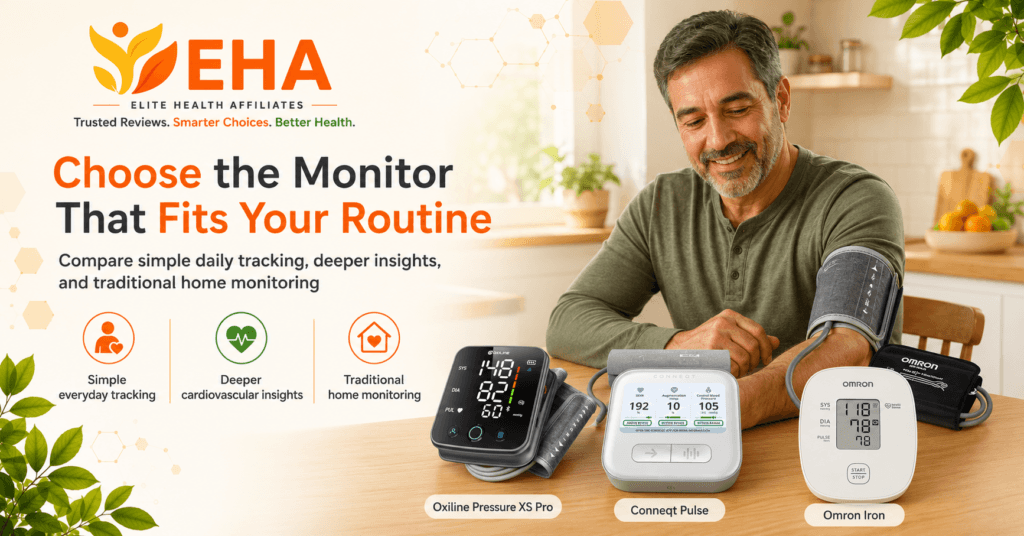
These three monitors are not competing for exactly the same user. The Oxiline Pressure XS Pro is designed for people who want a modern, uncomplicated device for regular home readings, while the Conneqt Pulse is aimed at those who want to explore central blood pressure and arterial stiffness alongside their standard numbers.
Omron takes the more traditional route. It offers the familiarity and broad model selection many shoppers prefer, but choosing among its different devices may require more comparison than buying one clearly defined monitor such as the Pressure XS Pro or Conneqt Pulse.
The best choice comes down to the experience you want every time you sit down to check your blood pressure. Choose Oxiline for simplicity, Conneqt for deeper insights, or Omron for a familiar traditional approach.
How We Evaluated These Blood Pressure Monitors
We did not rank these monitors by looking at the feature list alone. A device can sound impressive on paper and still be frustrating to use at home, which matters because poor cuff placement, inconsistent positioning, and a confusing routine can undermine even a well-designed monitor.
Our evaluation focused on the things that make the biggest difference in real-world use: cuff fit, readability, ease of operation, consistency, and whether the information provided is genuinely useful. We also considered how clearly each monitor fits a particular type of user rather than assuming that more features automatically make a device better.
That approach gives the Oxiline Pressure XS Pro an advantage for simplicity, the Conneqt Pulse an advantage for deeper cardiovascular information, and Omron an advantage for familiarity and traditional home monitoring. For a closer look at how the two monitoring styles differ, see our Blood Pressure Devices: Standard vs Advanced Monitoring guide.
Is One of These Monitors Actually More Accurate?
It would be misleading to say that one of these monitors is automatically more accurate for every person and every situation. Standard systolic and diastolic readings are affected by cuff fit, arm position, posture, movement, timing, and how consistently the device is used, so the monitor is only one part of the equation.
The Conneqt Pulse provides more information, but that extra depth should not be confused with guaranteed improvement in ordinary blood pressure readings. Its value comes from adding central blood pressure and arterial stiffness insights, while Oxiline and Omron remain focused on the standard numbers most people use for daily tracking.
The better question is whether the monitor makes accurate technique easier and produces readings you can repeat under similar conditions. Our How Accurate Are Home Blood Pressure Monitors? guide explains why technique, cuff fit, and consistency often matter as much as the device itself.
Which Blood Pressure Monitor Is Right for You?
Choose the Oxiline Pressure XS Pro when you want a modern, straightforward monitor that keeps everyday tracking simple. It is the strongest fit for someone who values a clear display, familiar readings, and a routine that does not require interpreting additional cardiovascular data.
Choose the Conneqt Pulse when you want to go beyond standard blood pressure numbers and explore central blood pressure and arterial stiffness. It asks a little more from the user, but it also provides a deeper view that traditional monitors cannot offer.
Choose Omron when brand familiarity, broad availability, and a traditional home-monitoring experience matter most. For a broader look at our current picks and how they compare, visit our Best Blood Pressure Monitor for Home Use guide.
What to Consider Before Choosing a Blood Pressure Monitor
The easiest way to make the wrong choice is to focus only on the monitor and ignore how it will fit into your routine. A device may look impressive, but if the cuff is uncomfortable, the display is hard to read, or the process feels more complicated than necessary, you may not use it consistently enough to get meaningful results.
Think about what you actually want to see each time you sit down to check your blood pressure. Some people only need systolic, diastolic, and pulse readings, while others want additional information that helps them better understand broader cardiovascular trends. Paying more only makes sense when those extra features solve a real problem for you.
The best monitor is the one that feels easy to use, fits your arm properly, and gives you information you understand. That combination makes it more likely that you will keep using it correctly instead of letting it sit in a drawer after the first few weeks.
Do Advanced Features Improve Blood Pressure Accuracy?
More features can make a monitor more informative, but they do not automatically make the basic blood pressure reading more accurate. A well-designed standard monitor may provide dependable systolic and diastolic results when the cuff fits correctly and the testing routine stays consistent.
The Conneqt Pulse stands out because it goes beyond those standard numbers by adding central blood pressure and arterial stiffness insights. That gives it a broader purpose, but its value comes from the extra context rather than a promise that every ordinary reading will be better than one from Oxiline or Omron.
For a closer look at how those advanced measurements perform and what they may add to home monitoring, see our Conneqt Pulse Accuracy guide.
Is the Oxiline Pressure XS Pro Accurate Enough for Daily Use?
For someone who wants straightforward daily readings, the Oxiline Pressure XS Pro is designed around the numbers most people already know how to use. Its focus on systolic pressure, diastolic pressure, and pulse keeps the experience simple and makes it easier to build a repeatable routine.
That simplicity is important because consistency matters so much in home monitoring. A clear display, familiar controls, and a comfortable cuff can make it easier to take readings the same way each time, which is often more useful than having additional data you may not understand or need.
Our Oxiline Pressure XS Pro Accuracy article takes a closer look at its consistency, cuff fit, and the factors that can influence how dependable its readings are at home.
Frequently Asked Questions
What is the most accurate blood pressure monitor for home use?
There is no single monitor that is automatically the most accurate for everyone. The best choice depends on cuff fit, correct technique, consistency, and how well the monitor matches your routine. The Oxiline Pressure XS Pro, Conneqt Pulse, and Omron Iron each serve a different type of user.
Is the Oxiline Pressure XS Pro accurate?
The Oxiline Pressure XS Pro is designed for routine upper-arm monitoring of systolic pressure, diastolic pressure, and pulse. Its real-world accuracy depends on proper cuff placement, arm position, adequate rest, and using the same technique each time.
Is the Conneqt Pulse more accurate than a standard monitor?
Not necessarily for basic systolic and diastolic readings. Its main advantage is the additional information it provides, including central blood pressure and arterial stiffness insights. Those measurements offer a deeper cardiovascular picture rather than guaranteeing better standard readings.
Is Omron a good choice for home blood pressure monitoring?
Yes. Omron remains a practical option for people who prefer a familiar, traditional upper-arm monitor. The Omron Iron keeps the experience simple and focuses on the standard numbers most people already understand.
Are upper-arm monitors more reliable than wrist monitors?
For most people, upper-arm monitors are easier to position correctly and use consistently. Wrist monitors can still be useful, but they are more sensitive to positioning and must be held precisely at heart level.
Does a more expensive monitor give more accurate readings?
Not automatically. A higher price may add connectivity, memory, larger displays, or advanced cardiovascular data, but those features do not guarantee more accurate basic readings. Proper technique and cuff fit remain essential.
How can I improve the accuracy of my home readings?
Sit quietly before testing, keep both feet flat on the floor, support your back, place the cuff on bare skin, and support your arm at heart level. Use the same arm and take readings under similar conditions whenever possible.
EHA Verdict

The most accurate blood pressure monitor is not simply the one with the longest feature list. It is the one that fits correctly, feels comfortable, makes proper technique easy, and gives you information you can understand and use consistently.
For straightforward everyday monitoring, the Oxiline Pressure XS Pro is our strongest overall choice. The Conneqt Pulse is the better fit for people who want central blood pressure and arterial stiffness insights, while the Omron Iron remains a dependable traditional option for shoppers who value simplicity, familiarity, and broad availability.
All three can serve the right user well. The decision comes down to whether you want a simple daily routine, deeper cardiovascular information, or a familiar traditional monitor.
Our Top Overall Recommendation
For most people, the Oxiline Pressure XS Pro is our top overall recommendation. It keeps home monitoring focused on the readings people use most—systolic pressure, diastolic pressure, and pulse—while offering a clear display and a straightforward routine that is easy to repeat consistently.
The Conneqt Pulse remains our preferred option for deeper cardiovascular insights, and Omron is still a practical traditional choice. However, when simplicity, usability, and everyday value are considered together, the Pressure XS Pro is the monitor we believe will suit the largest number of home users.
Take Control of Your Health with Confidence
Save 10% with code EHA10 on the official website only
Prefer to Shop on Amazon?
Compare current Amazon pricing and availability before ordering
Explore More Blood Pressure Monitor Reviews and Guides
Choosing the right monitor becomes much easier when you understand the difference between simple daily tracking, advanced cardiovascular insights, and traditional home monitoring. Our guides can help you compare accuracy, features, cuff design, ease of use, and the type of experience each monitor is built to provide.
Explore our complete collection of Blood Pressure Monitor Reviews and Guides for RN-tested reviews, accuracy articles, product comparisons, and practical home-monitoring information designed to help you choose with confidence.