
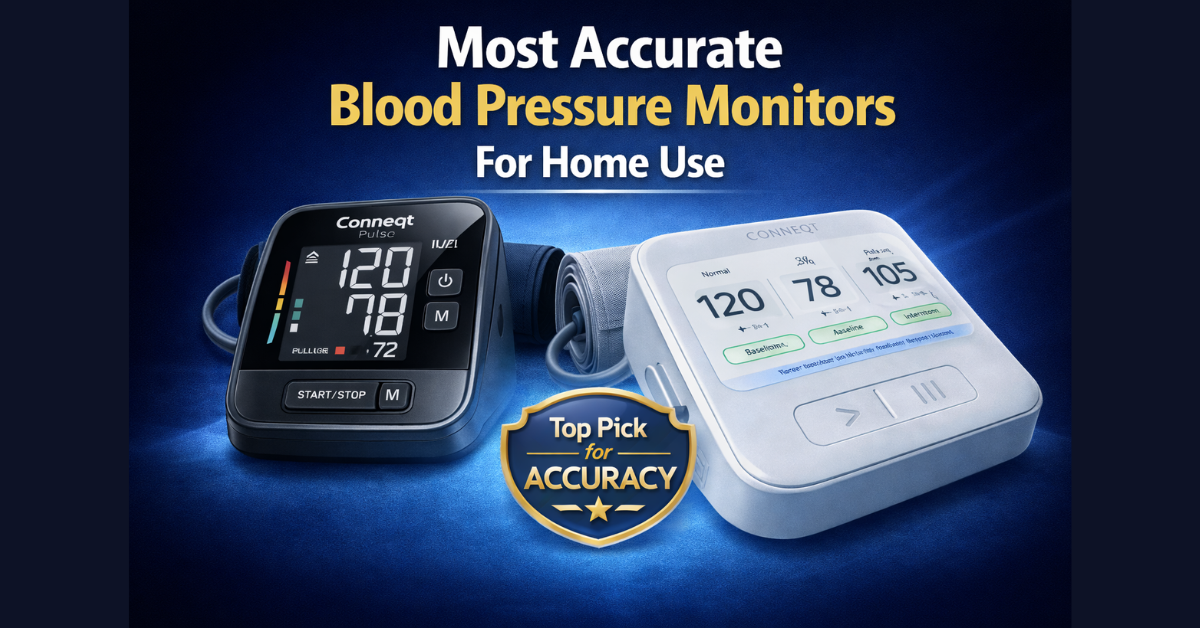
What is the most accurate blood pressure monitor for home use? In our opinion, Conneqt Pulse.
The Conneqt Pulse stands out because it measures not just standard systolic and diastolic readings, but also advanced cardiovascular metrics like central (heart-level) blood pressure and arterial stiffness.
Unlike traditional upper-arm monitors that only provide basic readings, the Conneqt Pulse delivers a more complete picture of cardiovascular health. This allows for deeper insight into how blood pressure is affecting the heart and arteries over time — something standard monitors simply cannot measure.
That said, accuracy isn’t just about the device itself.
It comes down to three key factors: clinical validation, proper usage, and consistency over time. Even the most advanced monitor can produce misleading results if it’s used incorrectly or inconsistently.
In this guide, we’ll break down what actually determines blood pressure accuracy, how different devices compare, and why advanced monitoring offers a more meaningful view of long-term heart health.
This post contains affiliate links. If you purchase through them, we may earn a small commission at no extra cost to you.
Advanced accuracy, deeper insight, and real results — see what sets it apart.
Table of Contents
What Determines Blood Pressure Monitor Accuracy
When choosing the most accurate blood pressure monitor, it’s important to understand what actually affects accuracy — because it’s not just the device itself.
Accuracy comes down to three key factors: validation, measurement method, and user consistency.
Clinical Validation Matters Most
The most reliable home blood pressure monitors are those that have undergone independent clinical validation testing. This means the device has been compared against professional measurements under standardized conditions.
A validated monitor should consistently fall within an accepted margin of error, typically around ±3 mmHg, which is considered accurate for home use.
Without proper validation, even a well-designed device can produce unreliable or inconsistent readings.
Upper Arm vs Wrist Measurement
Most experts agree that upper-arm monitors are more accurate than wrist devices.
Upper-arm monitors measure blood pressure closer to heart level, which leads to more consistent and reliable readings. Wrist monitors can still be useful, but they are far more sensitive to positioning errors, which can affect accuracy.
For this reason, nearly all clinically recommended home monitors are upper-arm devices.
Consistency Is More Important Than One Reading
One of the most common mistakes people make is focusing on a single reading.
Accurate monitoring is about trends over time, not one isolated number.
Even highly accurate devices can show variation from one reading to the next due to:
- Stress
- Movement
- Time of day
- Body position
Taking multiple readings and tracking patterns over time provides a much more reliable picture of cardiovascular health.
User Technique Plays a Major Role
Even the most accurate blood pressure monitor can give misleading results if it’s used incorrectly.
Common mistakes include:
- Using the wrong cuff size
- Not resting before measuring
- Letting the arm hang below heart level
- Talking during the reading
Proper technique is just as important as the device itself.
What This Means When Choosing a Monitor
The most accurate blood pressure monitor isn’t necessarily the most expensive or the most advanced.
It’s the one that:
- Is clinically validated
- Uses a reliable measurement method (upper arm)
- Delivers consistent readings over time
- Is easy enough to use correctly every day
Once these fundamentals are met, additional features can provide more insight — but not necessarily more basic accuracy.
Most Accurate Blood Pressure Monitors for Home Use
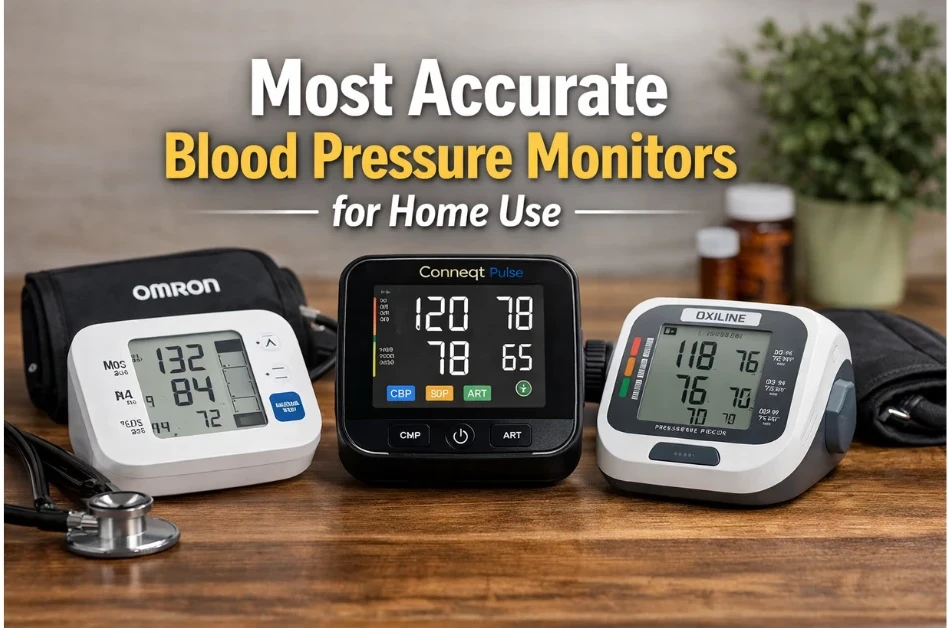
When it comes to accuracy, not all blood pressure monitors are the same. While many devices can provide reliable readings, the best options combine clinical validation, consistent performance, and ease of use.
Below are some of the most accurate blood pressure monitors for home use, each suited for different needs.
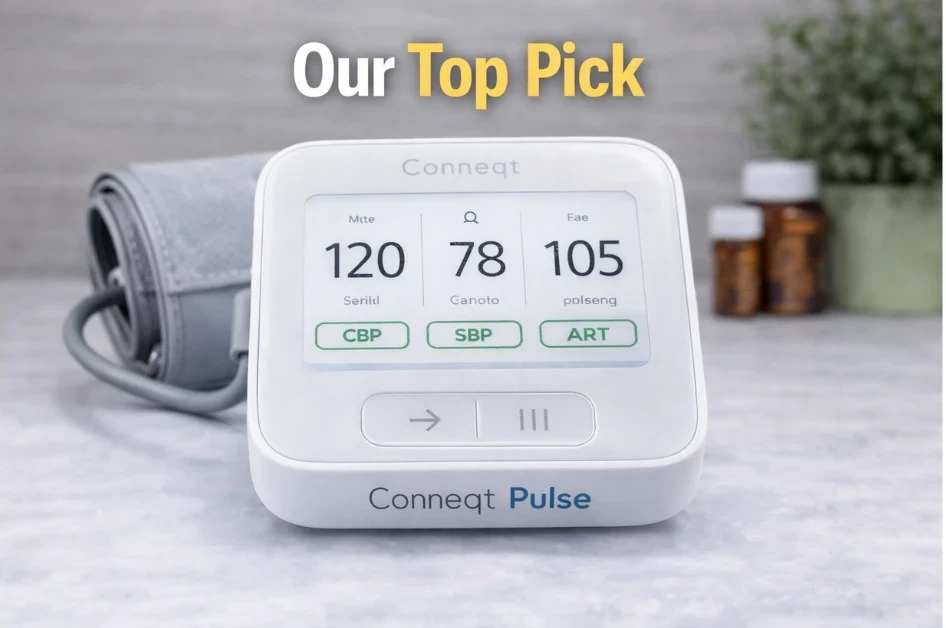
1. Conneqt Pulse (Best for Advanced Cardiovascular Insight)
Conneqt Pulse stands out by going beyond standard blood pressure readings. In addition to measuring systolic and diastolic pressure, it provides central (heart-level) blood pressure and arterial stiffness data, offering a more complete view of cardiovascular health.
This doesn’t necessarily mean it produces dramatically more accurate basic readings than a validated standard monitor. Instead, it delivers more context around those readings, which can be valuable for tracking long-term trends.
It’s best suited for users who:
- Want more than basic blood pressure numbers
- Are focused on long-term cardiovascular insight
- Prefer data-driven monitoring
Bottom line: Conneqt Pulse is ideal for users who want deeper insight into their cardiovascular health, not just standard readings.
👉 See our full Conneqt Pulse review for a detailed breakdown of features and real-world performance.
2. Oxiline Pressure XS Pro (Best for Reliable Core Accuracy)
For users who want straightforward, dependable readings, the Oxiline Pressure XS Pro is a strong choice. It focuses on delivering consistent systolic and diastolic measurements without the added complexity of advanced metrics.
This makes it a great option for daily monitoring, especially for those who prioritize ease of use and reliability.
It’s best suited for users who:
- Want simple, accurate daily tracking
- Prefer a no-frills, easy-to-use device
- Don’t need additional cardiovascular data
Bottom line: Oxiline Pressure XS Pro is one of the best options for reliable, consistent blood pressure readings without unnecessary complexity.
👉 For more details, see our full Oxiline Pressure XS Pro review.
3. Omron (Best Known Brand for Traditional Monitoring)
Omron is one of the most widely recognized names in home blood pressure monitoring. Their devices are commonly used and generally provide reliable, clinically accepted readings.
However, most Omron monitors focus on basic systolic and diastolic measurements, without offering the expanded cardiovascular data found in newer devices.
It’s best suited for users who:
- Prefer a trusted, well-known brand
- Want basic blood pressure monitoring
- Are comfortable with traditional devices
Bottom line: Omron remains a solid option for standard monitoring, but it does not offer the deeper insight available with more advanced devices.
What This Means for Accuracy
All three options can deliver accurate blood pressure readings when used correctly.
The difference comes down to what kind of accuracy you’re looking for:
- Standard accuracy: Reliable systolic and diastolic readings (Oxiline, Omron)
- Expanded insight: Additional cardiovascular data for deeper understanding (Conneqt Pulse)
Accuracy isn’t just about the number you see — it’s about how well you can understand and track your health over time.
Are Expensive Blood Pressure Monitors More Accurate?
It’s a common assumption that a more expensive blood pressure monitor will automatically be more accurate — but that isn’t always the case.
Price does not directly determine accuracy.
A properly validated upper-arm monitor can deliver highly accurate systolic and diastolic readings, regardless of whether it’s a basic model or a more advanced device.
What You’re Really Paying for
When the price increases, it’s usually not because the core readings are more precise — it’s because the device offers additional features and insights.
Higher-priced monitors may include:
- Central (heart-level) blood pressure measurements
- Arterial stiffness analysis
- App connectivity and long-term data tracking
- More advanced user interfaces
These features can provide more context around your readings, but they don’t necessarily make the basic blood pressure numbers significantly more accurate.
Accuracy Comes Down to Fundamentals
The most important factors for accuracy are still:
- Clinical validation
- Proper cuff size and placement
- Consistent measurement technique
- Taking multiple readings over time
A lower-cost, validated monitor used correctly will often produce more reliable results than an expensive device used inconsistently.
When a More Expensive Device Makes Sense
A higher-priced monitor may be worth it if you:
- Want deeper cardiovascular insight beyond basic readings
- Are tracking long-term health trends more closely
- Prefer additional data to discuss with your healthcare provider
In this case, you’re not paying for “better accuracy” — you’re paying for more information and better context.
When a More Expensive Device Makes Sense
A higher-priced monitor may be worth it if you:
- Want deeper cardiovascular insight beyond basic readings
- Are tracking long-term health trends more closely
- Prefer additional data to discuss with your healthcare provider
In this case, you’re not paying for “better accuracy” — you’re paying for more information and better context.
How to Get the Most Accurate Blood Pressure Reading at Home
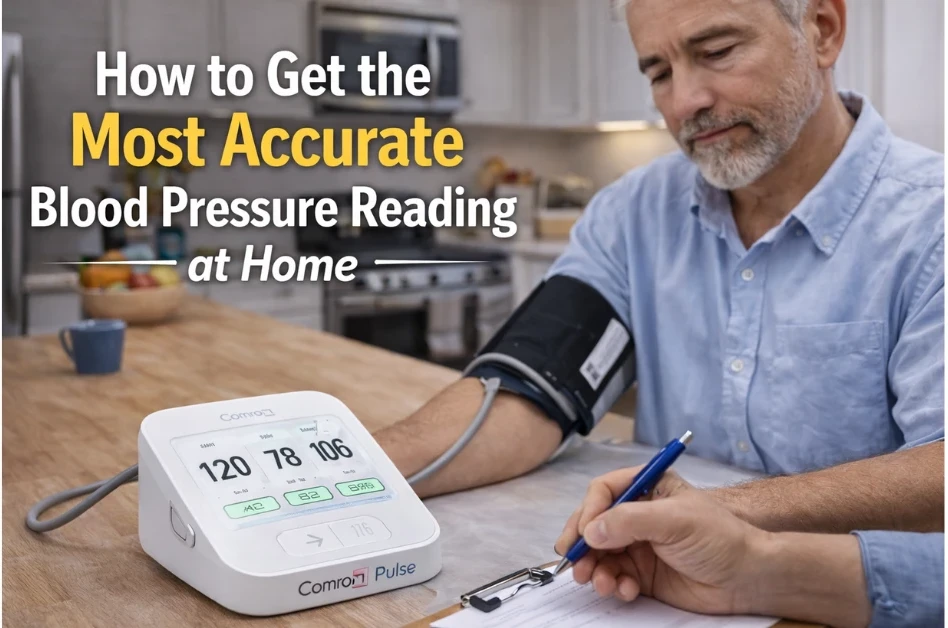
Even the most accurate blood pressure monitor can give misleading results if it’s not used correctly.
Getting an accurate reading depends just as much on your technique as it does on the device.
1. Rest Before Taking a Reading
Sit quietly for at least 5 minutes before measuring your blood pressure.
Avoid:
- Talking
- Moving around
- Checking your phone
Your body needs time to settle so the reading reflects your true resting pressure.
2. Sit in the Correct Position
Proper posture makes a bigger difference than most people realize.
Make sure you:
- Sit upright with your back supported
- Keep your feet flat on the floor
- Avoid crossing your legs
Small positioning errors can noticeably affect your results.
3. Keep Your Arm at Heart Level
Your arm should be:
- Supported
- Relaxed
- Positioned at heart level
If your arm is too low, readings may appear higher.
If it’s too high, readings may appear lower.
4. Use the Correct Cuff Size
Using the wrong cuff size is one of the most common causes of inaccurate readings.
- A cuff that’s too small → can raise readings
- A cuff that’s too large → can lower readings
Always match the cuff size to your arm circumference.
5. Don’t Talk During the Measurement
Talking, even briefly, can raise systolic pressure.
Stay completely still and silent while the monitor is taking your reading.
6. Avoid Common Triggers Before Testing
For the most accurate results, avoid:
- Caffeine
- Exercise
- Smoking
for at least 30 minutes before measuring.
7. Take Multiple Readings
A single reading doesn’t tell the full story.
Take two readings about one minute apart and average them.
This helps smooth out normal fluctuations and gives you a more reliable result.
8. Measure at the Same Time Each Day
Blood pressure naturally changes throughout the day.
Consistency matters more than timing.
Try to measure at the same time daily to track meaningful trends.
What This Means for Accuracy
Even a highly accurate device can produce inconsistent numbers if these steps aren’t followed.
The combination of a validated monitor and proper technique is what creates reliable results.
Common Mistakes That Affect Blood Pressure Accuracy
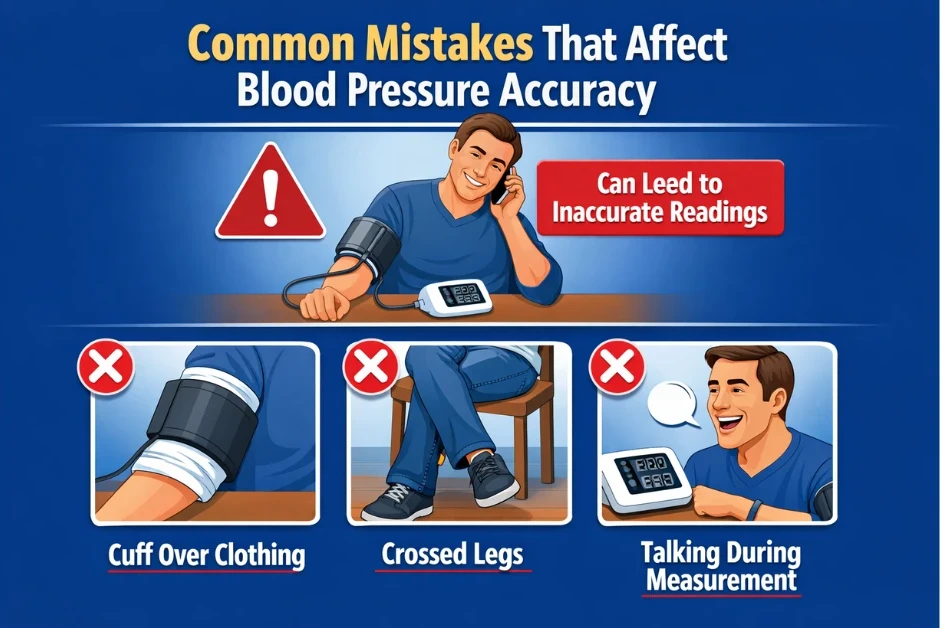
Even small mistakes can lead to readings that are higher or lower than your true blood pressure.
In many cases, inaccurate readings are caused by how the device is used — not the device itself.
Using the Wrong Cuff Size
One of the most common issues.
- Too small → falsely high readings
- Too large → falsely low readings
Always use a cuff that fits your arm properly.
Incorrect Arm Position
If your arm isn’t at heart level, your reading can be off.
- Arm too low → higher reading
- Arm too high → lower reading
Support your arm and keep it level with your heart.
Not Resting Before Measuring
Taking a reading right after moving, walking, or stress can skew results.
You should sit quietly for at least 5 minutes before measuring.
Talking During the Test
Even brief conversation can raise your blood pressure.
Stay still and silent while the cuff is inflating and deflating.
Measuring Over Clothing
Placing the cuff over a sleeve can affect pressure detection.
Always place the cuff directly on bare skin.
Poor Posture
Your body position matters more than most people think.
- Slouching
- Crossing legs
- Unsupported back
These can all influence your reading.
Sit upright with feet flat on the floor and back supported.
Relying on a Single Reading
Blood pressure fluctuates naturally.
One reading doesn’t give you the full picture.
Take multiple readings and look for patterns over time.
Testing at Inconsistent Times
Measuring at random times can make results harder to interpret.
Consistency helps you track meaningful trends.
What This Means
Many “inaccurate” readings aren’t caused by the monitor — they’re caused by inconsistent technique.
Fixing these small mistakes can dramatically improve the reliability of your readings.
Conneqt Pulse vs Standard Monitors: Accuracy Comparison
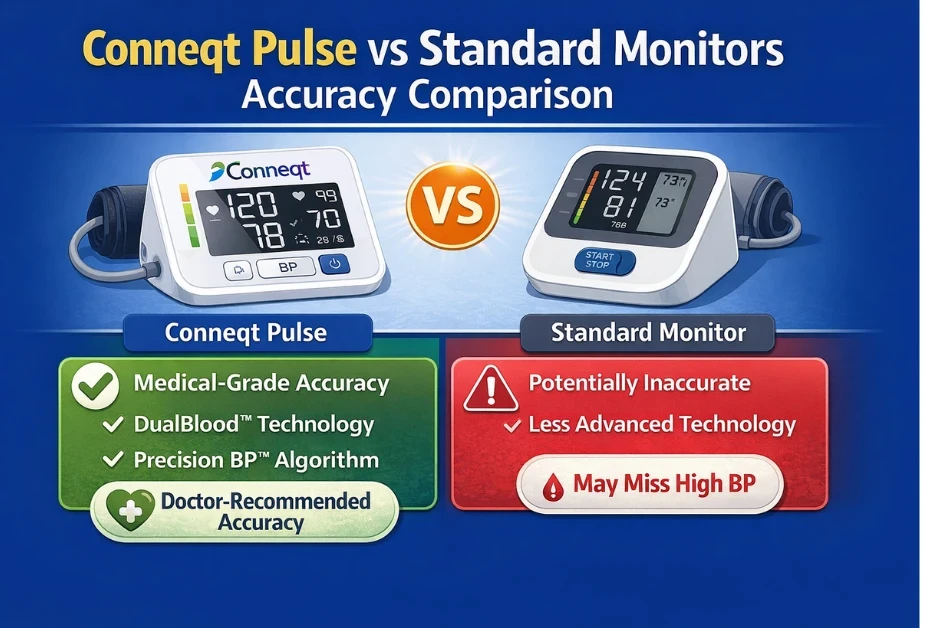
When comparing advanced devices like Conneqt Pulse to standard blood pressure monitors, it’s important to understand what “accuracy” really means.
For basic systolic and diastolic readings, both advanced and standard validated monitors can be highly accurate.
A well-designed upper-arm monitor — whether it’s a traditional device or a newer model — should produce readings within an accepted clinical range when used correctly.
Where the Difference Begins
The key difference isn’t in basic accuracy — it’s in how much insight the device provides beyond those readings.
Standard monitors:
- Measure systolic and diastolic pressure
- Provide basic, reliable tracking
- Focus on routine monitoring
Advanced devices like Conneqt Pulse:
- Estimate central (heart-level) blood pressure
- Analyze arterial stiffness
- Provide additional cardiovascular data
Does Conneqt Pulse Improve Accuracy?
Not in the way most people think.
Conneqt Pulse does not dramatically increase the accuracy of standard blood pressure readings — it expands what those readings mean.
Instead of just showing numbers, it helps provide context around how pressure is affecting the heart and arteries over time.
When That Extra Insight Matters
Advanced monitoring may be more useful if you:
- Want to track long-term cardiovascular trends
- Have risk factors like hypertension or diabetes
- Prefer more data to discuss with your healthcare provider
For these users, the added information can provide a more complete picture of heart health.
When a Standard Monitor Is Enough
A traditional upper-arm monitor is often all you need if you:
- Want simple, reliable daily readings
- Are focused on routine tracking
- Prefer a straightforward, easy-to-use device
Bottom Line
Both standard and advanced monitors can deliver accurate readings — the difference is how much insight you get beyond the numbers.
If you want reliable day-to-day tracking, a validated standard monitor is more than sufficient.
If you want a deeper understanding of your cardiovascular health, advanced devices like Conneqt Pulse offer additional layers of insight that traditional monitors don’t provide.
Pros and Cons of Home Blood Pressure Monitors
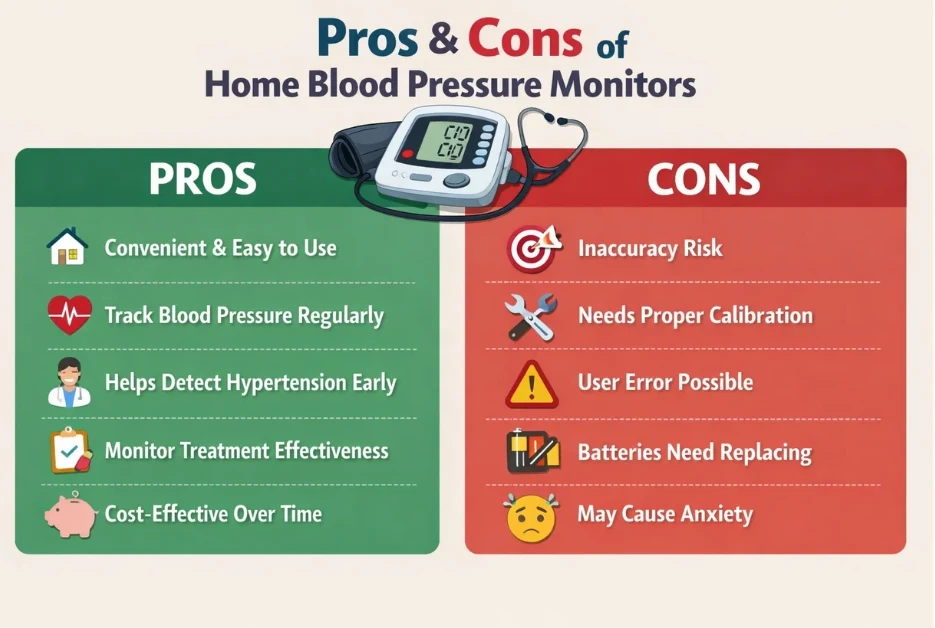
Understanding the strengths and limitations of home blood pressure monitors can help you choose a device that fits your needs — and avoid common frustrations.
Pros
Convenient for daily monitoring
You can check your blood pressure anytime without needing a doctor’s visit, making it easier to track changes over time.
Clinically reliable when validated
Many upper-arm monitors are capable of producing readings close to clinical measurements when used correctly.
Helps track long-term trends
Home monitoring allows you to see patterns over time, which is often more useful than a single reading.
Reduces “white coat” effect
Some people experience higher readings in medical settings due to stress. Home monitoring can provide a more realistic baseline.
Wide range of options available
From simple devices to advanced monitors with deeper cardiovascular insights, there’s a solution for nearly every user.
Cons
User error can affect accuracy
Incorrect cuff size, poor positioning, or not resting before measuring can all lead to inaccurate readings.
Not all devices are validated
Some monitors on the market haven’t undergone proper clinical testing, which can make their readings unreliable.
Technique matters more than people expect
Even a high-quality monitor can give misleading results if used inconsistently.
Can create unnecessary anxiety
Frequent checking or misinterpreting normal fluctuations may lead to stress or over-monitoring.
Limited insight with basic models
Standard monitors only provide systolic and diastolic readings, without deeper cardiovascular data.
Bottom Line
Home blood pressure monitors can be highly accurate and extremely useful — but only when the device is validated and used correctly.
For most users, the benefits far outweigh the drawbacks, especially when focusing on consistent technique and long-term trends rather than individual readings.
Frequently Asked Questions
What is the most accurate blood pressure monitor for home use? In our opinion, Conneqt Pulse.
The Conneqt Pulse stands out because it combines clinically validated upper-arm measurement with advanced cardiovascular metrics, delivering consistent readings while providing deeper insight into heart health.
While proper technique and consistency always matter, devices like the Conneqt Pulse go beyond basic monitoring by helping users better understand long-term trends and overall cardiovascular performance.
Are home blood pressure monitors as accurate as a doctor’s office?
Yes, many validated home blood pressure monitors can produce readings very close to those taken in a clinical setting. Small differences can occur due to positioning, timing, or natural fluctuations, but overall reliability is strong when used properly.
Which is more accurate: upper arm or wrist blood pressure monitors?
Upper-arm monitors are generally more accurate than wrist devices. They measure blood pressure closer to heart level and are less sensitive to positioning errors, making them the preferred option for most users.
Do more expensive blood pressure monitors give more accurate readings?
No, higher price does not automatically mean better accuracy. More expensive devices often include additional features, but a properly validated standard monitor can deliver highly accurate readings on its own.
How can I make my blood pressure readings more accurate at home?
To improve accuracy:
- Sit quietly for at least 5 minutes before measuring
- Keep your arm at heart level
- Use the correct cuff size
- Avoid talking during the reading
- Take multiple readings and average them
Consistency and proper technique are key.
Do advanced blood pressure monitors improve accuracy?
Advanced monitors typically do not improve basic systolic and diastolic accuracy. Instead, they provide additional data — such as central blood pressure or arterial stiffness — to give a deeper understanding of cardiovascular health.
How often should I check my blood pressure at home?
This depends on your health goals, but many people benefit from checking:
- Once in the morning
- Once in the evening
Tracking readings consistently over time provides more useful insight than occasional checks.
Can I rely on a single blood pressure reading?
No, a single reading does not give a complete picture. Blood pressure fluctuates throughout the day, so it’s better to take multiple readings and look for trends over time.
Explore Our Blood Pressure Monitor Guides
If you’re researching the most accurate blood pressure monitor for home use, these guides break down key differences, accuracy factors, and real-world performance.
Best Blood Pressure Monitor for Home Use: RN Tested & Recommended
A complete breakdown of top-rated monitors, comparing accuracy, ease of use, and overall performance.
Blood Pressure Devices for Home Use: Standard vs Advanced Monitoring
Explains the differences between traditional monitors and advanced devices that offer deeper cardiovascular insights.
How Accurate Are Home Blood Pressure Monitors? The Results Surprised Us
A detailed look at how reliable home readings are and what factors impact accuracy.
Top Blood Pressure Monitor Reviews
For a closer look at individual devices, these reviews break down real-world performance, features, and long-term usability.
Conneqt Pulse Review
A full evaluation of advanced monitoring features, including central blood pressure and arterial stiffness insights.
Oxiline Pressure XS Pro Review
A closer look at one of the most reliable standard monitors for consistent daily tracking.
EHA Verdict

The most accurate blood pressure monitor for home use is ultimately the one that delivers consistent, validated readings and fits your long-term monitoring needs.
For most users, a clinically validated upper-arm monitor provides reliable day-to-day accuracy and is more than sufficient for routine tracking.
However, for those who want deeper cardiovascular insight, advanced devices like the Conneqt Pulse offer additional data that can help provide a more complete understanding of heart health over time.
If your goal is simple, consistent monitoring, a standard device like the Oxiline Pressure XS Pro is a strong choice.
If you want expanded insight beyond basic readings, Conneqt Pulse stands out as a more advanced option.
The key is choosing a device that aligns with how much information you want — not just the number on the screen, but what that number actually means for your long-term health.
Where to Get the Most Accurate Blood Pressure Monitors
If you’re ready to choose a reliable blood pressure monitor for home use, it’s important to purchase from a trusted source to ensure product authenticity and access to the latest version.
Conneqt Pulse is available directly through the official website, where you can view current pricing, features, and any available offers. It is not typically available on Amazon, which is why many users search for “Conneqt Pulse Amazon” but end up purchasing through the official site.
👉 View the latest details on the official Conneqt Pulse website.
For those who prefer a more traditional monitor, the Oxiline Pressure XS Pro is also available online and offers a strong balance of accuracy, simplicity, and ease of use.
👉 Learn more in our Oxiline Pressure XS Pro review.
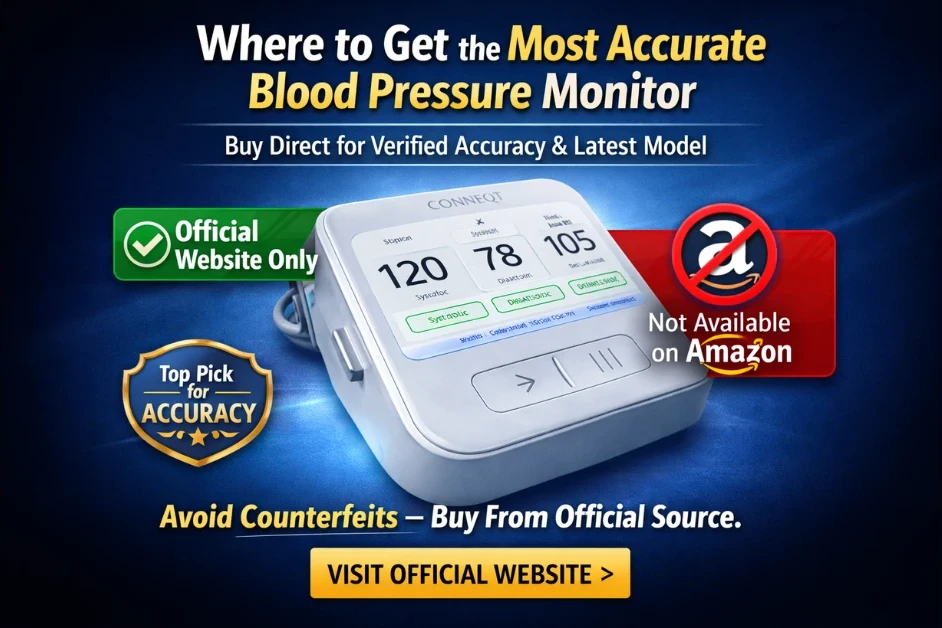
Get the latest version, verified accuracy, and current availability — not sold on Amazon.
Final Thoughts
The most accurate blood pressure monitor isn’t just about the device — it’s about how consistently and correctly it’s used over time.
Validated upper-arm monitors remain the standard for reliable readings, but newer devices are expanding what those readings can tell you about your overall cardiovascular health.
Whether you choose a simple, reliable monitor or a more advanced device with deeper insights, the goal is the same: consistent, accurate tracking that helps you better understand your health.
By focusing on validation, proper technique, and long-term trends, you can confidently choose a monitor that delivers meaningful, dependable results.
Thanks for reading, we look forward to your visit at EliteHealthAffiliates.com – Your Go-To Authority for Health & Wellness