
How accurate are home blood pressure monitors? If you’re tracking your blood pressure at home, that question likely crosses your mind every time you see a new reading.
Home monitors are widely recommended by healthcare providers and used by millions of people daily. But accuracy isn’t just about owning a good device. Cuff size, arm position, body posture, timing, and even stress levels can all influence the numbers you see.
The reassuring news is that most validated upper-arm home blood pressure monitors are capable of strong clinical accuracy when used correctly. The problem is that many inaccurate readings come from improper use, misunderstanding validation standards, or confusing marketing claims with real medical testing.
In this guide, we’ll break down how home blood pressure monitors work, what research says about their accuracy, and how to make sure your readings are as reliable as possible. We’ll also examine whether advanced devices truly improve accuracy — or simply provide deeper cardiovascular insights beyond standard measurements.
This post contains affiliate links. If you purchase through them, we may earn a small commission at no extra cost to you.
Table of Contents
How Do Home Blood Pressure Monitors Measure Blood Pressure?
Most home blood pressure monitors use oscillometric technology. Instead of listening to blood flow with a stethoscope (like in a doctor’s office), these devices detect tiny pressure changes in the artery as the cuff inflates and slowly deflates.
Here’s what happens:
- The cuff inflates to temporarily restrict blood flow.
- As it deflates, the monitor detects vibrations in the artery.
- An internal algorithm calculates your systolic and diastolic blood pressure based on those pressure changes.
Because this process is automated, consistency matters more than technique — but proper cuff placement and positioning still play a major role in accuracy.
It’s also important to understand that home monitors don’t measure blood pressure the exact same way a manual reading does. Instead, they estimate values using validated algorithms. When a device has undergone proper clinical validation testing, those estimates are typically very close to professional-grade measurements.
Are Home Blood Pressure Monitors Clinically Accurate?
Yes — many home blood pressure monitors are clinically accurate, but only if they’ve undergone proper validation testing.
A key distinction most consumers don’t realize is the difference between FDA clearance and independent clinical validation. FDA clearance generally means the device is considered safe and substantially equivalent to existing products. It does not automatically mean the monitor has passed rigorous accuracy testing under recognized medical protocols.
Clinical validation, on the other hand, involves comparing a device’s readings against trained professionals using standardized measurement methods. Organizations such as the American Heart Association support formal validation standards to ensure devices meet acceptable accuracy thresholds.
For a properly validated upper-arm monitor, the typical acceptable margin of error is around ±3 mmHg. In real-world terms, that means a validated home device should produce readings very close to what you’d receive in a clinical setting — assuming it’s used correctly.
Upper-arm monitors tend to perform more consistently than wrist models because they measure blood pressure at heart level more reliably. Wrist devices can still be accurate, but they are more sensitive to positioning errors.
The bottom line: a validated upper-arm home blood pressure monitor can be highly reliable, but accuracy depends on both the device and the user.
What Causes Inaccurate Blood Pressure Readings at Home?
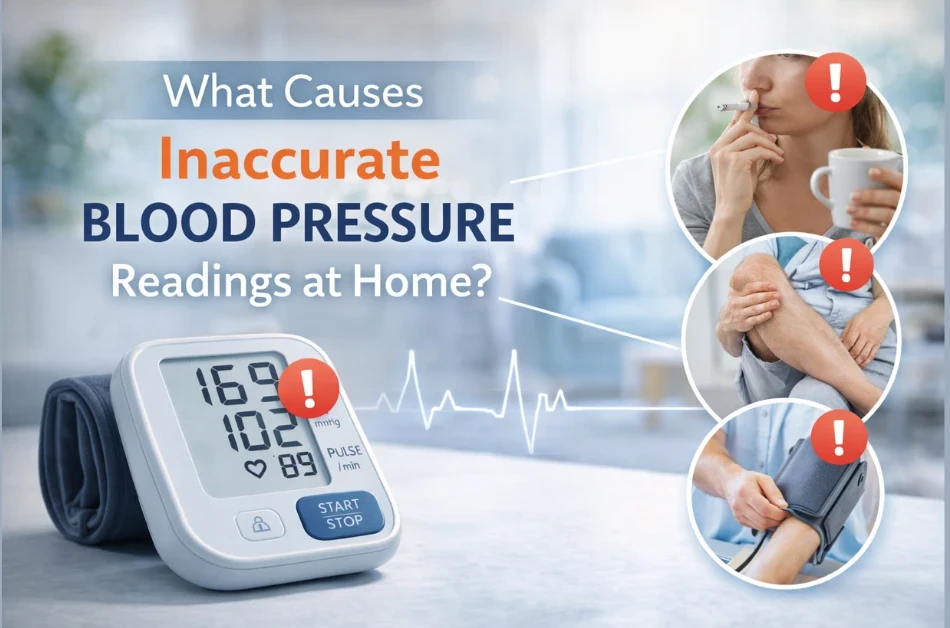
Even the most accurate home blood pressure monitor can produce misleading results if it’s used incorrectly. In fact, user error is one of the biggest reasons for inconsistent readings.
Here are the most common causes of inaccurate measurements:
- Wrong cuff size. A cuff that’s too small can artificially raise readings. A cuff that’s too large can lower them. Proper fit matters more than most people realize.
- Incorrect arm position. Your arm should be supported at heart level. Letting it hang down or lifting it too high can change results.
- Talking during the measurement. Even brief conversation can raise systolic pressure.
- Not resting beforehand. You should sit quietly for at least 5 minutes before testing.
- Full bladder. Surprisingly, this can raise blood pressure readings.
- Stress or anxiety. “White coat syndrome” doesn’t just happen in clinics — it can happen at home too.
It’s important to understand that blood pressure naturally fluctuates throughout the day. A single reading doesn’t tell the whole story. Patterns over time are far more meaningful than one isolated number.
When a validated device is used properly and readings are taken consistently, home monitoring can be a very reliable way to track cardiovascular health.
Are Advanced Blood Pressure Monitors More Accurate?
This is where marketing can create confusion.
Advanced blood pressure monitors are not necessarily more accurate for basic systolic and diastolic readings. A properly validated standard upper-arm monitor can already deliver readings within an accepted clinical margin of error.
What advanced devices typically offer is additional cardiovascular data, not improved basic accuracy.
Depending on the model, advanced monitors may provide insights such as:
- Central (heart-level) blood pressure
- Arterial stiffness measurements
- Pulse wave analysis
- Expanded heart health metrics
These measurements aim to give a deeper view of how pressure is affecting the arteries and heart — something standard monitors do not evaluate.
For example, devices like the Conneqt Pulse advanced blood pressure monitor are designed to go beyond traditional upper-arm readings by incorporating additional cardiovascular indicators. That doesn’t mean the systolic or diastolic numbers are dramatically more precise — it means the device provides broader insight into vascular health.
If you’d like a deeper breakdown of how this advanced monitor performs and what those expanded metrics actually mean, we cover it in our Conneqt Pulse review.
For many users, a validated standard monitor is completely sufficient. Advanced devices may be more relevant for individuals who want expanded cardiovascular tracking or who have risk factors that warrant closer monitoring.
Accuracy, in most cases, depends more on validation and proper use than on whether a device is labeled “advanced.”
For a broader breakdown of how standard and advanced monitors compare — including who each type is best suited for — see our Blood Pressure Devices for Home Use: Standard vs Advanced Monitoring guide.
How to Get the Most Accurate Blood Pressure Reading at Home
Even the best device can produce inconsistent numbers if the measurement process isn’t consistent. The good news is that a few simple adjustments can significantly improve reliability.
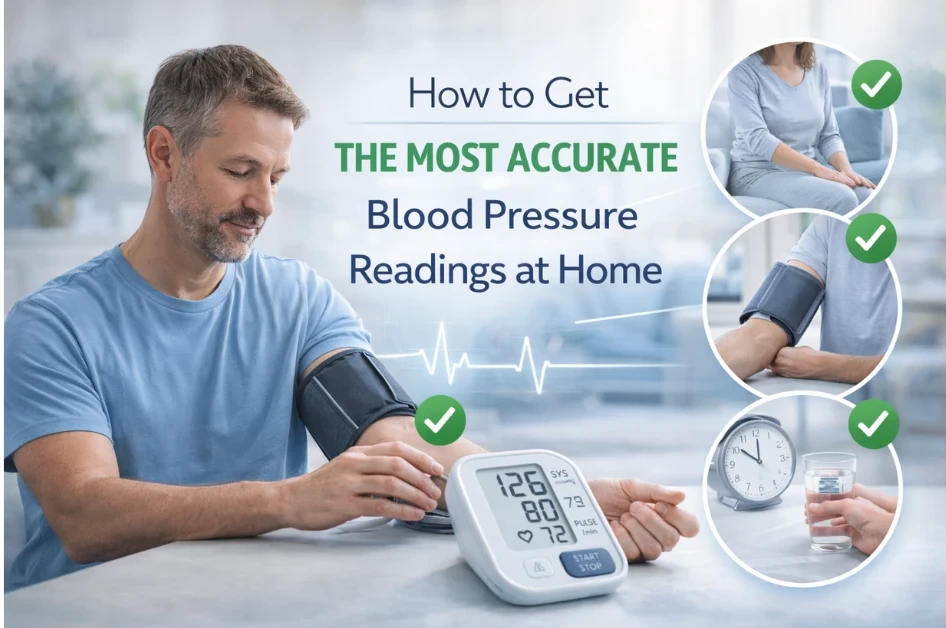
Follow these best practices for more accurate readings:
- Rest quietly for at least 5 minutes before measuring.
- Sit upright with your back supported and feet flat on the floor.
- Keep your arm supported at heart level.
- Use the correct cuff size for your arm.
- Avoid caffeine, exercise, or smoking for at least 30 minutes beforehand.
- Do not talk during the measurement.
- Take two readings, one minute apart, and record the average.
It’s also helpful to measure your blood pressure at the same time each day to track patterns rather than focusing on a single number.
When a validated monitor is used properly and readings are taken consistently, home blood pressure tracking can be a highly reliable way to monitor cardiovascular health over time.
Recommended Monitors for Accurate Home Blood Pressure Tracking
If you’re looking for a validated device that aligns with proper home monitoring standards, here are two options that approach accuracy from slightly different angles.
Conneqt Pulse Advanced Blood Pressure Monitor
Designed for users who want more than basic systolic and diastolic readings the Conneqt Pulse advanced blood pressure monitor incorporates additional cardiovascular metrics such as central blood pressure and arterial stiffness analysis.
It’s best suited for individuals interested in expanded heart health insights beyond standard measurements.
For a detailed breakdown of its performance and features, see our Conneqt Pulse review.
Oxiline Pressure XS Pro
A validated upper arm monitor focused on straightforward, reliable core readings is the Oxiline Pressure XS Pro. It’s a strong choice for users who prioritize simplicity, ease of use, and consistent daily tracking without advanced vascular metrics.
You can read our full evaluation in our Oxiline Pressure XS Pro review.
Both devices emphasize proper upper-arm measurement and validation standards — which remain the most important factors when evaluating home blood pressure accuracy.
Frequently Asked Questions
Are home blood pressure monitors as accurate as a doctor’s office reading?
When properly validated and used correctly, most upper-arm home blood pressure monitors can produce readings very close to those taken in a clinical setting. Small differences can occur due to technique, positioning, or normal blood pressure fluctuation.
What is the typical margin of error for a home blood pressure monitor?
For a clinically validated device, the acceptable margin of error is typically around ±3 mmHg. Proper use plays a major role in staying within that range.
Are wrist blood pressure monitors accurate?
Wrist monitors can be accurate, but they are more sensitive to positioning errors. Upper arm monitors generally provide more consistent results because they measure closer to heart level.
Why do my readings change every time I measure?
Blood pressure naturally fluctuates throughout the day. Stress, movement, caffeine, posture, and even talking can affect results. Trends over time are more important than a single reading.
Do advanced blood pressure monitors improve accuracy?
Advanced devices typically do not improve basic systolic and diastolic accuracy. Instead, they provide additional cardiovascular metrics such as central blood pressure or arterial stiffness measurements.

Final Thoughts
So, how accurate are home blood pressure monitors?
When properly validated and used correctly, most upper-arm home blood pressure monitors can provide readings that are very close to clinical measurements. The biggest factors affecting accuracy are usually technique, cuff fit, and consistency — not the device itself.
Standard monitors are often more than sufficient for routine tracking. Advanced devices may provide expanded cardiovascular insights, but they don’t automatically make basic systolic and diastolic readings more precise.
The most important takeaway is this:
Choose a validated upper-arm monitor, use it correctly, and focus on trends over time rather than one isolated number.
When used properly, home blood pressure monitoring can be a reliable and valuable tool for managing long-term cardiovascular health.
Thanks for visiting, we look forward to your visit at EliteHealthAffiliates.com – Your Go-To Authority for Health & Wellness