

Conneqt Pulse accuracy is one of the most important factors people need to consider when evaluating this advanced blood pressure monitor. While the device measures traditional readings like systolic and diastolic pressure, it also estimates central blood pressure and arterial stiffness, which raises an important question: how accurate are these additional measurements when used at home?
Blood pressure monitors play an important role in helping individuals track their cardiovascular health over time. When readings are consistent and reliable, they can help users monitor changes in blood pressure and share useful information with healthcare providers. Because of this, the accuracy of any home blood pressure monitor is a key factor when deciding whether a device is worth using.
The Conneqt Pulse advanced blood pressure monitor uses SphygmoCor® technology, a system that has been used in cardiovascular research and clinical environments to evaluate arterial health. By bringing this technology into a home monitoring device, the Conneqt Pulse aims to provide more insight than many standard blood pressure monitors that only display a single reading.
In this article, we’ll take a closer look at Conneqt Pulse accuracy, how its measurements compare to traditional monitors, and what users should understand about interpreting central blood pressure and arterial health readings at home.
This post contains affiliate links. If you purchase through them, we may earn a small commission at no extra cost to you.

Table of Contents
How We Tested Conneqt Pulse Accuracy (RN Supervised)
To evaluate Conneqt Pulse accuracy, we conducted a series of tests using standard home blood pressure monitoring procedures under registered nurse (RN) supervision. The goal was to observe how the Conneqt Pulse advanced blood pressure monitor performed when compared with readings from a clinically validated upper-arm blood pressure monitor, which represents the type of device commonly used in medical offices.
During testing, multiple readings were taken using the Conneqt Pulse and then compared with readings taken from the comparison monitor. Each test followed recommended home blood pressure measurement practices, including proper cuff placement, seated positioning, and resting for several minutes before each reading.
To help reduce variables that can influence blood pressure measurements, readings were taken several minutes apart, and multiple tests were performed during the same session. This allowed us to observe how consistently the Conneqt Pulse advanced blood pressure monitor reproduced similar readings over repeated measurements.
In addition to evaluating standard systolic and diastolic blood pressure readings, we also examined the device’s ability to estimate central blood pressure and arterial stiffness, which are two of the advanced cardiovascular measurements that differentiate the Conneqt Pulse from many standard home blood pressure monitors.
By comparing readings across devices and repeating measurements under consistent conditions, we were able to develop a clearer understanding of Conneqt Pulse accuracy and how reliably the device performs in a typical home monitoring environment.
What We Found
During testing, Conneqt Pulse accuracy was generally consistent with readings taken from the comparison upper-arm blood pressure monitor when proper measurement techniques were followed. When multiple readings were taken several minutes apart, the systolic and diastolic measurements stayed within a reasonable range of each other, which is typical for a reliable home blood pressure monitor.
It’s important to remember that small variations can occur with nearly any digital blood pressure monitor. Factors such as body position, stress levels, recent activity, and cuff placement can influence readings. Because of this, healthcare providers usually recommend taking multiple readings and monitoring trends over time rather than relying on a single measurement.
One of the more interesting observations during testing was the additional data provided by the Conneqt Pulse advanced blood pressure monitor. Beyond traditional blood pressure readings, the device estimates central blood pressure and arterial stiffness, which are indicators related to overall arterial health.
While these advanced measurements are not intended to replace clinical testing, they may provide useful insights when used as part of regular blood pressure monitoring at home. Over time, this type of information can help users better understand patterns in their cardiovascular health.
Overall, our testing suggested that Conneqt Pulse accuracy is comparable to other quality upper-arm home blood pressure monitors, with the added benefit of offering additional arterial health insights that many standard monitors do not provide.
What Affects Conneqt Pulse Blood Pressure Monitor Accuracy?
Several factors can influence Conneqt Pulse accuracy, just as they can with any home blood pressure monitor. Even high-quality devices can produce slightly different readings depending on how and when measurements are taken.
Cuff Placement
Proper cuff placement is one of the most important factors affecting accuracy. The cuff should be positioned securely around the upper arm, with the tubing aligned correctly and the cuff sitting close to heart level. If the cuff is too loose or positioned incorrectly, readings may appear higher or lower than expected.
Body Position
Your body position during measurement can also affect blood pressure accuracy. For the most reliable readings, it’s recommended to sit upright with your back supported, feet flat on the floor, and arm resting comfortably at heart level. Sitting in a relaxed and stable position helps reduce measurement variability.
Recent Activity or Stress
Blood pressure naturally fluctuates throughout the day. Physical activity, stress, caffeine, and even talking during a measurement can influence readings. Taking a reading immediately after exercise or during a stressful moment may produce a higher result than one taken while resting.
Taking Multiple Readings
Healthcare professionals often recommend taking two or three readings several minutes apart when monitoring blood pressure at home. This helps reduce the impact of normal fluctuations and provides a more reliable view of your overall blood pressure trend.
When these best practices are followed, devices like the Conneqt Pulse advanced blood pressure monitor can provide readings that are consistent enough for routine home monitoring and long-term blood pressure tracking.

How to Get the Most Accurate Readings with the Conneqt Pulse
Getting the most reliable results from the Conneqt Pulse advanced blood pressure monitor comes down to following a few simple best practices. Small adjustments in how measurements are taken can make a noticeable difference in Conneqt Pulse accuracy.
Rest Before Taking a Measurement
Before using the Conneqt Pulse, it’s best to sit quietly for at least five minutes. This allows your body to return to a relaxed state and helps prevent temporary increases in blood pressure caused by activity or stress.
Keep Your Arm at Heart Level
For the most accurate readings, your arm should rest comfortably at heart level during the measurement. Supporting your arm on a table or desk can help keep the position stable and reduce unnecessary movement.
Avoid Talking During the Reading
Talking or moving during a measurement can affect blood pressure readings. Remaining still and quiet while the Conneqt Pulse blood pressure monitor completes its measurement helps ensure the device records the most accurate data possible.
Measure at the Same Time Each Day
Blood pressure can vary throughout the day. Taking readings at the same time each day makes it easier to compare results and identify meaningful trends over time.
Track Trends Rather Than Individual Readings
A single reading rarely tells the whole story. The real value of using the Conneqt Pulse advanced blood pressure monitor comes from tracking readings consistently and observing patterns over time. Monitoring trends can provide a clearer picture of overall cardiovascular health and help guide discussions with healthcare providers.
Following these steps can help improve Conneqt Pulse accuracy and make home monitoring a more reliable way to stay informed about your blood pressure and arterial health trends.
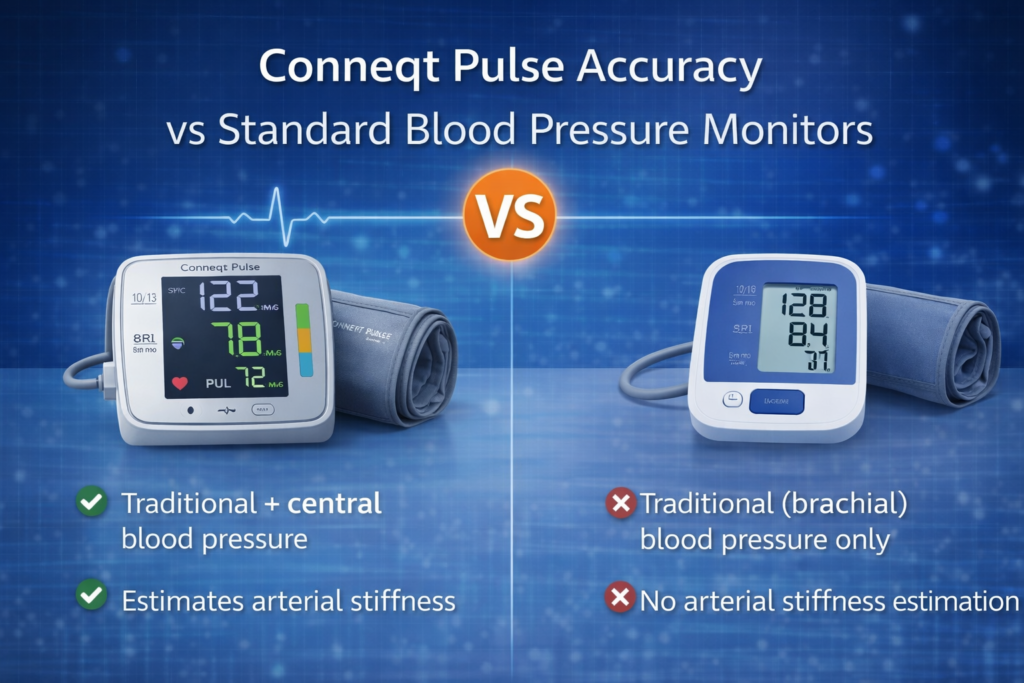
Conneqt Pulse Accuracy vs Standard Blood Pressure Monitors
When evaluating Conneqt Pulse accuracy, it helps to understand how the device compares with a standard home blood pressure monitor. Both types of devices measure blood pressure using an upper-arm cuff, but the information they provide can be quite different.
A standard blood pressure monitor typically measures three main values:
- Systolic blood pressure
- Diastolic blood pressure
- Pulse rate
These readings are widely used in both home and clinical settings to monitor blood pressure trends and identify potential cardiovascular concerns.
The Conneqt Pulse advanced blood pressure monitor, however, goes a step further by estimating additional measurements related to arterial health. In addition to traditional blood pressure readings, the device analyzes central blood pressure and arterial stiffness, which provide a deeper look at how pressure behaves within the arteries.
Central blood pressure reflects the pressure closer to the heart and major arteries, while arterial stiffness measurements evaluate how flexible or rigid the arteries may be. These measurements are made possible through SphygmoCor® technology, which has been used in cardiovascular research and clinical environments for many years.
While these advanced measurements are not intended to replace clinical testing, they can provide additional insight when used as part of long-term home blood pressure monitoring. For users interested in tracking both traditional blood pressure readings and broader arterial health indicators, the Conneqt Pulse advanced blood pressure monitor offers capabilities that many standard monitors do not provide.
To better understand the technology behind these readings, see our breakdown: how the Conneqt Pulse advanced blood pressure monitor works.
Pros and Cons of Conneqt Pulse Accuracy
Like any home blood pressure monitor, the Conneqt Pulse advanced blood pressure monitor has strengths and limitations when it comes to accuracy. Understanding these can help users decide whether an advanced blood pressure monitor like the Conneqt Pulse fits their needs.
Pros
Consistent upper-arm measurement design
The Conneqt Pulse uses an upper-arm cuff, which is generally considered the most reliable format for home blood pressure monitoring. Upper-arm monitors tend to provide more consistent readings compared to wrist-based devices.
Advanced arterial health insights
In addition to standard readings, the Conneqt Pulse advanced blood pressure monitor estimates central blood pressure and arterial stiffness, giving users a broader understanding of their cardiovascular health.
Trend monitoring over time
Because the device can be used regularly at home, users can track blood pressure trends rather than relying on occasional measurements taken during doctor visits.
Cons
Advanced metrics may require interpretation
Measurements like central blood pressure and arterial stiffness may not be as familiar as traditional blood pressure readings. Some users may need additional guidance to understand what these metrics mean.
Home measurements can vary slightly
As with most digital blood pressure monitors, readings can vary depending on body position, cuff placement, and recent activity.
Not a replacement for clinical evaluation
While the Conneqt Pulse provides useful insights, home monitoring devices should always be used alongside professional medical guidance rather than as a replacement for clinical testing.
Overall, when proper measurement practices are followed, the Conneqt Pulse accuracy appears consistent with other quality upper-arm blood pressure monitors, while also offering additional arterial health insights that many standard devices do not provide.

Who Should Consider the Conneqt Pulse for Accurate Monitoring?
The Conneqt Pulse advanced blood pressure monitor may be a good option for individuals who want more than a basic blood pressure reading. Because the device measures both traditional blood pressure values and additional arterial health indicators, it is designed for users interested in gaining a broader understanding of their cardiovascular health.
People Monitoring Blood Pressure at Home
Individuals who regularly track their blood pressure at home may benefit from the additional insights provided by the Conneqt Pulse. Consistent home monitoring can help reveal long-term blood pressure trends, which can be useful when discussing health changes with a healthcare provider.
Users Interested in Advanced Cardiovascular Insights
The Conneqt Pulse advanced blood pressure monitor estimates central blood pressure and arterial stiffness, which are indicators related to arterial health. For people who want deeper information about how blood pressure behaves within their arteries, these additional measurements may offer helpful context.
Individuals Focused on Preventive Health
Some users simply want to take a more proactive approach to their cardiovascular wellness. By monitoring both traditional blood pressure readings and additional arterial health markers, the Conneqt Pulse may provide a more complete picture of overall cardiovascular trends.
People Who Want Consistent At-Home Monitoring
Devices like the Conneqt Pulse are designed to make routine blood pressure monitoring easier to perform at home. When used regularly and with proper measurement techniques, they can help users stay informed about their blood pressure patterns between medical visits.
Conneqt Pulse Accuracy FAQ
Is the Conneqt Pulse clinically validated for accuracy?
Yes. The Conneqt Pulse has undergone clinical validation testing, meaning it has been evaluated against medical-grade equipment used in hospitals and research labs to help ensure its measurements are reliable across real users.
How accurate is the Conneqt Pulse compared to traditional monitors?
In general, the Conneqt Pulse advanced blood pressure monitor performs similarly to other quality upper-arm blood pressure monitors when measuring traditional brachial blood pressure.
In addition, it estimates central blood pressure and arterial stiffness, which are advanced cardiovascular indicators not typically measured by standard home monitors.
What makes Conneqt Pulse different from a standard blood pressure monitor?
Standard home monitors measure blood pressure only at the arm (brachial pressure).
The Conneqt Pulse also estimates central blood pressure near the heart and analyzes arterial waveform data, providing deeper insight into arterial health and cardiovascular trends.
Does the Conneqt Pulse use clinical technology?
Yes. The device uses SphygmoCor® technology, a system widely used in cardiovascular research and clinical environments to analyze arterial waveform data and estimate central blood pressure.
How long does a Conneqt Pulse measurement take?
A typical measurement takes about two minutes. During this time, the monitor measures traditional blood pressure readings while also evaluating arterial health indicators.
How often should I measure my blood pressure?
Healthcare professionals typically recommend measuring blood pressure once or twice daily at consistent times, especially when first monitoring trends. Taking multiple readings and tracking patterns over time can provide a clearer picture of cardiovascular health.
How should I prepare for a reading?
For the most accurate results:
- Sit upright with your back supported
- Keep both feet flat on the floor
- Rest quietly for 5 minutes before measuring
- Avoid caffeine, exercise, or smoking for 30 minutes before a reading
- Position the cuff at heart level
Can the Conneqt Pulse detect atrial fibrillation (AFib)?
The Conneqt Pulse analyzes arterial waveform patterns, which can provide insights into cardiovascular health. However, it is not intended to diagnose atrial fibrillation or replace medical diagnostic equipment.
Can home blood pressure readings vary even with an accurate monitor?
Yes. Blood pressure naturally fluctuates depending on factors such as body position, stress, recent activity, caffeine intake, and cuff placement.
For the most reliable results, healthcare professionals recommend taking multiple readings and tracking trends over time rather than relying on a single measurement.
Does the Conneqt Pulse replace medical testing?
No. While the Conneqt Pulse advanced blood pressure monitor provides useful insights into blood pressure and arterial health, it should be used as a supplement to regular medical care, not a replacement for professional diagnosis or clinical testing.
Curious how the Conneqt Pulse performs overall?
Accuracy is only one part of the bigger picture. In our complete Conneqt Pulse review, we cover the device’s features, technology, usability, and who this advanced blood pressure monitor is best suited for.
Where to Buy the Conneqt Pulse Advanced Blood Pressure Monitor
The Conneqt Pulse advanced blood pressure monitor is currently available exclusively through the official CONNEQT website. Unlike many standard blood pressure monitors, the device is not typically sold through large online marketplaces or retail stores.
Ordering directly from the official website helps ensure that customers receive the latest version of the device, along with access to the full Conneqt monitoring platform and product support resources. The purchase process is completed online, and the monitor is then shipped directly to the customer.
Because the Conneqt Pulse provides advanced measurements such as central blood pressure and arterial stiffness, purchasing directly from the manufacturer also ensures that users have access to the tools and updates associated with the device’s arterial health monitoring features.
If you’re interested in learning more about the device, you can visit the official Conneqt website to explore the features and capabilities of the Conneqt Pulse advanced blood pressure monitor.

Final Thoughts on Conneqt Pulse Accuracy
Overall, Conneqt Pulse accuracy appears comparable to other quality upper-arm blood pressure monitors when proper measurement practices are followed. During testing and evaluation, the device produced consistent readings while also offering additional cardiovascular insights that most traditional monitors do not provide.
What sets the Conneqt Pulse advanced blood pressure monitor apart is its ability to go beyond basic blood pressure readings. By estimating central blood pressure and arterial stiffness, the device provides a broader perspective on arterial health and cardiovascular trends that may help users better understand changes in their blood pressure over time.
For individuals who want more than just a single blood pressure number, the Conneqt Pulse offers a more advanced approach to home blood pressure monitoring. When used consistently and alongside regular medical care, it can be a valuable tool for tracking long-term cardiovascular health patterns.
If you’re interested in monitoring both traditional blood pressure readings and deeper arterial health insights, the Conneqt Pulse advanced blood pressure monitor may be worth considering. To explore the device further or learn more about its features, you can visit the official Conneqt website and see how the monitor works for yourself.
Thanks for visiting, we look forward to your visit at EliteHealthAffiliates.com – Your Go-To Authority for Health & Wellness