
Finding the right blood pressure devices for home use seems simple—until you realize how different today’s options truly are. Most people assume all monitors work the same, but the reality is that home blood pressure devices vary dramatically in accuracy, data quality, and the depth of cardiovascular insight they provide.
And those differences matter far more than most consumers realize.
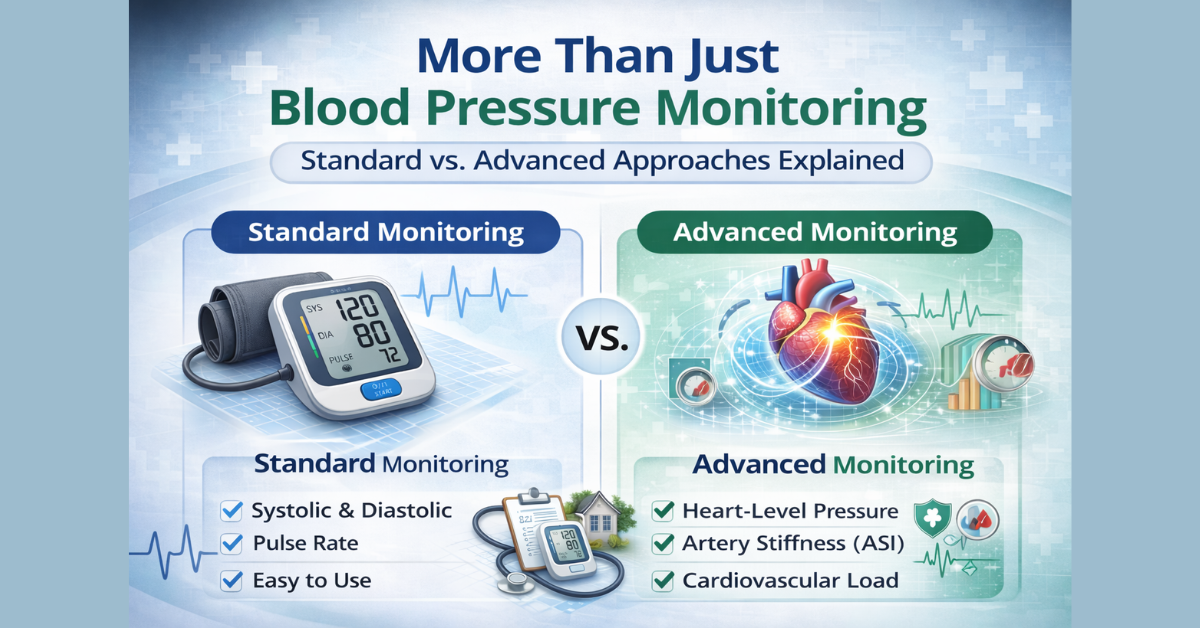
For decades, traditional cuffs have been the default. They’re familiar, inexpensive, and easy to use. But as cardiovascular research has evolved, so has the technology designed for home monitoring. Today, some devices go far beyond standard readings, offering heart-level blood pressure, artery stiffness analysis, and other metrics doctors use to assess long-term cardiovascular risk.
The challenge? Most shoppers never hear about these differences. Many end up choosing devices that are convenient rather than devices that deliver the deeper insights their health truly needs.
This guide breaks everything down clearly. Whether you’re looking for simple day-to-day tracking or advanced cardiovascular monitoring, understanding the differences between standard vs advanced blood pressure devices for home use will help you choose equipment that genuinely supports your long-term health.
This post contains affiliate links. If you purchase through them, we may earn a small commission at no extra cost to you.
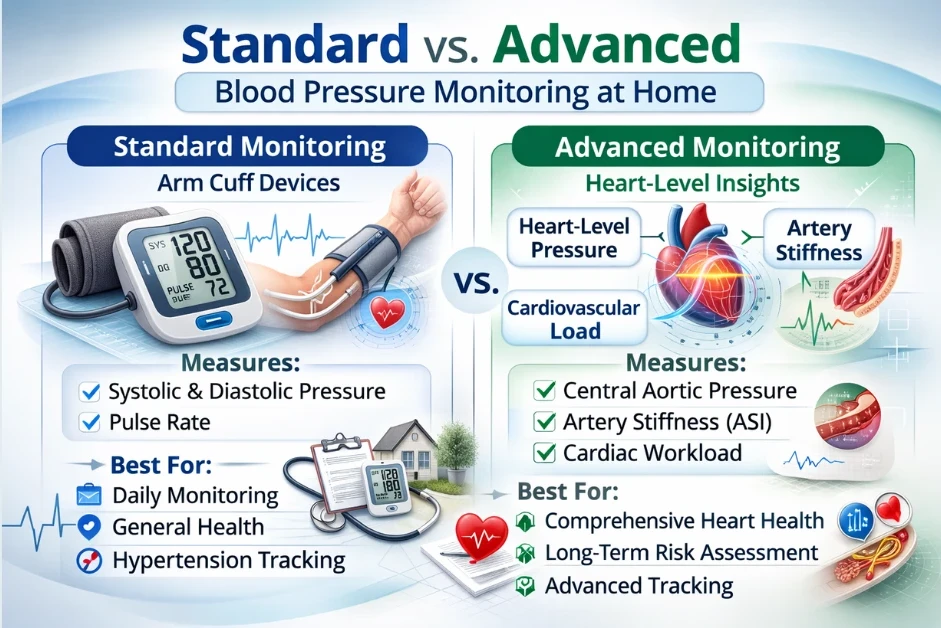
Table of Contents
Standard Blood Pressure Devices for Home Use
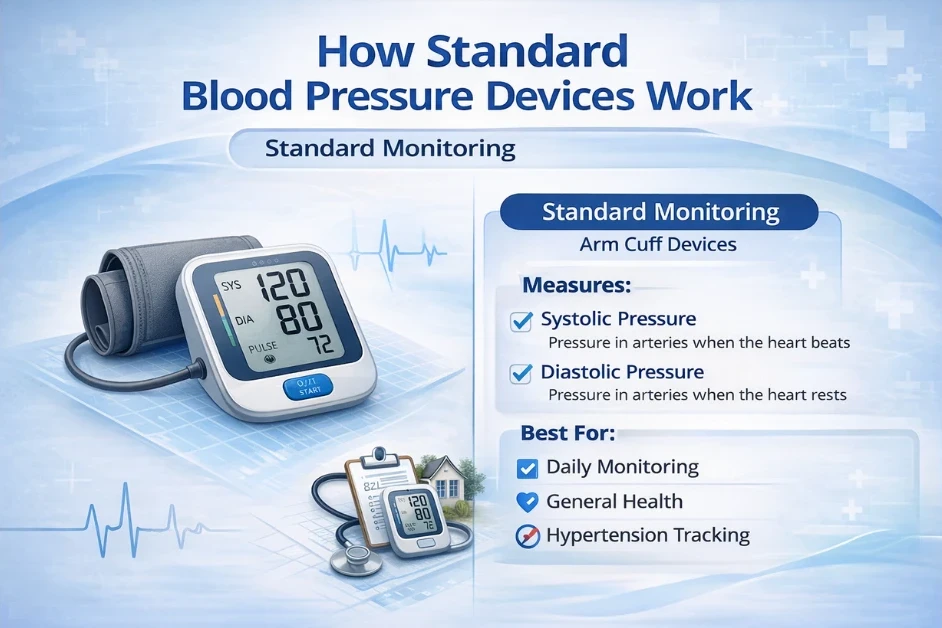
Standard blood pressure devices for home use are the monitors most people recognize immediately. These include the traditional upper-arm cuff devices you’ll find in pharmacies, retail stores, and across the internet. They remain popular because they’re simple, affordable, and clinically accepted for everyday monitoring.
These devices typically measure systolic pressure, diastolic pressure, and pulse rate. For many households, that’s all they need—especially if the goal is basic tracking or confirming what a healthcare provider has already identified. Their main strength is consistent, reliable readings when used correctly.
However, standard devices come with one important limitation: they only measure pressure in the brachial artery (upper arm). While helpful, this number does not always reflect the pressure your heart actually experiences. For individuals with higher cardiovascular risk, this distinction can be meaningful.
Standard blood pressure devices are ideal for people who:
- Want basic day-to-day blood pressure tracking
- Have already been evaluated by a healthcare provider
- Do not need deeper cardiovascular insights
- Prefer a budget-friendly, easy-to-use option
These devices are effective for routine monitoring. But they are designed for straightforward readings, not the expanded cardiovascular data that advanced blood pressure devices can now provide.
Advanced Blood Pressure Devices for Home Use
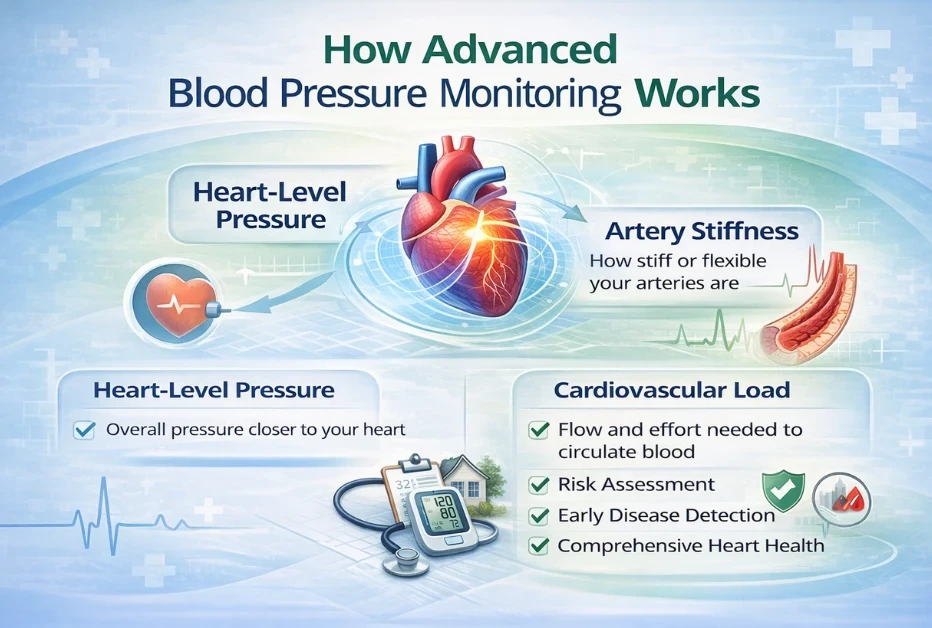
Advanced blood pressure devices for home use go far beyond basic monitoring. While standard monitors provide only systolic and diastolic readings, advanced devices deliver deeper cardiovascular insights that traditional cuffs simply cannot measure. These enhanced metrics give users a more complete, clinically meaningful picture of their heart health.
The biggest difference comes from the ability to measure heart-level (central) blood pressure, not just pressure in the brachial artery. This matters because the pressure your heart actually experiences can be very different from the number on your arm. Devices capable of estimating central pressure offer a more accurate reflection of true cardiovascular strain.
Many advanced devices also analyze artery stiffness, an important marker strongly linked to long-term heart and vascular health. This type of measurement is rarely available in standard home monitors—it’s something typically found only in clinical-grade equipment. Having access to this level of insight at home allows users to track meaningful trends earlier and have more informed discussions with their healthcare providers.
Advanced blood pressure devices are ideal for people who:
- Want more than basic systolic/diastolic readings
- Have hypertension, diabetes, or other cardiovascular risk factors
- Want to monitor long-term heart health trends, not just daily numbers
- Prefer clinical-grade insights in a home-friendly device
While advanced devices may cost more, the tradeoff is significant: greater accuracy, deeper data, and a clearer long-term understanding of your cardiovascular health. For many users, that added insight is well worth the investment.
Standard vs Advanced: What These Differences Mean for Your Health
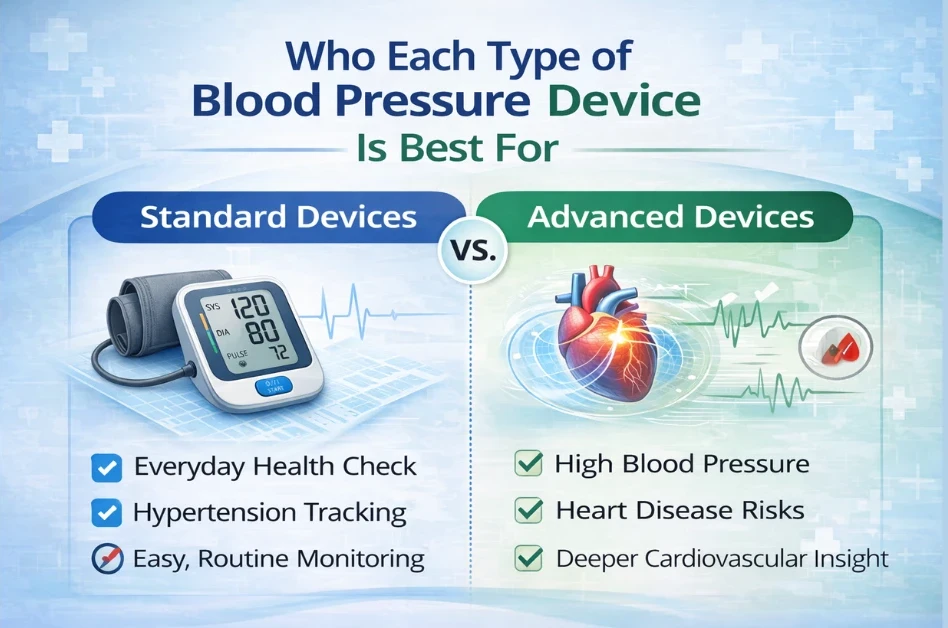
The biggest difference between standard and advanced blood pressure devices for home use is how much health insight they provide—and that directly affects who each type is best for.
Standard devices are best suited for people who want simple, routine monitoring. If you only need to check blood pressure occasionally, confirm medication effectiveness, or track basic trends, a traditional cuff provides everything you need. These devices work well for individuals with stable blood pressure, no major cardiovascular risk factors, and those who prefer a straightforward, budget-friendly option.
Advanced devices, on the other hand, are designed for users who need more detailed cardiovascular data. If you have hypertension, diabetes, a family history of heart disease, or simply want a clearer picture of how your heart and arteries are functioning, advanced monitoring offers significant advantages. These devices provide insights like heart-level blood pressure and artery stiffness, helping users and healthcare providers understand long-term risks more effectively.
In short:
- Choose standard monitoring if you want simple, reliable, everyday tracking.
- Choose advanced monitoring if you want deeper insight into long-term heart health.
This distinction helps ensure you’re using a device that truly matches your needs—without overpaying for features you don’t need or missing out on insights that could benefit your long-term health.
RN Testing: How We Evaluated These Devices
To understand how standard and advanced blood pressure devices for home use perform in real-world conditions, we tested each category under the supervision of a registered nurse (RN). This approach ensures that our observations reflect not just convenience or usability, but also clinical relevance.
We evaluated each device across four key areas:
1. Ease of Use
The RN assessed how simple each device was to set up, position, and operate—especially for older adults or first-time users. Standard devices generally scored higher on simplicity, while advanced devices required a brief learning curve but offered more comprehensive data once mastered.
2. Reading Consistency
Multiple readings were taken from each device to check consistency. Standard devices were reliable for routine systolic and diastolic measurements, while advanced devices provided additional metrics that remained stable across repeated tests.
3. Depth of Insight
This is where the difference became clear. Advanced devices delivered heart-level pressure, artery stiffness indicators, and other detailed metrics that standard monitors simply cannot provide. The RN noted that these additional data points could be particularly valuable for individuals managing long-term cardiovascular conditions.
4. Practical Everyday Use
We also evaluated how each device fit into a typical at-home routine—battery life, comfort, cuff design, and time required for a full reading. Both device categories performed well, but advanced devices stood out for users who want more than basic numbers and prefer to track detailed trends over time.
Overall, RN testing confirmed that both device types serve an important purpose, but they meet very different needs. The findings helped clarify not just how the devices function, but which type is likely to make a meaningful difference depending on the user’s goals.
Pros and Cons: Standard vs Advanced Blood Pressure Devices
Standard Blood Pressure Devices
Pros:
- Easy to use with minimal setup
- Affordable and widely available
- Reliable for basic systolic/diastolic readings
- Ideal for routine daily monitoring
- Great for users who want a simple, no-frills option
Cons:
- Provide limited cardiovascular insight
- Cannot measure heart-level pressure
- No data on artery stiffness or long-term vascular trends
- May not offer enough information for users with higher risk factors
Advanced Blood Pressure Devices
Pros:
- Offer heart-level (central) blood pressure measurements
- Provide artery stiffness trends and additional cardiovascular markers
- Deliver more detailed, clinically meaningful insights
- Helpful for users with hypertension, diabetes, or long-term risk management
- Support more informed discussions with healthcare providers
Cons:
- Higher price point than standard monitors
- Often have a slightly longer learning curve
- More features may feel unnecessary for users who only need basic tracking
Accuracy plays a major role when choosing a home blood pressure monitor. Even well-designed devices can produce inconsistent readings if they’re not validated or used correctly.
To understand what affects measurement reliability and how close home monitors are to clinical readings, see our detailed guide: How Accurate Are Home Blood Pressure Monitors?
Frequently Asked Questions
What Is the Difference Between Standard and Advanced Blood Pressure Devices?
Standard blood pressure monitors measure systolic and diastolic pressure at the upper arm. Advanced devices go further by offering additional insights such as central (heart-level) blood pressure and arterial stiffness, providing a broader view of cardiovascular health.
Do I Need an Advanced Blood Pressure Device?
Not necessarily. If you only need basic daily blood pressure monitoring, a standard device is typically sufficient. However, if you want deeper cardiovascular insight or have risk factors like hypertension or diabetes, an advanced device may offer added value.
Are Advanced Devices More Accurate?
Both standard and advanced devices can be accurate for traditional systolic and diastolic readings. The difference is that advanced monitors provide additional cardiovascular metrics that may better reflect how the heart and arteries are functioning over time.
Are Advanced Devices Harder to Use?
There may be a brief learning curve, but most advanced monitors include guided instructions and app support. Once familiar with the interface, daily use is generally straightforward.
Do Standard Devices Work Well for Most People?
Yes. For individuals who want simple, reliable blood pressure tracking, standard devices remain an excellent choice. They provide the core numbers most healthcare providers rely on.
Can Advanced Devices Replace Doctor Visits?
No. While they provide helpful data, they cannot diagnose conditions or replace professional medical evaluation. They are best used as a supplement to routine medical care.
Why Would Someone Choose a More Expensive Advanced Device?
Advanced devices offer metrics that standard monitors cannot, including trend analysis and arterial insights that may help guide discussions with healthcare providers and support more personalized health decisions.
Devices like the Conneqt Pulse advanced blood pressure monitor go beyond traditional readings by estimating central blood pressure and analyzing arterial stiffness. If you’re curious how this technology works in practice, see our full breakdown of how the Conneqt Pulse works.
Want to go deeper into blood pressure monitoring? Explore our full guide series below.
Complete Blood Pressure Monitoring Guide Series
Getting Started
Accuracy & Performance
- How Accurate Are Home Blood Pressure Monitors?
- Conneqt Pulse Accuracy
- Does Conneqt Pulse Actually Work?
- Most Accurate Blood Pressure Monitors for Home Use
Buying Decisions
- Best Blood Pressure Monitor for Home Use
- Conneqt Pulse Review (Advanced Monitoring Option)
- Oxiline Pressure XS Pro Review (Best Standard Option)
Where to Buy Blood Pressure Devices for Home Use
Choosing the right blood pressure devices for home use depends on whether you need standard monitoring or advanced cardiovascular insight. According to the American Heart Association, regular home monitoring can support better long-term blood pressure control and help identify trends earlier making the choice of device more important than most people realize.
If you’re considering a standard home blood pressure device, one of the most reliable options is the Oxiline Pressure XS Pro. It delivers consistent readings, easy operation, and strong overall performance for users who want straightforward tracking.
To learn whether it fits your needs, read our full evaluation: Best Blood Pressure Monitor for Home Use.
For those who want advanced monitoring, including heart-level blood pressure, artery stiffness trends, and deeper cardiovascular data, the Conneqt Pulse stands out as a next-level option. It provides insights that traditional monitors simply cannot offer.
For a complete breakdown, read our detailed: Conneqt Pulse Review.
Exploring these reviews will help you decide which category—and which specific device—offers the right balance of insight, simplicity, and long-term value for your personal health goals. Once you understand the differences clearly, choosing where to buy becomes a far more confident decision.

Final Thoughts
Choosing the right blood pressure devices for home use starts with understanding the level of monitoring you actually need. Standard devices offer reliable everyday tracking, making them a strong fit for users who want simple, consistent readings. Advanced devices, on the other hand, provide a deeper look into long-term cardiovascular health—ideal for those who want more insight than a traditional cuff can offer.
What matters most is selecting a device that aligns with your goals, your comfort level, and the depth of information you want to measure at home. Modern options make it possible to choose between simplicity and advanced insight, without compromising accuracy or convenience.
If you’re leaning toward a standard device, our full breakdown Oxiline Pressure XS Pro Review offers a closer look deep dive at standard blood pressure monitors and what you should expect when choosing the Oxiline Pressure XS Pro.
If you’re considering advanced monitoring, our Conneqt Pulse Review provides detailed insight into its heart-level pressure and artery stiffness tracking. Exploring the many benefits of choosing the Conneqt Pulse.
Understanding these differences ensures you choose a device that truly supports your long-term heart health—whether that means sticking with a dependable standard monitor or upgrading to a more comprehensive, data-focused solution.
Thanks for reading, we look forward to your visit at EliteHealthAffiliates.com – Your Go-To Authority for Health & Wellness