
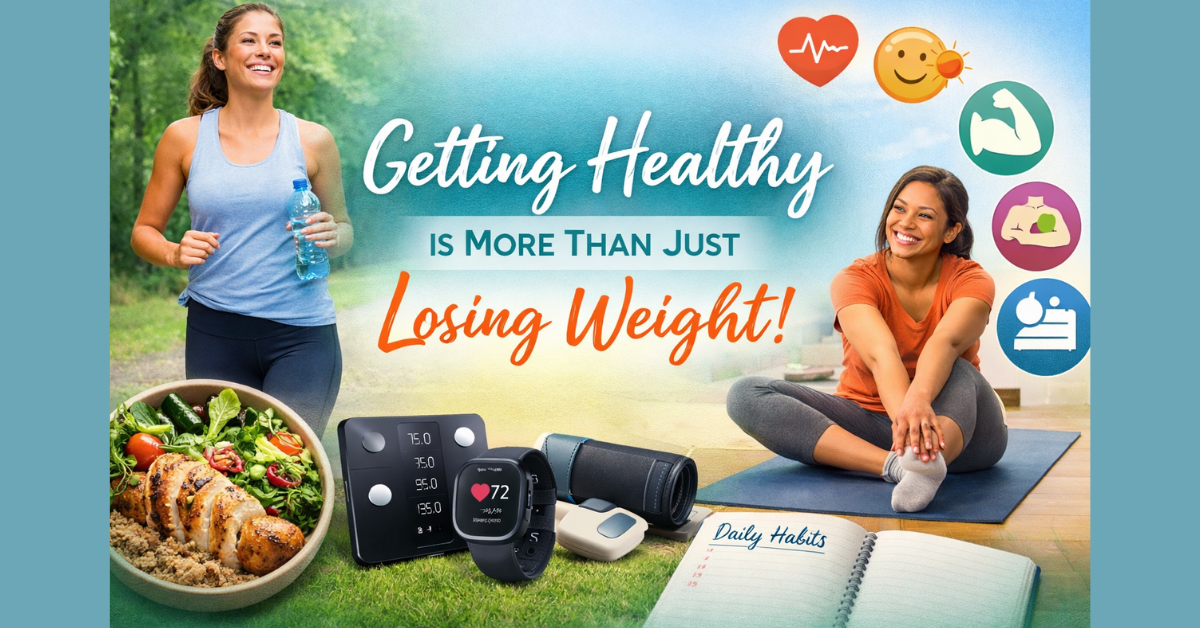
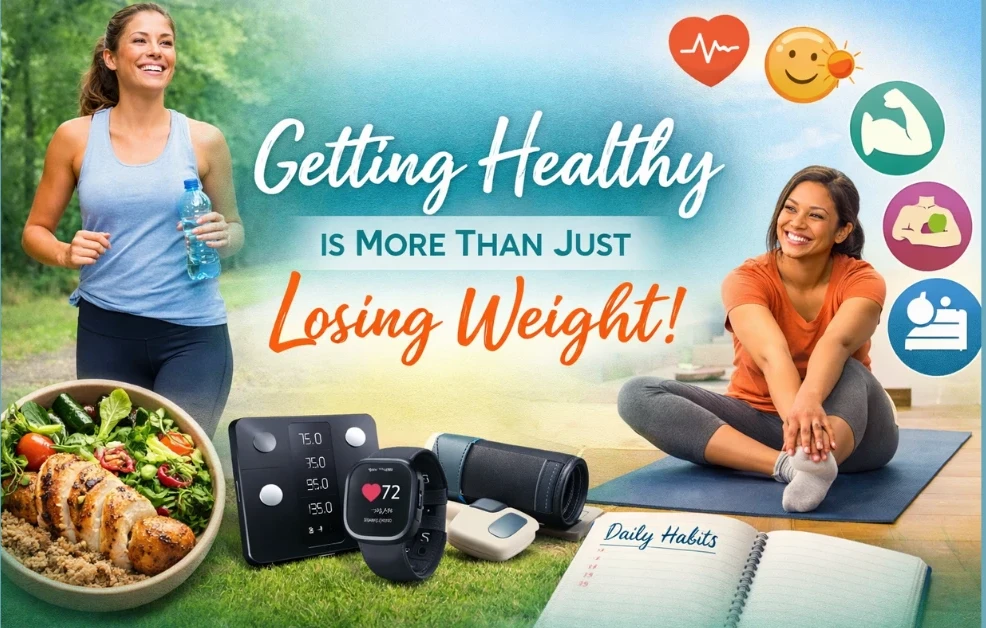
Getting healthy has become a popular goal, but many people still assume it simply means losing weight. Step on the scale, see the number drop, and believe progress is being made. The reality, however, is far more nuanced. Losing weight and getting healthy are not the same thing.
A person can lose weight while becoming less healthy, while another may gain weight and dramatically improve their overall health. Understanding this difference is essential if your goal is long-term wellness—not short-term results.
This article explains what getting healthy truly means, why weight alone can be misleading, and how to measure real progress the right way.
This post contains affiliate links. If you purchase through them, we may earn a small commission at no extra cost to you.

Table of Contents
What Does “Getting Healthy” Actually Mean?
Getting healthy focuses on how well your body functions, not just what it weighs.
True health includes:
- Strong muscle and bone structure
- Balanced body fat levels
- Efficient metabolism
- Healthy cardiovascular function
- Stable daily energy
- Proper hydration
- Healthy circulation and blood pressure
Your weight alone does not reflect these factors. It tells you nothing about what your body is made of, which is where real health improvements occur.
Why Losing Weight Isn’t Always Healthy
Weight loss can occur for the wrong reasons—especially when the only goal is a smaller number on the scale.
Common unhealthy methods include:
- Crash dieting that slows metabolism
- Severe calorie restriction leading to muscle loss
- Excessive cardio without strength training
- Temporary water loss mistaken for fat loss
In these cases, the scale may drop, but:
- Muscle mass decreases
- Body fat percentage may stay the same—or rise
- Metabolic health declines
- Energy, strength, and resilience suffer
Weight loss without improved health is not real progress.
Why the Scale Alone Is Misleading
A traditional bathroom scale measures only total body weight. It cannot tell the difference between fat, muscle, water, or bone.
Two people can weigh the same yet have completely different health profiles. One may be strong, lean, and metabolically healthy, while the other carries excess body fat with low muscle mass.
This is why focusing only on weight often leads to confusion, frustration, and stalled motivation.
Getting Healthy Is About Body Composition
Body composition shows what your weight is actually made of, which matters far more than the number itself.
Key health-focused metrics include:
- Body fat percentage
- Muscle mass
- Visceral fat levels
- Hydration status
- Bone mass
- Basal metabolic rate (BMR)
When people shift their focus to getting healthy, they often notice:
- Minimal change on the scale
- Clothes fitting better
- Increased strength
- Improved energy
- Lower body fat percentage
These are signs of real progress, even if weight stays the same.

Healthy Habits That Don’t Always Reduce Weight Immediately
Some of the most powerful health improvements don’t result in fast weight loss.
Examples include:
- Strength training that builds muscle
- Increasing protein intake
- Improving hydration
- Reducing stress and improving sleep
- Supporting hormonal balance
- Choosing consistent movement over extreme workouts
These habits improve long-term health, metabolism, and body composition, even when the scale moves slowly—or not at all.
Why Getting Healthy Is More Sustainable Than Dieting
Weight-focused goals are often short-term and emotionally driven.
Health-focused goals are long-term and data-driven.
When your priority is getting healthy:
- Plateaus are easier to understand
- Motivation isn’t tied to daily weigh-ins
- Decisions are based on progress, not panic
- Results are easier to maintain
This shift helps many people finally break free from yo-yo dieting cycles.
How to Track Health the Right Way
Tracking health effectively means looking beyond total weight.
The most effective approach includes:
- Body composition data
- Trends over time—not daily fluctuations
- Multiple health markers working together
This is where smarter tracking tools become essential.
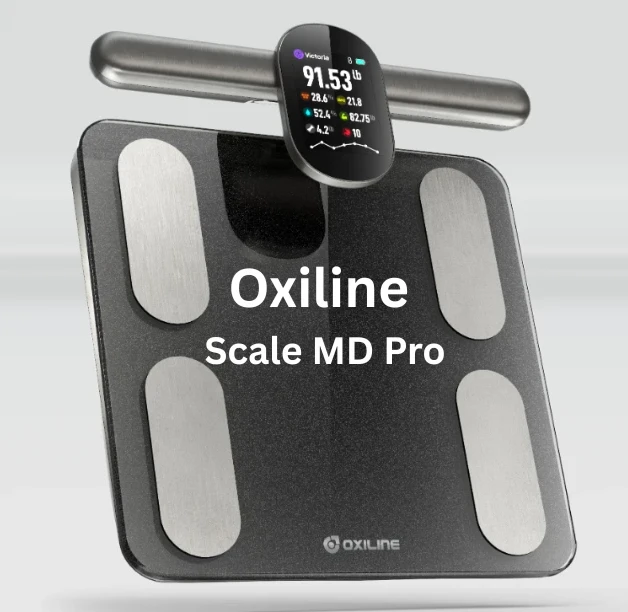
Where the Oxiline Scale MD Pro Fits In
For anyone serious about getting healthy, the Oxiline Scale MD Pro offers insight that a basic scale simply cannot.
It tracks metrics such as:
- Body fat percentage
- Muscle mass
- Visceral fat
- Hydration levels
- Bone mass
- Metabolic indicators
Instead of guessing whether a plateau means failure or progress, you can see what’s actually changing inside your body, making it easier to adjust habits intelligently and stay motivated.
Tracking Health Beyond the Scale
If your goal is getting healthy rather than simply losing weight, tracking the right data matters. A traditional scale can only show total weight, but it can’t reveal what’s actually changing inside your body.
To see how key health markers can be measured beyond weight alone, you can learn more about the tool designed for that purpose here => Oxiline Scale MD Pro: 31 Metrics for Powerful Health Insights.
Who This Health-First Approach Is Best For
This approach is especially helpful for:
- Adults over 40
- People building or preserving muscle
- Those at a “normal” weight who still feel unhealthy
- Anyone frustrated by scale plateaus
- Individuals focused on long-term wellness, not quick fixes
Frequently Asked Questions About Getting Healthy
Is getting healthy the same as losing weight?
No. While weight loss can be part of getting healthy, the two are not the same. Getting healthy focuses on improving how your body functions—such as muscle strength, metabolism, energy levels, and overall wellness—rather than just reducing body weight.
Why can I feel healthier even if the scale doesn’t change?
The scale only measures total weight. If you’re building muscle, improving hydration, or reducing body fat while maintaining weight, your health can improve significantly without seeing changes on the scale. This is common when focusing on sustainable health habits.
Can you get healthier without losing weight?
Yes. Many people improve their health by increasing muscle mass, lowering body fat percentage, improving cardiovascular fitness, and stabilizing energy levels—even if their weight stays the same or increases slightly.
Why does focusing only on weight lead to frustration?
Weight fluctuates daily due to water retention, digestion, and other factors unrelated to health. When progress is judged only by the scale, healthy changes can go unnoticed, leading people to abandon habits that are actually working.
What should I focus on instead of just weight?
A health-first approach looks at trends over time, including strength, energy, body composition, and overall well-being. These indicators provide a more accurate picture of whether you’re truly getting healthier.
Optional Support for Healthy Habits
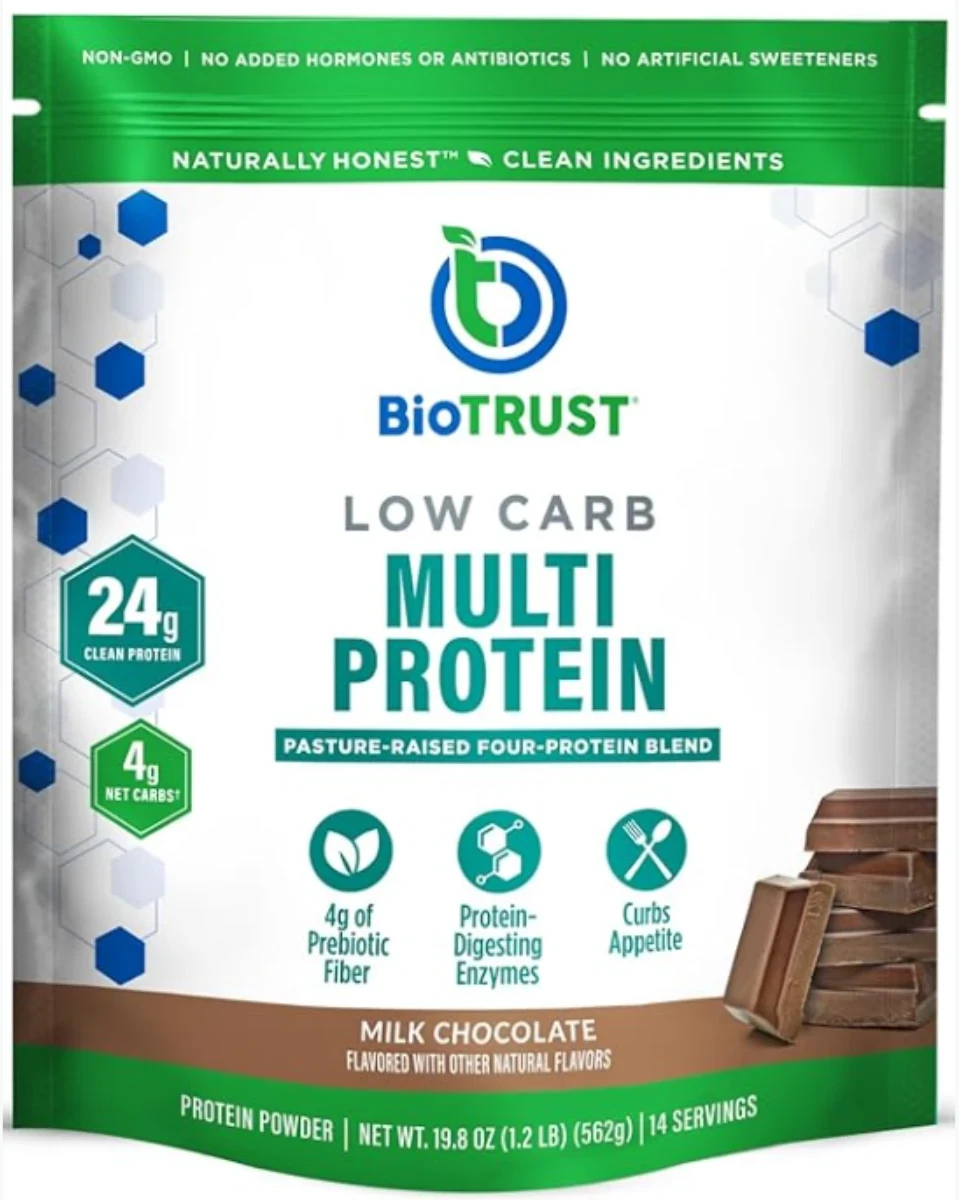
For those looking to boost protein intake as part of a balanced diet, products like BioTrust Low Carb Protein can be a convenient addition. Using a high-quality protein supplement may help support muscle maintenance, satiety, and overall nutritional balance—all important parts of getting healthy, not just losing weight.
Additional Resource: BioTrust Low Carb Protein Powder Review: Does BioTrust Low Carb Really Work?
Final Thoughts
Losing weight can be part of your journey—but it’s not the whole picture. Getting healthy means improving how your body functions, boosting your energy, and enhancing overall well-being—not just dropping a number on the scale.
Focus on meaningful metrics and sustainable habits, and you’ll see progress that’s clear, motivating, and lasting. Health isn’t a single number—it’s a system, and it deserves thoughtful attention.
Tools like the Oxiline Scale MD Pro can help by showing a fuller picture of your health, tracking more than just weight to support better decision-making.
For those looking to support balanced nutrition, products like BioTrust Low Carb Protein can be a convenient option to help maintain muscle, feel fuller longer, and complement a healthy lifestyle—without making it the main goal.
Thanks for reading, we look forward to your visit at EliteHealthAffiliates.com – Your Health and Wellness Authority!